


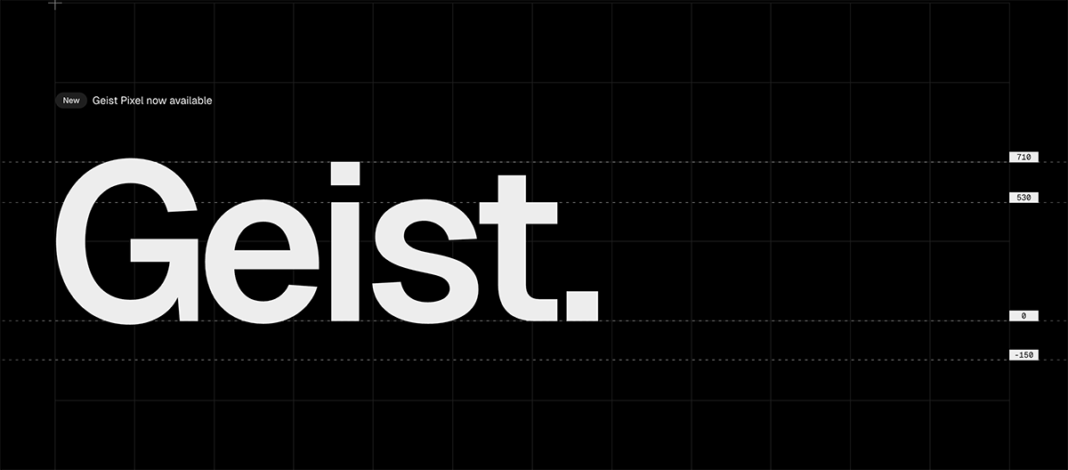
Vercel has launched Geist Pixel, a fully open-source font available in five variants. Each glyph was meticulously refined pixel by pixel to eliminate visual noise and ensure clarity at small sizes while retaining personality at larger scales. The release reflects Vercel’s mission to make the web more beautiful.
When Vercel announced the launch of Geist Pixel, its new open-source font, it was not simply adding another typeface to the digital landscape. It was making a statement about the role of design in shaping the web’s visual identity. Geist Pixel arrives with five variants, each crafted with painstaking attention to detail, and it embodies the company’s philosophy that even the smallest contributions can elevate the beauty of the internet.
Typography has always been central to how information is consumed online. Fonts are not just functional carriers of text; they are aesthetic choices that influence readability, mood, and brand identity. Geist Pixel was designed with this dual purpose in mind: clarity at small sizes and personality at larger scales. Achieving this balance required a meticulous process. Each glyph was refined manually to avoid common pitfalls such as uneven weight distribution, awkward diagonals, or distracting visual noise. Corners, curves, and transitions were adjusted pixel by pixel, ensuring that the font maintains crispness and coherence across different contexts.
This level of craftsmanship is rare in digital type design, where automation often dominates. By choosing to refine every glyph manually, Vercel signals its commitment to precision and artistry. The result is a font that feels both modern and timeless, capable of serving developers, designers, and brands who want their digital presence to be both functional and expressive.
The open-source nature of Geist Pixel is equally significant. In releasing the font freely, Vercel invites the global design and developer community to adopt, adapt, and build upon it. Open-source fonts democratize design, allowing creators of all scales—from independent bloggers to multinational corporations—to access high-quality typography without licensing barriers. Geist Pixel thus becomes not just a product but a shared resource, contributing to a more inclusive and aesthetically rich web.
The timing of this launch also reflects broader trends in digital design. As screens become more diverse in size and resolution, from smartwatches to ultra-high-definition monitors, the demand for fonts that scale gracefully has intensified. Geist Pixel’s pixel-level refinements ensure that it performs consistently across these varied environments. At small sizes, it avoids the blurriness or clutter that can plague less carefully designed fonts. At larger scales, it retains distinctive character, offering designers the flexibility to use it in headlines, branding, or creative projects without sacrificing readability.
For Vercel, known primarily as a platform for front-end development and deployment, the launch of Geist Pixel may seem like a small step outside its core domain. Yet it aligns perfectly with the company’s ethos. Vercel has long championed developer experience and design excellence, emphasizing that performance and aesthetics are inseparable in modern web development. By contributing a font to the open-source ecosystem, it reinforces its role not just as a technical enabler but as a cultural participant in shaping the web’s future.
The announcement also resonates with a growing appreciation for micro-contributions in digital culture. In a world where sweeping innovations often dominate headlines, Geist Pixel exemplifies the impact of subtle, thoughtful design decisions. A font may not revolutionize the internet, but it can quietly transform how millions of people experience content every day. It is in these details—the curve of a letter, the balance of a diagonal—that the web’s beauty is built.
Designers and developers who adopt Geist Pixel will find themselves working with a typeface that embodies both restraint and personality. It is not loud or ornamental, but it carries a quiet confidence. Its clarity makes it ideal for interfaces, documentation, and technical content, while its refined character allows it to shine in creative and expressive contexts. In this way, Geist Pixel bridges the gap between utility and artistry, a hallmark of enduring design.
The release also underscores the collaborative spirit of the web. By making Geist Pixel open-source, Vercel acknowledges that beauty online is not the product of any single company or designer but of collective effort. Each contribution, however small, adds to the mosaic of experiences that define the internet. Geist Pixel is one such contribution—modest in scale but meaningful in impact.
Ultimately, the launch of Geist Pixel is a reminder that design matters. In the rush to innovate technologically, it is easy to overlook the subtler dimensions of user experience. Fonts, colors, layouts—these are the elements that shape how people feel when they interact with digital spaces. By investing in the refinement of a font, Vercel affirms that beauty is not a luxury but a necessity for the web.
As the company itself put it, Geist Pixel is “another small contribution to make the web more beautiful.” In its precision, openness, and elegance, it succeeds in doing just that. For designers and developers seeking a font that balances clarity with character, Geist Pixel offers a new tool—and perhaps a new standard—for digital typography.
Discover more from Creative Brands
Subscribe to get the latest posts sent to your email.