


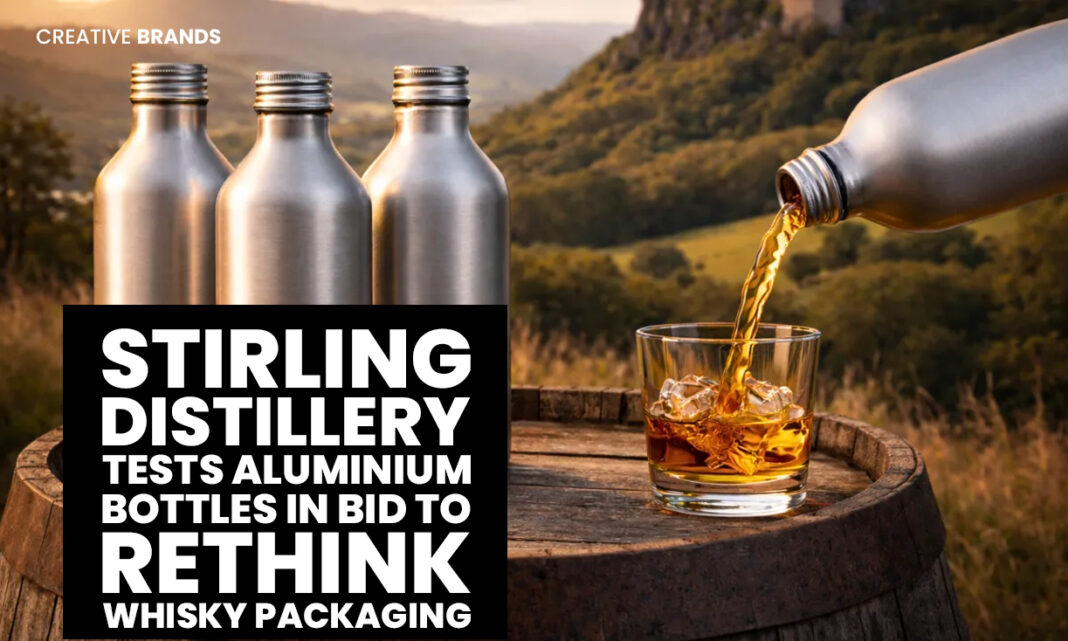
Stirling Distillery in Scotland is trialling aluminium bottles for its small-batch whisky in collaboration with Heriot-Watt University researchers. The initiative aims to curb the environmental impact of heavy glass bottles, though testing continues to ensure aluminium can protect flavour and safety. No commercial rollout has yet been confirmed.
Stirling Distillery in Scotland has set the whisky world watching closely as it begins trials to determine whether its small-batch malt whisky can be commercially sold in aluminium bottles, challenging one of the industry’s most deeply rooted traditions: glass packaging. The move, reported by The Guardian, comes at a moment when Scotland’s distillers are increasingly grappling with the environmental footprint of premium spirits and seeking solutions that don’t compromise quality or identity.
The experiment reflects an emerging sustainability impulse within the sector. Glass, while synonymous with Scotch whisky’s heritage and premium positioning, is both heavy and energy-intensive to produce. A typical single-malt bottle can weigh nearly as much as the liquid it carries, pushing up carbon emissions during manufacturing, long-distance transport and distribution. Aluminium, by contrast, is far lighter and globally recycled at higher rates, making it an appealing alternative—if it can satisfy performance, safety and flavour standards.
For that reason, the Stirling Distillery trial is as much a scientific inquiry as it is a marketing and packaging experiment. The distillery is working with researchers at Heriot-Watt University to examine how aluminium behaves in contact with strong spirits over time. Although aluminium is already widely used across food and beverage packaging, spirits bring unique challenges due to their high alcohol content and sensitivity to chemical interactions. The ongoing research focuses on protective internal linings, corrosion resistance and long-term storage stability—critical factors for any material intended to hold whisky that may be cellared, gifted, or consumed ceremonially.
Industry observers note that the stakes extend beyond one small Scottish distillery. If whisky is ultimately deemed compatible with aluminium, it could open the door to a supply-chain transformation that trims emissions without sacrificing the image of a luxury product. High-end spirits have historically relied on heavy glass—not only for tradition but also for tactile cues of value and authenticity. Whether aluminium can be accepted as “premium” remains an open question, as consumer and collector behaviour often leans conservative in categories anchored in craftsmanship and heritage.
Stirling Distillery has acknowledged that the trial is still firmly in the experimental phase, with no timeline announced for commercial release or broader market adoption. For now, the aluminium bottles sit at the intersection of sustainability goals, technological research and cultural resistance that surrounds any attempt to modernise Scotland’s most iconic export. Whether the journey leads to a new era of eco-conscious whisky packaging or remains an intriguing footnote in the sector’s history will ultimately depend on how the metal performs—and whether whisky drinkers are willing to raise a lighter, less traditional bottle in celebration.
Discover more from Creative Brands
Subscribe to get the latest posts sent to your email.