


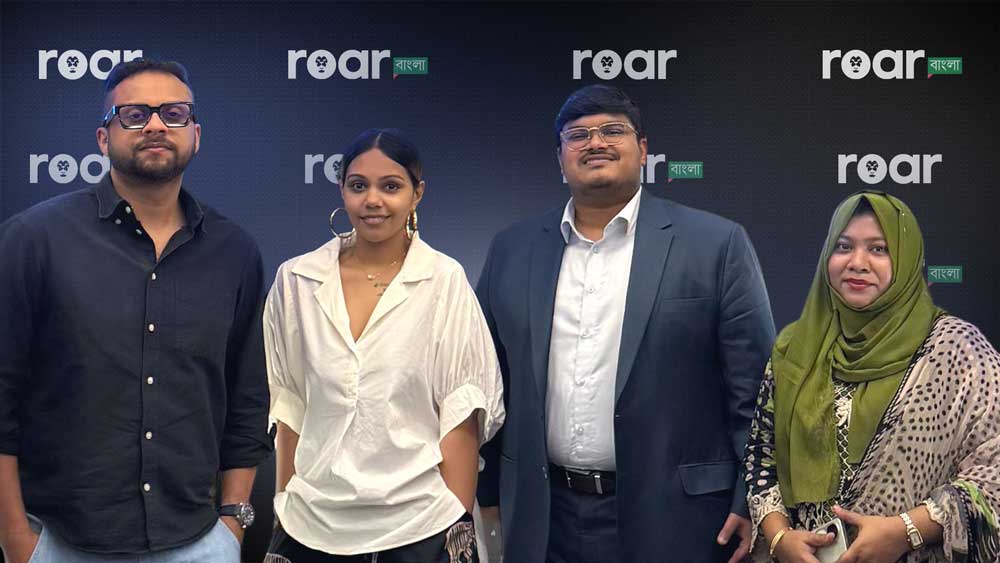
Roar Global is deepening its South Asian footprint, scaling operations in Bangladesh after a successful first year and forging an exclusive partnership in Nepal. The move reflects a shift from entry-phase activity to long-term institutional growth, underscoring its ambition to build sustainable digital advertising infrastructure across emerging economies.
When Roar Global first set foot in Bangladesh in September 2024, the move was seen as a bold experiment: a digital advertising player stepping into one of South Asia’s most dynamic yet complex markets. A year later, the experiment has turned into a success story, and the company is now ready to write its next chapter.
The announcement of structured operational growth in Bangladesh, coupled with an exclusive market partnership in Nepal, signals more than just expansion. It marks Roar Global’s transition from tentative entry to confident, scalable operations — a statement of intent that it is here to stay, and to shape the future of digital advertising across the region.
Bangladesh has been the proving ground. Over twelve months, Roar Global has navigated the intricacies of a market where mobile penetration is high, digital adoption is accelerating, and consumer behaviour is evolving rapidly. The company’s ability to generate revenue in its first year has validated its strategy, but the real story lies in what comes next. Moving from an entry-phase structure to a dedicated regional team model, Roar Global is embedding itself in the local ecosystem. This shift is about more than staffing; it is about institutionalising operations, building resilience, and ensuring that growth is sustainable rather than opportunistic.
For Bangladesh’s advertising industry, the implications are significant. A dedicated regional team means investment in local talent, professionalisation of practices, and the introduction of global standards adapted to local realities. It is a step towards raising the bar in a market that has long been fragmented, where digital advertising often struggled to find its footing amid traditional media dominance. Roar Global’s presence could help accelerate the transition, offering brands and businesses a more structured, transparent, and scalable platform to reach audiences.
Nepal, meanwhile, represents a different kind of opportunity. Smaller in scale but rich in potential, the country’s digital advertising sector is still in its formative stages. By entering through an exclusive market partnership, Roar Global is positioning itself not just as a participant but as a catalyst for growth. The exclusivity of the partnership suggests a long-term commitment, one that allows the company to shape the contours of the market while aligning with local needs. For Nepalese businesses, this could mean access to infrastructure and expertise that might otherwise have taken years to develop.
Together, Bangladesh and Nepal illustrate Roar Global’s broader vision for South Asia. The region is home to some of the fastest-growing digital economies in the world, yet its advertising infrastructure often lags behind. Internet penetration is rising, mobile-first consumption is the norm, and audiences are hungry for digital content. But without sustainable systems, the promise of digital advertising risks being undermined by issues of transparency, accountability, and scalability. Roar Global’s strategy is to bridge this gap, building infrastructure that can support growth while empowering local businesses to thrive.
The company’s emphasis on sustainability is particularly striking. In emerging markets, rapid growth often comes at the expense of long-term viability. Roar Global’s insistence on structured, institutionalised operations suggests a different approach: one that prioritises resilience, governance, and innovation. By embedding itself in local contexts, the company is not only securing its own future but also contributing to the healthy development of the wider ecosystem.
This approach reflects broader shifts in the global advertising industry. As traditional markets reach saturation, attention is turning to emerging economies. South Asia, with its vast population and accelerating digital adoption, is an attractive frontier. Yet success here requires more than simply importing global models. It demands sensitivity to local cultures, regulatory environments, and consumer behaviours. Roar Global’s phased strategy — entry, consolidation, expansion — demonstrates an awareness of these realities, and a willingness to adapt.
For competitors and partners, the message is clear: Roar Global is not dabbling in South Asia; it is committing to it. This commitment is likely to attract brands seeking reliable partners in the region, while also raising expectations for industry standards. In Bangladesh, the move to a regional team model could help professionalise the sector, while in Nepal, the exclusive partnership could set a precedent for how international players engage with smaller markets.
Looking ahead, the company’s expansion into Bangladesh and Nepal may serve as a blueprint for further growth. Other South Asian markets — Sri Lanka, Bhutan, the Maldives — could present opportunities for similar models of structured entry and partnership. The challenge will be to replicate success while respecting the unique dynamics of each market.
Ultimately, Roar Global’s announcement is more than a corporate milestone. It is a marker of change in South Asia’s digital advertising landscape. By moving beyond entry and committing to scalable, institutionalised operations, the company is helping to shape the future of the region’s digital economy. Its dual focus on Bangladesh and Nepal reflects both ambition and pragmatism, balancing the pursuit of growth with the need for sustainability.
As South Asia continues its digital transformation, Roar Global’s expansion offers a glimpse of what the future might look like: a region where advertising infrastructure is not just catching up but setting new standards, where local businesses are empowered by global expertise, and where sustainable growth is more than a slogan — it is a strategy.
Discover more from Creative Brands
Subscribe to get the latest posts sent to your email.