


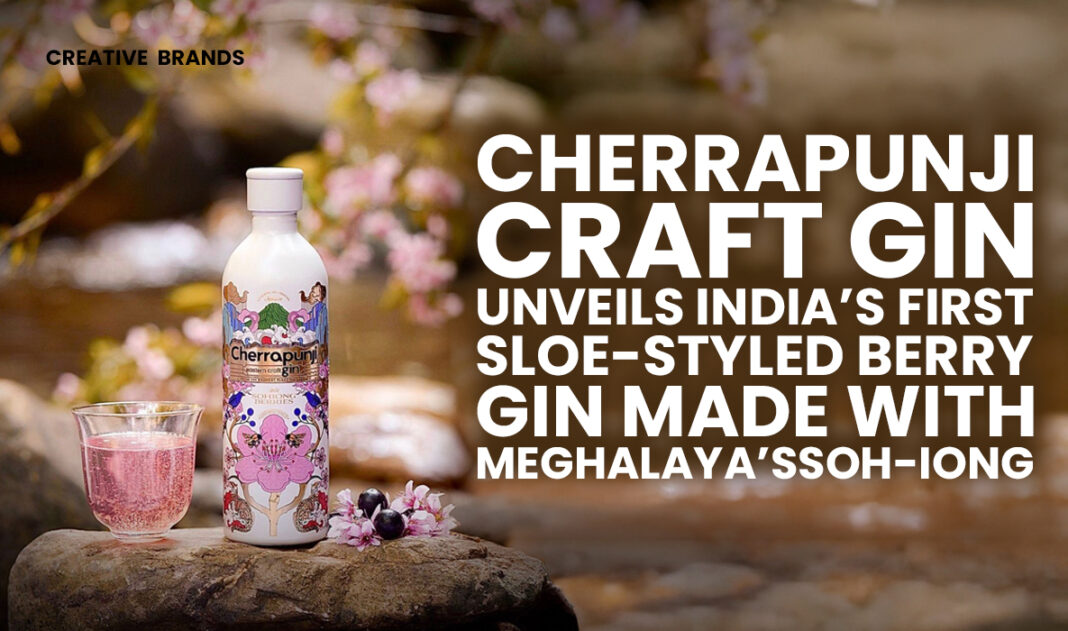
Cherrapunji Craft Gin has launched India’s first sloe-styled gin, crafted from Meghalaya’s native Soh-iong mountain berries. Unsweetened, uncoloured and rooted in clean craft principles, the new expression blends Himalayan juniper, Khasi mandarin, Kaji Nemu, taro, chamomile, cherry blossom and Soh-iong to create a uniquely Indian, region-driven berry gin.
A new chapter in India’s craft spirits story is unfolding from the mist-laden hills of Meghalaya, where a remarkable gin inspired by the forests and folklore of the Northeast is beginning to make its presence felt. The newest expression of Cherrapunji Craft Gin, created with mountain berries locally known as Soh-iong, is set to redefine how Indian consumers experience flavour, provenance and craftsmanship. For the distillers behind the brand, this launch represents not just another product on their shelf but a milestone for India’s evolving gin culture: the nation’s first sloe-styled gin, unsweetened, uncoloured and made with absolute fidelity to the principles of clean craft tradition.
The idea for the gin came from a simple but powerful curiosity. During travels through England, the maker found themselves deeply impressed by classic sloe gins and the distinct character of damson-based expressions. These were spirits with a sense of place, rooted in local fruit and heritage techniques, yet crafted with precision and purity. It sparked an idea: what if India, too, could have its own berry-based gin—one rooted in its own geography, shaped by its own ingredients, and staying true to the philosophy of cleanliness, authenticity and respect for natural flavour? If the English countryside had sloe berries that gave rise to a timeless category, then the lush Khasi Hills, with their abundance of native forests and endemic fruit, surely held a secret of their own.
That secret revealed itself in the form of Soh-iong, a mountain berry that grows in the highland forests of Meghalaya. In Khasi, the name translates quite literally to “fruit-black,” a reference to its deep, dark colour and distinct flavour profile that has long been cherished in local households. The berry is used in traditional cuisine, in preserves and even in festive brews, and its presence is deeply woven into the culinary culture of the region. Its tannic sharpness, slight astringency and rich aroma, however, make it a particularly exciting ingredient for a gin maker in search of India’s answer to the sloe berry. The moment the first experimental batches were tested, the potential became clear: Soh-iong could shape a gin that felt at once local and universal, rooted in the Northeast but ready to stand on any global craft spirits stage.
But this was not merely about finding the right fruit. It was also a commitment to keeping the product unsweetened, uncoloured and free from artificial enhancements. Traditional sloe gin often leans on sweetness and richer textures, but the makers of Cherrapunji Craft Gin wanted something different—not a replica of the English original, but an Indian interpretation that prized purity over embellishment. The challenge lay in allowing the berry to stand out without relying on sugar, preserving its natural personality while making sure the gin remained balanced, aromatic and enjoyable. In the world of craft spirits, this is easier imagined than achieved. Yet the team persisted with small-batch experimentation, allowing the Soh-iong to macerate under carefully controlled conditions until it yielded just the right depth, colour and flavour on its own terms. What emerged was a spirit that was unmistakably berry-forward, yet lean, botanical in character, and decisively modern.
The new expression’s botanical composition reflects the brand’s philosophy of celebrating India’s diverse landscapes. At its heart is Himalayan juniper, known for its crisp, resinous clarity and often considered superior to its European counterparts for gin making. Complementing it are citrus notes from Khasi mandarin and Kaji Nemu, both native to the Northeast and prized for their aroma. Their presence lifts the gin with bright, refreshing high notes that balance the richness of the berry. Taro and chamomile lend softness and earthy floral tones, creating an aromatic middle layer that fills out the palate without overwhelming it. And then come the cherry blossom flowers from Meghalaya—delicate, lightly sweet, and evocative of the hill state’s changing seasons. Together, the botanicals are not merely flavourings but a sensory journey through Meghalaya’s forested slopes, orchards and mountain trails.
Every bottle of this Soh-iong expression feels like an anthology of the region: its fruit, its flora, its air washed constantly by monsoon mist, its traditions and its quiet insistence on doing things in an unhurried, unspoilt way. India’s craft gin industry has been expanding rapidly over the last few years, with distillers experimenting with spices, native botanicals and regional flavours. But the launch of a berry-based gin that mirrors the principles of classic sloe style—without the sweetening, without artificial colouring, and without compromising finesse—marks a significant new frontier. It shows that Indian craft spirits are no longer just interpreting global traditions; they are contributing to them, putting forward new expressions that feel authentic and memorable.
The gin also points to a broader trend in the world of spirits: a turn toward transparency, clarity and minimal manipulation. Consumers today are more curious than ever about what goes into their glass, where each ingredient comes from, and whether the brand values integrity over superficial polish. In this context, a gin that refuses artificial colouring and sweeteners—even when entering a category where these are common—signals a commitment to honesty that is likely to resonate strongly with discerning drinkers. The natural tint from the Soh-iong berry, subtle yet striking, becomes a visual reminder of this philosophy.
For Meghalaya itself, this gin represents an intriguing bridge between tradition and contemporary craft entrepreneurship. The state has long been celebrated for its natural bounty: citrus, herbs, wildflowers, endemic fruit and farm-to-forest diversity. Bringing these ingredients into the world of craft spirits creates economic avenues for local farmers, foragers and horticulture communities, giving the region’s produce a place in premium markets. In this sense, each bottle carries not just flavour but a local livelihood story—one that brings Meghalaya closer to global bar shelves while keeping its identity firmly intact.
As the gin begins to make its way into the hands of mixologists, bartenders and craft spirit enthusiasts, its potential becomes even more exciting. Its dryness, berry density and botanical complexity make it versatile enough for classic cocktails yet expressive enough to stand alone. Imagine a twist on a Negroni that replaces the expected sweetness with the natural depth of Soh-iong, or a martini that introduces a faint whisper of mountain berry without surrendering its crisp structure. Even a simple gin and tonic could evolve into a layered, aromatic experience unlike any other on the Indian market. The possibilities speak not only to the gin’s craftsmanship but to its confidence—this is not a product meant to imitate but to stand independently.
Ultimately, the newest expression of Cherrapunji Craft Gin is more than a beverage. It is a narrative in a bottle—a story of hills and berries, of curiosity turned into creation, of local botanicals finding global relevance, of a distiller who wondered if India could have its own berry gin and then set out to make it possible. It signifies the expansion of India’s craft spirits imagination and the growing recognition that authenticity and innovation can coexist beautifully. As the first sloe-styled gin in the country, it carries both the weight and the thrill of being a pioneer. And as more drinkers encounter its unsweetened honesty and uncoloured complexity, it may well become a reference point for how India approaches the next decade of craft distillation.
Discover more from Creative Brands
Subscribe to get the latest posts sent to your email.