


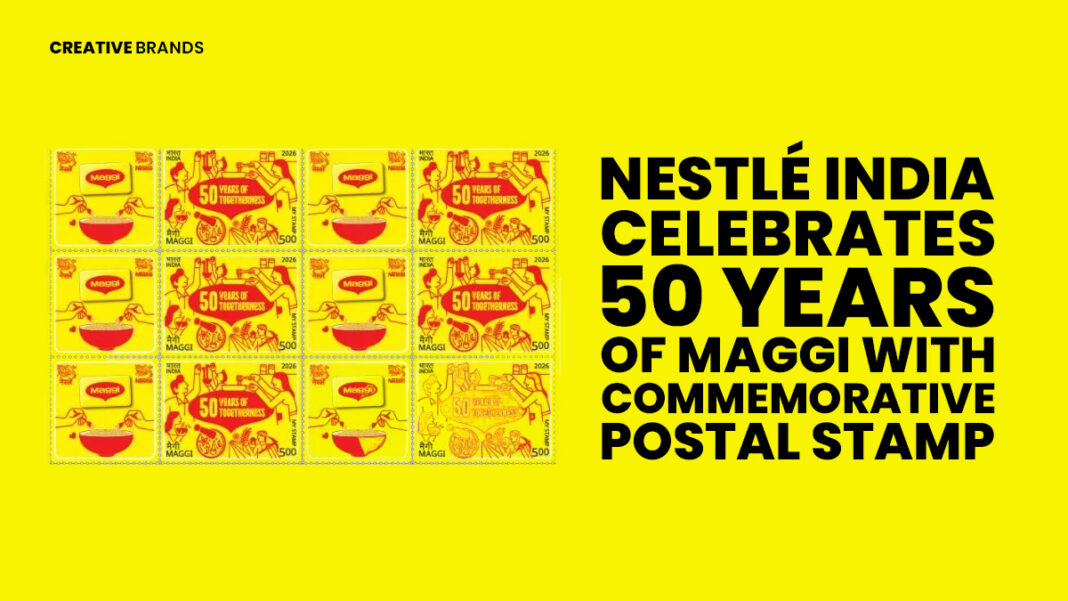
Nestlé India has marked the 50th anniversary of MAGGI with a commemorative postal stamp, honouring the brand’s enduring presence in Indian kitchens. The stamp reflects MAGGI’s journey from a convenience food to a cultural icon, symbolising shared moments across generations and its evolution alongside changing consumer preferences in India.
Few brands in India have managed to transcend their category and become cultural touchstones, but MAGGI has done precisely that. As Nestlé India celebrates 50 years of MAGGI, the company has chosen a uniquely symbolic gesture: a commemorative postal stamp issued in recognition of the brand’s remarkable journey. This stamp is not just a tribute to a product but to the countless shared food moments it has created across generations, and to its evolution alongside the shifting tastes and lifestyles of Indian consumers.
Introduced in India in the early 1980s, MAGGI noodles quickly became synonymous with convenience, affordability, and taste. For many, it was the first packaged food that felt both modern and accessible, offering a quick solution for busy households and students alike. Over time, MAGGI became more than just a snack; it became a cultural phenomenon. The phrase “two-minute noodles” entered everyday vocabulary, and the yellow packet became a fixture in homes, hostels, and roadside stalls. The commemorative stamp captures this legacy, acknowledging how MAGGI has woven itself into the fabric of Indian life.
The decision to mark MAGGI’s 50-year milestone with a postal stamp is particularly poignant. Stamps have historically been used to honour national achievements, cultural icons, and milestones that resonate with the public. By placing MAGGI in this league, Nestlé India underscores the brand’s role not merely as a food product but as a symbol of shared experiences. From children returning home from school to late-night hostel cravings, from mothers experimenting with recipes to roadside vendors serving steaming bowls, MAGGI has been part of countless stories. The stamp reflects this universality, reminding people that food is often about memory as much as taste.
MAGGI’s journey has not been without challenges. In 2015, the brand faced one of its most difficult moments when regulatory authorities raised concerns about product safety, leading to a temporary ban. For a brand so deeply embedded in public consciousness, the setback was significant. Yet, MAGGI’s comeback was equally remarkable. Nestlé India worked to rebuild trust, reintroducing the product with renewed transparency and quality assurances. The resilience of MAGGI during this period reinforced its bond with consumers, who welcomed it back with enthusiasm. The commemorative stamp, therefore, also symbolises resilience and the ability of a brand to adapt and endure.
Over the decades, MAGGI has evolved to meet changing consumer preferences. While the classic masala flavour remains beloved, Nestlé India has introduced variations to cater to diverse tastes and health-conscious consumers. From atta noodles to oats and multigrain options, the brand has sought to balance nostalgia with innovation. It has also expanded into sauces, seasonings, and ready-to-cook products, ensuring that MAGGI remains relevant in a market where food habits are constantly shifting. The stamp, in this sense, is not just a nod to the past but a recognition of the brand’s ability to evolve with the times.
The cultural significance of MAGGI is perhaps best understood through its emotional resonance. For many Indians, MAGGI is tied to formative experiences—learning to cook for the first time, sharing a bowl with friends, or finding comfort in its familiar taste during moments of transition. It is a brand that has managed to be both personal and universal, intimate yet widely shared. The commemorative stamp captures this duality, serving as a reminder that food is often a bridge between generations, a way of connecting people across time and place.
Nestlé India’s decision to celebrate MAGGI’s golden jubilee in this manner also reflects the growing recognition of brands as cultural institutions. In a country where food traditions are deeply rooted, the success of a packaged product like MAGGI speaks to broader social changes—urbanisation, changing family structures, and the rise of convenience as a lifestyle choice. The stamp becomes a marker of these shifts, encapsulating how a simple noodle packet came to represent modern India’s evolving relationship with food.
The launch of the commemorative stamp has been accompanied by celebrations that highlight MAGGI’s journey. Nestlé India has emphasised the brand’s role in fostering shared moments, whether in homes, schools, or public spaces. The stamp itself, with its design reflecting MAGGI’s iconic imagery, is intended to evoke nostalgia while celebrating continuity. It is a gesture that invites consumers to reflect on their own relationship with the brand, to recall the countless times MAGGI has been part of their lives.
As MAGGI steps into its next chapter, the commemorative stamp serves as both a celebration and a challenge. It celebrates the brand’s enduring legacy, its ability to remain relevant across decades, and its place in the hearts of millions. At the same time, it challenges Nestlé India to continue innovating, to ensure that MAGGI remains not just a nostalgic favourite but a contemporary choice for future generations.
In the end, the story of MAGGI is not just about noodles. It is about how a brand can become a cultural marker, a shared language of taste and memory. The commemorative postal stamp is a fitting tribute to this journey, encapsulating fifty years of moments that have defined not just a product but a way of life. For millions of Indians, MAGGI is more than food—it is comfort, connection, and continuity. And now, with its place on a postal stamp, it is also history.
Discover more from Creative Brands
Subscribe to get the latest posts sent to your email.