


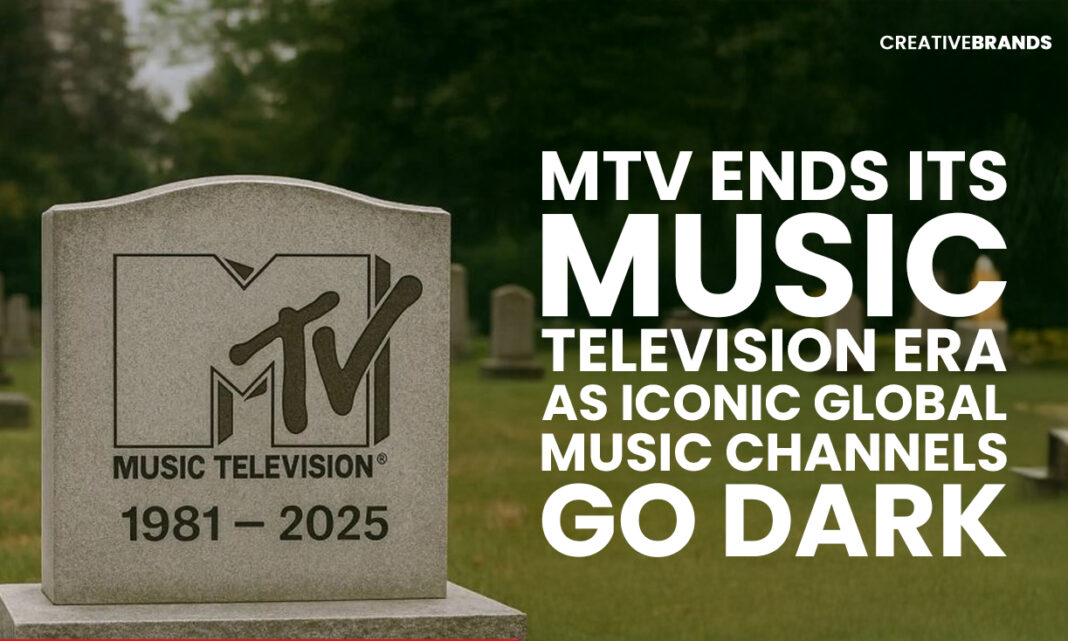
MTV has shut down its global music-focused channels, including MTV Music, MTV 80s, MTV 90s, and MTV Live, ending a 44-year legacy of nonstop music television. While MTV’s entertainment channels continue, the move marks the definitive close of an era that shaped global music culture.
When MTV first flickered onto television screens in August 1981, it did so with a promise that felt revolutionary: “Video Killed the Radio Star.” In many ways, it did. For over four decades, MTV didn’t just play music; it reshaped how music was discovered, marketed, performed, and remembered. Now, with the shutdown of its global music-focused channels—MTV Music, MTV 80s, MTV 90s, and MTV Live—that original promise has come full circle. The screens that once pulsed with nonstop videos, live concerts, and era-defining performances have gone dark, marking the end of a 44-year chapter in television history.
The closure does not mean the MTV brand itself is disappearing. The main entertainment-focused MTV channels will continue to operate, filled with reality shows, scripted content, and pop-culture programming. But the decision to end the dedicated music channels is symbolic. It represents the final severing of MTV from the very format that gave it its identity and global cultural power.
At its peak, MTV was more than a channel; it was a cultural force. It transformed musicians into visual artists and celebrities into icons. Artists like Madonna, Michael Jackson, Prince, Duran Duran, Nirvana, and Beyoncé didn’t just release songs—they released moments, crafted through music videos that MTV amplified around the world. For millions of viewers, MTV was the first place they encountered new sounds, styles, and attitudes. It shaped fashion trends, slang, youth rebellion, and even political conversations.
The later launch of niche channels such as MTV 80s and MTV 90s was an attempt to preserve that legacy. These channels functioned as time capsules, offering curated nostalgia for audiences who grew up recording videos on VHS tapes or waiting patiently for their favourite song to come on air. MTV Live, meanwhile, kept the spirit of performance alive with concert footage, acoustic sessions, and live recordings that reminded viewers that music was as much about presence and energy as it was about sound.
Their shutdown underscores a truth the industry has been grappling with for years: the way people consume music has irrevocably changed. Linear television, especially music television, no longer fits easily into a world dominated by streaming platforms, algorithms, and on-demand culture. Viewers no longer wait for a video to be played; they search, skip, replay, and share instantly. Spotify, Apple Music, YouTube, and social media platforms like Instagram and TikTok have become the new MTVs—places where music breaks, trends form, and artists go viral overnight.
Yet, the loss feels deeper than a simple shift in technology. MTV’s music channels offered something that algorithms cannot easily replicate: curation with personality. VJs were tastemakers, not just presenters. Programming blocks created shared experiences, where millions of people watched the same videos at the same time, debated them the next day, and felt part of a collective cultural moment. There was anticipation, surprise, and even frustration—emotions that came from surrendering control to a schedule.
For the industry, MTV’s retreat from music programming also signals the end of an era where television was central to artist development. Music videos were once major investments, designed specifically for television impact. Directors became stars in their own right, and premieres were events. Today, videos are often designed for mobile screens, vertical formats, and social sharing. Budgets, aesthetics, and storytelling have adapted accordingly.
The decision to shut down these channels is also rooted in economics. Maintaining multiple linear music channels in a fragmented media landscape is costly, especially when audiences are shrinking and advertising revenue is migrating online. Media companies are increasingly consolidating brands, focusing on content that delivers predictable engagement and monetization. Reality television, youth-focused entertainment, and franchise-driven programming offer that stability in a way that music television no longer does.
For longtime viewers, however, the emotional impact is undeniable. The silence left by these channels is filled with memories: discovering a favourite band by accident, staying up late to watch a live concert, or feeling seen when a song mirrored a personal moment. MTV’s music channels were companions through adolescence, heartbreaks, rebellions, and celebrations.
Globally, MTV also played a role in cross-cultural exchange. International versions and regional programming introduced audiences to artists beyond their borders, helping globalize pop culture long before the internet made it seamless. The end of these channels feels like the closing of a shared global jukebox.
As MTV continues as an entertainment brand, its evolution reflects the broader story of media itself. Television adapts, sheds skins, and follows audiences wherever they go. What remains constant is the power of music to connect people—only the medium has changed. The music hasn’t stopped; it has simply moved elsewhere.
Still, the shutdown of MTV Music, MTV 80s, MTV 90s, and MTV Live is more than a programming decision. It is a cultural milestone, signaling the definitive end of music television as a dominant force. For 44 years, MTV proved that sound and vision together could change the world. As the lights go out on its music channels, that legacy remains—etched not just in archives, but in the collective memory of generations who grew up watching, listening, and believing that music could define who they were.
Discover more from Creative Brands
Subscribe to get the latest posts sent to your email.