


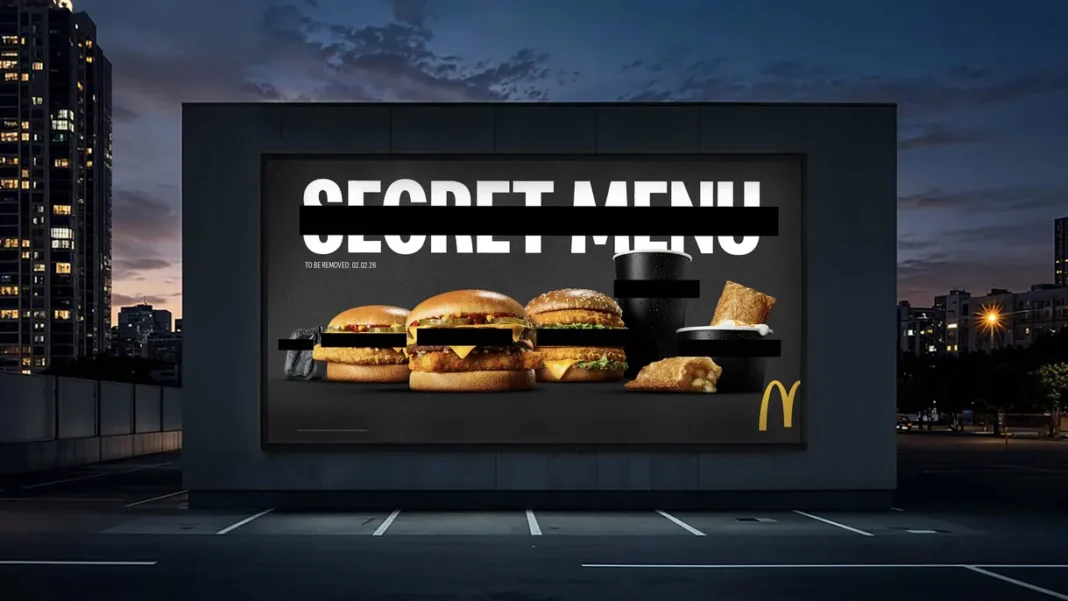
McDonald’s UK has unveiled a Secret Menu campaign that thrives on mystery, revealing only fragments while leaving the rest obscured. Created by Leo Burnett UK, the initiative demonstrates how partial disclosure can spark curiosity and engagement, proving that sometimes less transparency drives more exploration and intrigue among consumers.
McDonald’s UK has taken a bold step into the realm of mystery marketing, unveiling a Secret Menu that exists in tantalizing fragments rather than full disclosure. In a world where consumers are accustomed to instant gratification and complete transparency, the fast-food giant has chosen to withhold just enough information to keep everyone guessing. The campaign, crafted by Leo Burnett UK, is a masterclass in how partial revelation can be more powerful than laying everything bare. It is a strategy that plays on human psychology, curiosity, and the thrill of discovery, echoing the way certain files or documents in public life are released with blacked-out sections, leaving the public to speculate about what lies beneath.
The Secret Menu is not a figment of imagination—it exists, but not in the way one might expect. Instead of a straightforward list of items, McDonald’s has chosen to tease, hint, and obscure. Some offerings are revealed in part, others are cloaked in mystery, and the rest are unlocked only through exploration. It is a campaign that thrives on the tension between knowing and not knowing, a deliberate act of withholding that makes the consumer lean in closer, eager to uncover what has been hidden.
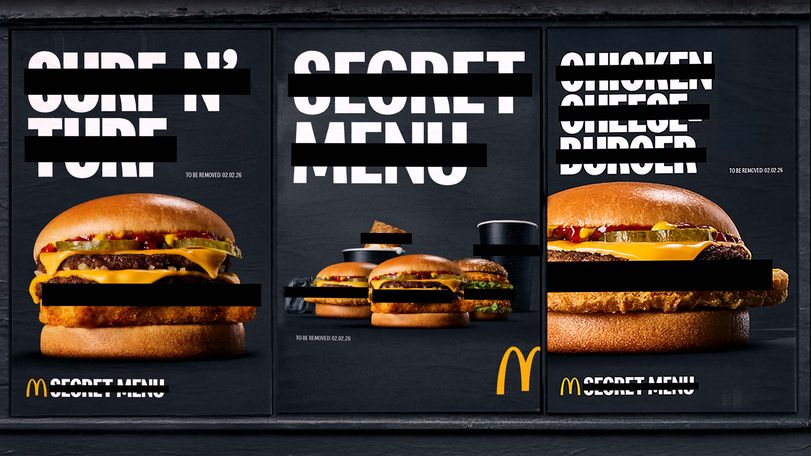
The comparison to the infamous Epstein files is not accidental. Just as those documents were released with heavy redactions, sparking endless speculation about what was concealed, McDonald’s has chosen to black out portions of its menu. The effect is the same: curiosity is heightened, conversations are sparked, and the audience is drawn into a game of speculation. In the case of McDonald’s, however, the stakes are far lighter—what’s hidden is not scandalous information but the promise of indulgent food items waiting to be discovered. Yet the psychological mechanism is identical. People are more intrigued by what they cannot see than by what is fully revealed.
Leo Burnett UK, the creative force behind the campaign, has long understood the power of narrative and mystery in advertising. By crafting a menu that is both present and absent, they have tapped into a cultural moment where audiences are weary of overexposure and oversharing. In a digital age where everything is explained, documented, and dissected, the allure of something unexplained becomes irresistible. The campaign asks a simple but profound question: would you explore more if everything wasn’t explained to you?
The answer, judging by the buzz surrounding the campaign, is a resounding yes. Social media has lit up with speculation, theories, and playful guesses about what the hidden items might be. Some users claim to have unlocked certain dishes by visiting specific outlets or engaging with digital clues, while others revel in the guessing game itself. The campaign has transformed the act of ordering food into an adventure, a treasure hunt where the reward is not just a meal but the satisfaction of discovery.
This strategy is not without precedent. Brands have long used mystery and scarcity to drive engagement. Limited editions, secret drops, and hidden features have become staples of marketing in industries ranging from fashion to technology. What sets McDonald’s apart is the scale and accessibility of the campaign. Unlike luxury brands that thrive on exclusivity, McDonald’s is a mass-market giant. By introducing mystery into its everyday offerings, it democratizes the thrill of discovery, allowing anyone to participate in the game.
The campaign also reflects a deeper truth about consumer behavior. Transparency, while valuable, can sometimes dull the edge of curiosity. When everything is explained upfront, there is little room for imagination or speculation. By contrast, partial disclosure invites the consumer to fill in the gaps, to project their own desires and fantasies onto the product. In this way, the Secret Menu becomes not just a list of items but a canvas for imagination. Each blacked-out section is an invitation to dream about what could be hidden there.
The timing of the campaign is also significant. In an era where trust in institutions is fragile and skepticism runs high, McDonald’s has chosen to embrace the language of secrecy and disclosure. By mimicking the aesthetics of redacted files, the campaign taps into a cultural fascination with hidden truths and forbidden knowledge. It is a playful nod to the serious world of classified documents and investigative journalism, repurposed for the lighthearted domain of fast food. The juxtaposition is striking and effective, turning a simple menu into a cultural artifact.
Critics might argue that withholding information is a risky move. Consumers could become frustrated if they feel manipulated or misled. Yet the genius of the campaign lies in its balance. Enough is revealed to assure the audience that the menu exists and is worth exploring, but not so much that the mystery is dispelled. The blacked-out sections are not barriers but invitations, designed to provoke curiosity rather than irritation.
The campaign also raises broader questions about the role of transparency in marketing. For years, brands have been told that openness and honesty are the keys to building trust. Yet McDonald’s UK demonstrates that transparency is not a one-size-fits-all solution. In some cases, withholding can be more engaging than revealing. The Secret Menu is not about deception but about playfulness, about creating a dynamic where the consumer is an active participant rather than a passive recipient.
The success of the campaign will ultimately be measured not just in sales but in cultural impact. Already, it has sparked conversations about the nature of secrecy, curiosity, and engagement. It has reminded audiences that mystery can be delightful, that not knowing can be as compelling as knowing. In a world saturated with information, the act of withholding becomes a radical gesture, a way of reclaiming the power of imagination.
For McDonald’s UK, the Secret Menu is more than a marketing gimmick. It is a statement about the brand’s willingness to experiment, to play with cultural tropes, and to challenge conventional wisdom. It shows that even a global giant can surprise its audience, can create moments of intrigue in the everyday act of ordering a meal. It is a reminder that brands, like people, are most compelling when they leave something unsaid.
As the campaign unfolds, consumers will continue to speculate, explore, and unlock the hidden items. Each revelation will be a small victory, each discovery a reward for curiosity. The menu may never be fully revealed, and that is precisely the point. The mystery is not a flaw but a feature, a deliberate design that keeps the audience engaged.
In the end, the Secret Menu is a lesson in the power of partial disclosure. By blacking out just enough to keep everyone guessing, McDonald’s UK has created a campaign that is as much about psychology as it is about food. It is a playful experiment in curiosity, a reminder that sometimes the most powerful stories are the ones that are not fully told. And in a world where everything is explained, documented, and revealed, the allure of the unexplained may be the most irresistible offering of all.
Discover more from Creative Brands
Subscribe to get the latest posts sent to your email.