

Lacoste has opened its first café in Paris, signalling a bold move into luxury hospitality. With 60% of global luxury spending now focused on experiences, the brand joins Dior, YSL, and Ralph Lauren in blending retail with lifestyle. The café reflects a growing trend of immersive, experiential luxury marketing.
When Lacoste announced the opening of its first café in Paris, the news raised eyebrows. A brand synonymous with crocodile logos, tennis whites, and understated French chic suddenly stepping into hospitality seemed, at first glance, unnecessary. Yet, in the evolving landscape of luxury, where experiences increasingly outweigh possessions, the move feels not only logical but inevitable.
Luxury is no longer confined to the transactional act of purchasing a handbag, a fragrance, or a polo shirt. It is about immersion, about living inside the brand’s world, and about sharing that experience with others. The numbers speak for themselves: 60% of global luxury spending today is directed towards experiences rather than products. This shift has forced brands to rethink their strategies, moving beyond boutiques and flagship stores into cafés, restaurants, hotels, and even cultural spaces.
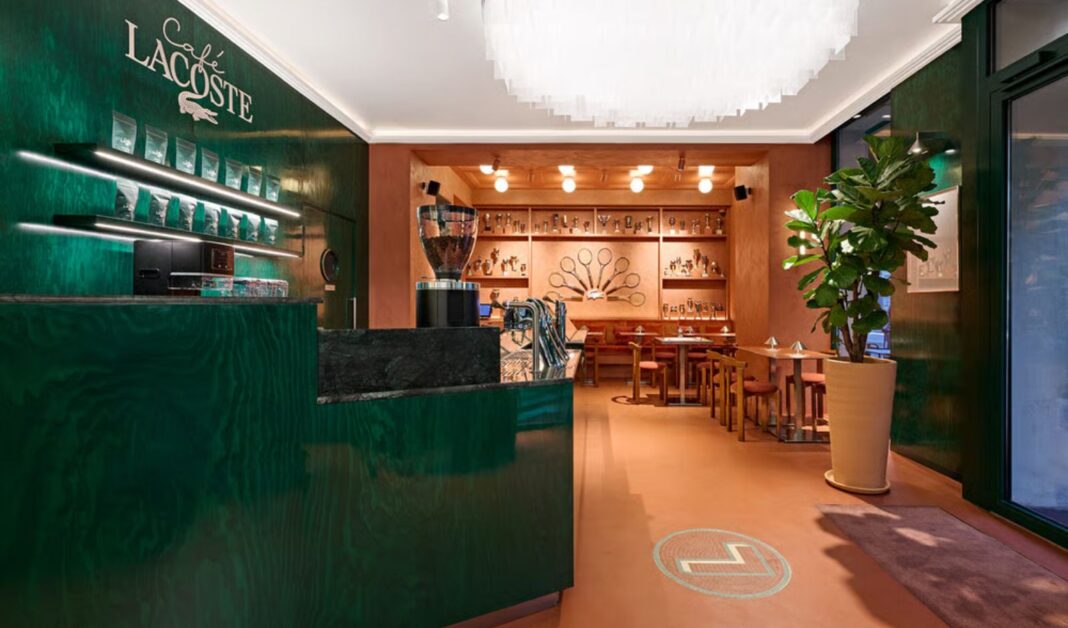
Lacoste’s Parisian café is a carefully curated extension of its identity. It is not simply a place to sip coffee; it is a stage where lifestyle and brand narrative converge. The interiors echo Lacoste’s heritage of sport and elegance, while the menu is designed to appeal to both loyal customers and curious passers-by. In a city where café culture is as much about social theatre as it is about caffeine, Lacoste has found a natural setting to deepen its connection with consumers.
The brand is not alone in this venture. Yves Saint Laurent, Dior, and Ralph Lauren have all experimented with blending retail and hospitality. Ralph Lauren’s Polo Bar in New York, for instance, has become a destination in its own right, offering diners a taste of the brand’s equestrian-inspired lifestyle. Dior’s café in Seoul and Saint Laurent’s Rive Droite concept store in Paris similarly blur the lines between shopping and socialising. These spaces are not ancillary; they are central to how luxury houses now cultivate loyalty and relevance.
What makes such ventures compelling is their ability to generate social media virality. A café branded by Lacoste is not just a place to eat or drink; it is a backdrop for Instagram posts, TikTok reels, and digital storytelling. In the age of digital influence, where a single image can reach millions, the café becomes a marketing tool as much as a hospitality offering. Customers are not only consuming food and drink; they are consuming the brand, and in turn, broadcasting it to their networks.
This strategy reflects a broader transformation in luxury marketing. Traditional advertising, while still significant, no longer suffices in a world where consumers crave authenticity and participation. A café offers a tactile, sensory experience that a billboard cannot. It allows customers to feel part of the brand’s universe, to linger in it, and to share it with others. The transaction is no longer just financial; it is emotional and cultural.
For Lacoste, whose heritage is rooted in sport and leisure, the café is a natural extension. René Lacoste, the tennis legend who founded the brand, was known for innovation both on and off the court. The café continues that spirit, positioning Lacoste not merely as a clothing label but as a lifestyle curator. It is a reminder that luxury is as much about how one spends time as it is about what one wears.
The move also signals a shift in how luxury brands view their physical spaces. Flagship stores have long been temples of consumption, designed to awe and seduce. But cafés and restaurants introduce a different rhythm. They invite lingering, conversation, and community. They transform customers from shoppers into participants, embedding the brand into daily routines and social rituals. In Paris, a city where cafés are cultural institutions, Lacoste’s entry into hospitality feels particularly resonant.
Critics might argue that such ventures risk diluting brand identity, turning fashion houses into lifestyle conglomerates. Yet, the evidence suggests otherwise. By carefully curating these spaces, brands reinforce their narratives rather than weaken them. Ralph Lauren’s Polo Bar does not undermine his fashion empire; it amplifies it. Dior’s cafés do not distract from haute couture; they extend its aura into everyday life. Lacoste’s café, similarly, is not a departure but a deepening of its ethos.
The café also reflects the democratisation of luxury. While Lacoste’s clothing may be aspirational, a coffee or pastry at its café is more accessible. It allows a wider audience to engage with the brand, even if they cannot afford its apparel. This inclusivity, paradoxically, strengthens exclusivity, as it broadens the brand’s cultural footprint while maintaining its core identity.
In the long run, such ventures may redefine what luxury means. No longer confined to objects, luxury becomes a way of living, a series of curated experiences that shape identity and memory. A handbag may be treasured, but a meal shared in a branded café creates stories, photographs, and moments that endure. For brands, this is invaluable: it transforms customers into storytellers, ambassadors, and co-creators of meaning.
Lacoste’s Paris café, then, is more than a novelty. It is a statement about the future of luxury, where hospitality and retail converge, and where experiences drive engagement. It is a reminder that in a world saturated with products, what truly distinguishes a brand is the ability to create moments that resonate. As consumers sip their coffee beneath the crocodile emblem, they are not just tasting a beverage; they are tasting the brand itself.
In an era where luxury is increasingly defined by how it makes people feel, Lacoste’s café is both timely and strategic. It may have seemed unnecessary at first, but in hindsight, it is precisely what the brand—and the industry—needs.
Discover more from Creative Brands
Subscribe to get the latest posts sent to your email.