


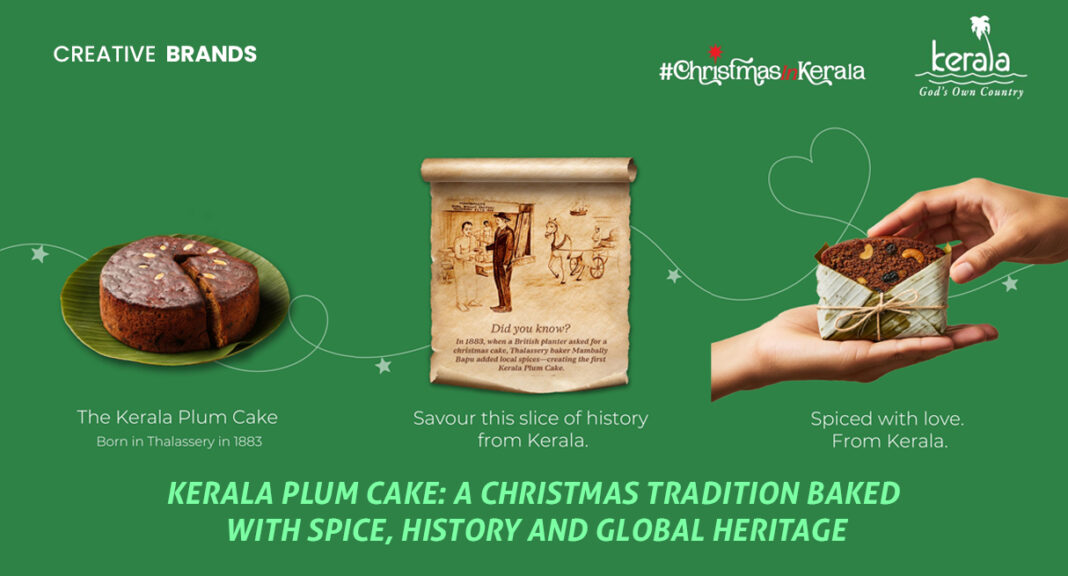
Fragrant with nutmeg, cinnamon and cloves, Kerala’s iconic plum cake reflects centuries of spice-trade history and culinary craftsmanship. Rooted in Christmas tradition and perfected over generations, the cake has gained global appeal. Kerala Tourism is now promoting it as an edible symbol of the state’s cultural legacy and rich food heritage.
In Kerala, Christmas announces itself long before the carols are sung or the stars are lit. It arrives quietly in kitchens and bakeries, in the warm, heady aroma of nutmeg, cinnamon and cloves slowly blooming in ovens across the state. The Kerala plum cake, dark, dense and fragrant, is not just a festive dessert but a living archive of history, trade and craftsmanship. Each slice carries with it centuries of cultural exchange, shaped by the spice routes that once made the Malabar Coast the centre of the world’s culinary imagination.
Unlike lighter cakes that rely on sweetness alone, the Kerala plum cake is defined by depth. Its character comes from spices that have travelled through time, from pepper vines and cinnamon bark that once drew merchants from distant shores. Nutmeg, cloves and cardamom—grown in Kerala’s own hills—are folded into batters enriched with premium dried fruits soaked patiently in rum or brandy. The process is unhurried, almost meditative, reflecting a culinary philosophy where flavour is built layer by layer, and nothing is rushed.
The cake’s origins are inseparable from Kerala’s history as a global trading hub. For centuries, Arab, European and Asian traders converged on its ports, exchanging goods, ideas and tastes. With them came new baking techniques, dried fruits from afar and the tradition of festive cakes. Local bakers absorbed these influences, adapting them to regional ingredients and sensibilities. The result was not an imitation of European fruitcakes, but something distinctly Keralite—richer in spice, darker in colour and more complex in flavour.
Over generations, the plum cake became an integral part of Christmas in Kerala’s Christian households, while also crossing religious and cultural boundaries. It is gifted to neighbours, shared with friends and enjoyed well beyond the festive season. In many homes, recipes are guarded heirlooms, passed down with handwritten notes and subtle variations that reflect family preferences. Some favour more spice, others a heavier hand with dried fruits, but all agree on the essence: patience, quality ingredients and respect for tradition.
What began as a seasonal indulgence has, over time, evolved into a refined craft. Bakeries across Kerala have elevated plum cake-making into an art form, experimenting with ageing techniques, ingredient sourcing and flavour balance. The best cakes are allowed to mature, their flavours deepening as spices meld with fruit and alcohol. This ageing process, once a domestic practice, is now a hallmark of premium production, reflecting a sophisticated understanding of time as an ingredient.
The global appeal of Kerala plum cake has grown steadily, driven by the Indian diaspora and an increasing international curiosity about regional cuisines. From Middle Eastern supermarkets to speciality stores in Europe and North America, the cake has found admirers who appreciate its complexity and authenticity. Labeled proudly as Made in India and perfected in Kerala, it stands as an example of how local food traditions can resonate globally without losing their soul.
In recent years, this culinary heritage has also become a tool for storytelling, and Kerala Tourism has stepped in to amplify that narrative. By promoting the plum cake as part of the state’s cultural identity, the tourism department is positioning food as a gateway to understanding Kerala’s history. The cake is no longer just something to eat; it is something to experience, a sensory introduction to the state’s spice-laden past and its living traditions.
For travellers, the plum cake offers an accessible entry point into Kerala’s rich food culture. Tasting it is to taste the legacy of the spice trade, the influence of colonial encounters and the ingenuity of local bakers who transformed global inputs into something uniquely their own. Bakeries become destinations, ovens turn into storytellers and the act of buying a cake becomes a form of cultural exchange.
The promotion of plum cake also reflects a broader shift in tourism thinking. Experiences are increasingly defined by authenticity and immersion rather than sightseeing alone. Visitors want to connect with places through their food, crafts and everyday rituals. By highlighting a product that is both festive and deeply rooted in history, Kerala Tourism is aligning with this demand, offering a narrative that feels intimate and meaningful.
The cake’s spice profile is particularly emblematic of Kerala’s identity. Nutmeg and cloves, once precious commodities that shaped global trade routes, now find a humble yet powerful expression in a Christmas dessert. Cinnamon adds warmth, while the richness of dried fruits speaks to abundance and celebration. Together, they create a flavour that is at once comforting and complex, mirroring Kerala itself—a place where serenity and intensity coexist.
Behind every slice lies the labour of farmers, spice growers and bakers, whose skills have been refined over generations. The promotion of plum cake indirectly shines a light on these communities, reinforcing the idea that culinary heritage is a collective achievement. It underscores the importance of preserving traditional knowledge at a time when mass production threatens to flatten regional differences.
The story of Kerala plum cake is also one of adaptation. While rooted in tradition, it continues to evolve, with bakers experimenting with new ingredients, packaging and formats to appeal to modern consumers. Yet, the core remains unchanged: the careful balance of spices, fruit and time. This ability to innovate without erasing the past is perhaps the cake’s greatest strength.
As Kerala Tourism brings the plum cake into the spotlight, it invites the world to see the state through a different lens. Not just as a destination of backwaters and beaches, but as a place where history is edible, where stories are baked, and where celebration is infused with meaning. The cake becomes a symbol of Kerala’s broader cultural promise—rich, layered and enduring.
During Christmas, when tables across the state are laid with slices of dark, fragrant cake, the connection between past and present feels especially tangible. The same spices that once sailed across oceans now perfume homes, linking families to centuries of trade and tradition. In promoting this heritage, Kerala Tourism is not inventing a new narrative, but honouring one that has been quietly told, year after year, in ovens across the state.
The Kerala plum cake is, ultimately, more than a festive treat. It is a reminder that food can carry memory, identity and history in ways few other things can. With every bite, it tells a story of Kerala’s place in the world—crafted by time, enriched by trade and celebrated through a tradition that continues to bring people together, one Christmas at a time.
Discover more from Creative Brands
Subscribe to get the latest posts sent to your email.