


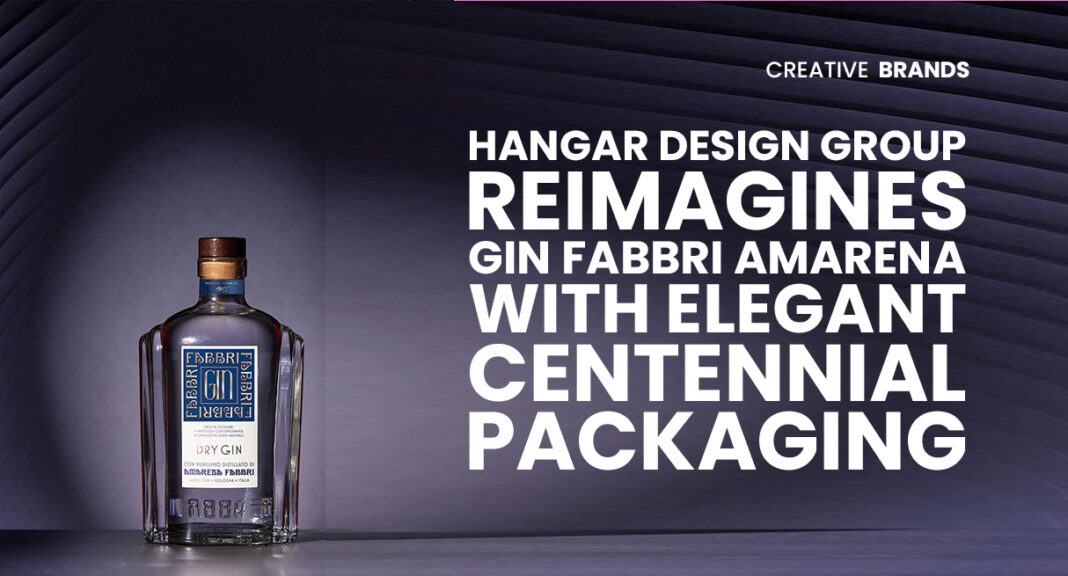
Marking 100 years since its original creation, Gin Fabbri Amarena returns with a refined new packaging identity by Hangar Design Group. Rooted in 1920s heritage and enriched with Fabbri’s signature Amarena distillate, the redesign blends historical authenticity with contemporary elegance for today’s premium spirits market.
A century after it first took shape in Bologna, Gin Fabbri Amarena returns to the spotlight with a renewed identity that bridges heritage and modernity, thanks to a refined packaging redesign by Hangar Design Group. The revival marks a significant moment for Premiata Distilleria Fabbri, reconnecting the brand with a lesser-known but historically rich chapter of its past while presenting the gin to contemporary consumers through a design language rooted in authenticity, elegance, and place.
The story of Gin Fabbri Amarena begins in the 1920s, when Gennaro Fabbri, founder of the iconic Italian company best known for its Amarena cherries, crafted the distillery’s first gin. Created in Bologna during a period of experimentation and artisanal excellence, the gin reflected both the technical knowledge of distillation and the sensorial curiosity of its maker. While Amarena Fabbri would go on to become the brand’s most globally recognised product, the existence of a gin in its early portfolio speaks to a broader vision of flavour, innovation, and refinement that has long defined the company.
Now, one hundred years later, that vision has been carefully revived. The contemporary Gin Fabbri Amarena remains faithful to its original spirit while being enriched with Fabbri’s signature Purissimo Distillato di Amarena, a defining ingredient that ties the product unmistakably to the brand’s DNA. This balance between continuity and reinvention is at the heart of the project developed by Hangar Design Group, which approached the assignment not as a simple restyling exercise but as a cultural and historical reinterpretation.
The design process began with in-depth research into early 20th-century aesthetics, drawing from archival materials that documented the visual language of the era in which the gin was first produced. Rather than replicating these references literally, Hangar Design Group translated them into a contemporary idiom, preserving their essence while adapting proportions, finishes, and details to meet modern expectations of premium spirits packaging. The result is a bottle that feels timeless rather than nostalgic, confident in its heritage without being constrained by it.
Central to the new identity is the bottle itself, whose soft, faceted silhouette echoes the shape of the original 1920s design. Its form is both tactile and elegant, inviting handling while standing out subtly on the bar counter. The choice of transparent glass underscores a commitment to visual purity, allowing the crystal-clear gin to speak for itself and reinforcing the idea of honesty and authenticity that underpins the entire project. This transparency also reflects a contemporary preference for clarity and craftsmanship in premium spirits, aligning historical values with present-day sensibilities.
Rose-gold accents play a pivotal role in elevating the packaging and adding a layer of symbolic meaning. Used sparingly yet decisively, they reference Fabbri’s most precious treasure: the Amarena cherry. The warm metallic tones bring a sense of understated luxury while creating a visual bridge between the botanical complexity of the gin and the emotional richness associated with the brand’s flagship ingredient. These accents are applied through refined foil details on the label, enhancing tactility and visual depth without overwhelming the design.
Typography, too, has been treated as a key narrative element. Clean and balanced, the lettering draws directly from historical typefaces found in Fabbri’s archives, with proportions and spacing reworked to achieve clarity and distinction in a contemporary context. The result is an identity that feels rooted and recognisable, yet fresh and confident, capable of commanding attention in both retail environments and professional mixology settings.
Material choices further reinforce the project’s ethos. The uncoated paper label, combined with transparent glass and metallic detailing, creates a sensory experience that is deliberately restrained. This aesthetic of essentiality allows the product itself to remain at the centre, aligning form and function in service of the gin’s character. Every element of the packaging has been conceived to showcase and celebrate the liquid within, rather than distract from it.
That liquid is a dry gin of notable balance and complexity. Distilled with juniper berries, bitter orange peels, liquorice and angelica roots, coriander and cardamom seeds, the recipe is classic in structure yet distinctive in execution. The addition of Purissimo Distillato di Amarena introduces a unique aromatic dimension, setting Gin Fabbri Amarena apart from conventional gins without tipping it into sweetness. Crystal clear in appearance, the gin offers an aromatic equilibrium in which botanicals integrate seamlessly with the unmistakable fragrance of Amarena Fabbri.
On the palate, the tasting journey unfolds with clarity and intention. Coriander leads the opening, offering a gentle spiciness that is quickly complemented by the brightness of citrus. Juniper follows with balsamic depth, grounding the profile and reaffirming the gin’s classic credentials. The Amarena note emerges subtly yet persistently at the finish, lingering just long enough to invite another sip. This restrained persistence gives the gin its distinctive character, memorable without being overpowering.
Such a balance makes Gin Fabbri Amarena particularly compelling in mixology. Designed to inspire bartenders and spirits professionals, it lends itself both to creative experimentation and to the reinterpretation of timeless classics. In a Martini, it introduces a nuanced aromatic layer; in a Negroni, it dialogues elegantly with bitter and sweet components; in an Italian Collins, it enhances freshness while adding depth. The gin’s versatility reflects its dual identity as a heritage product and a contemporary tool for creativity behind the bar.
Beyond its functional qualities, the revival of Gin Fabbri Amarena carries broader cultural significance. By reconnecting with its early distilling history, Premiata Distilleria Fabbri reinforces its identity as a company shaped not only by a single iconic product but by a century-long commitment to flavour innovation and craftsmanship. The collaboration with Hangar Design Group demonstrates how design can serve as a bridge between past and present, translating intangible values into tangible forms.
Rooted in Bologna, the project also draws inspiration from the city itself, particularly its iconic porticoes, which have long symbolised continuity, shelter, and civic identity. These architectural references subtly inform the rhythm and structure of the packaging, embedding a sense of place into the object and reinforcing the gin’s origins without overt literalism.
As Gin Fabbri Amarena re-enters the market in its refined centennial guise, it does so with a clear sense of purpose. It is not merely a revival but a reintroduction, inviting a new generation of professionals and enthusiasts to discover a product shaped by history yet designed for contemporary tastes. In merging century-old heritage with modern design and mixological relevance, the project stands as a compelling example of how brands can honour their past while speaking confidently to the present.
Discover more from Creative Brands
Subscribe to get the latest posts sent to your email.