


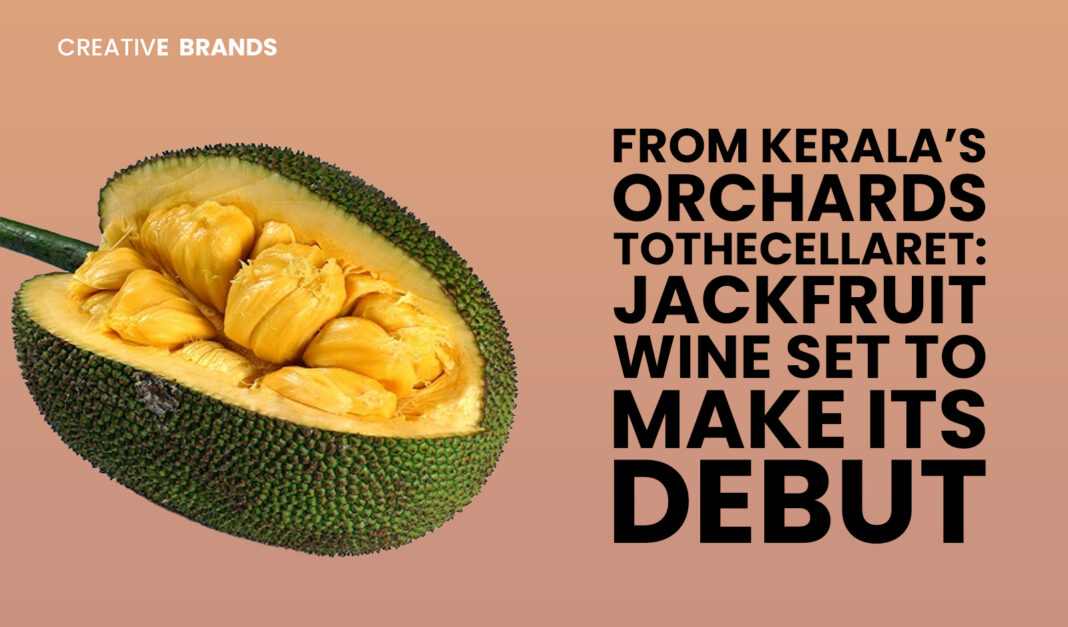
Kerala’s jackfruit is poised for a transformation as winemaker Thomas P O from Kottarakkara prepares to launch the state’s first jackfruit wine. With Bevco outlets set to stock bottles by April, his innovation marks a milestone in Kerala’s horti-wine movement, promising farmers new income and reducing agricultural waste.
Jackfruit, the mushy tropical fruit that hangs in abundance across Kerala’s countryside, has long been relegated to the kitchen or left to rot under trees. But in a few months, it will find itself in a new avatar—neatly bottled, corked, and ready to be poured into glasses as wine. For oenophiles, this is more than a novelty; it is a testament to how tradition and innovation can blend seamlessly. And the man behind this transformation is Thomas P O, a seasoned winemaker from Kottarakkara, whose journey from Vatican City to Kerala’s orchards has culminated in this pioneering effort.
Thomas is no ordinary vintner. An internationally licensed blending expert, he honed his craft in the Vatican, where wine-making is not just a profession but a centuries-old tradition. It was there that he perfected the art of balancing flavours, understanding fermentation, and respecting the delicate chemistry that turns fruit into fine wine. When he returned to Kerala, he carried with him not just technical expertise but a vision—to unlock the potential of local fruits that were often overlooked or underutilised.
His first experiments in Kerala began in 2019, when he started producing non-alcoholic wines. These early ventures did not require a licence from the excise department, allowing him to test the waters and gauge public interest. The response was encouraging, but Thomas knew that the real breakthrough would come when the state embraced the idea of alcoholic wines made from indigenous fruits. That opportunity arrived when the Kerala government pitched the concept of ‘horti-wine’—a category of wines brewed from local fruit varieties. The initiative was designed to provide farmers with additional income streams and reduce agricultural waste, a pressing issue in a state where fruit often goes unsold or unused.
Thomas seized the moment. In 2024, he became the first person in Kerala to obtain a licence to brew horti-wine. Though a handful of others followed suit, less than half a dozen in total, most have yet to venture fully into the business. Thomas, however, wasted no time. His pineapple and grape wines have already made their way to Bevco outlets, earning appreciation from customers who were curious to taste something different from the conventional grape-based varieties. The success of these wines has emboldened him to take the next step—jackfruit wine.
Jackfruit, with its distinctive aroma and fibrous texture, is not the easiest fruit to convert into wine. Its mushy consistency poses challenges in fermentation, and its flavour profile demands careful balancing to avoid overpowering notes. But Thomas, with his Vatican-honed skills, foresaw the potential. He believed that with the right technique, jackfruit could yield a wine that was both unique and palatable, offering a tropical twist to Kerala’s growing wine culture.
By April, Bevco outlets across the state are expected to receive the first batch of jackfruit wine from Thomas’s cellars. For Kerala’s wine enthusiasts, this will be a moment of curiosity and celebration. For farmers, it could mark the beginning of a new chapter in agricultural sustainability. Jackfruit, often left to ripen and rot in backyards, could now become a source of steady income, its value enhanced through fermentation and bottling.
The implications go beyond economics. Jackfruit wine represents a cultural shift, a willingness to experiment with local produce and elevate it to global standards. It is also a nod to Kerala’s evolving palate, where consumers are increasingly open to trying new flavours and embracing innovations rooted in tradition. Thomas’s work embodies this spirit—respecting the fruit’s heritage while reimagining its possibilities.
The journey has not been without challenges. Securing licences, setting up infrastructure, and convincing consumers to try something unfamiliar are hurdles that any pioneer must face. Yet Thomas’s persistence has paid off. His pineapple and grape wines have already proven that horti-wine can find a market in Kerala. The jackfruit variant, he believes, will be equally successful, if not more, given the fruit’s ubiquity and cultural resonance.
For Thomas, this is not just about business. It is about redefining how Kerala views its own produce. In a state where jackfruit is often dismissed as a backyard fruit, his wine elevates it to a product of sophistication, worthy of being savoured in cellarets and dining tables. It is also about creating a sustainable model where farmers benefit, waste is reduced, and consumers enjoy something new.
As April approaches, anticipation builds. Will jackfruit wine win over Kerala’s oenophiles? Will it carve a niche alongside grape and pineapple varieties? Thomas is confident. His bottles, waiting to be uncorked, carry not just fermented fruit but a story—of a man who travelled from Vatican City to Kottarakkara, who saw potential in the overlooked, and who dared to turn mushy jackfruit into fine wine.
In the end, jackfruit wine is more than a beverage. It is a symbol of Kerala’s ability to innovate while staying rooted in its soil. It is a reminder that even the most humble fruit can, with vision and skill, rise to new heights. And it is proof that when tradition meets creativity, the results can be savoured—sip by sip, bottle by bottle.
Discover more from Creative Brands
Subscribe to get the latest posts sent to your email.