

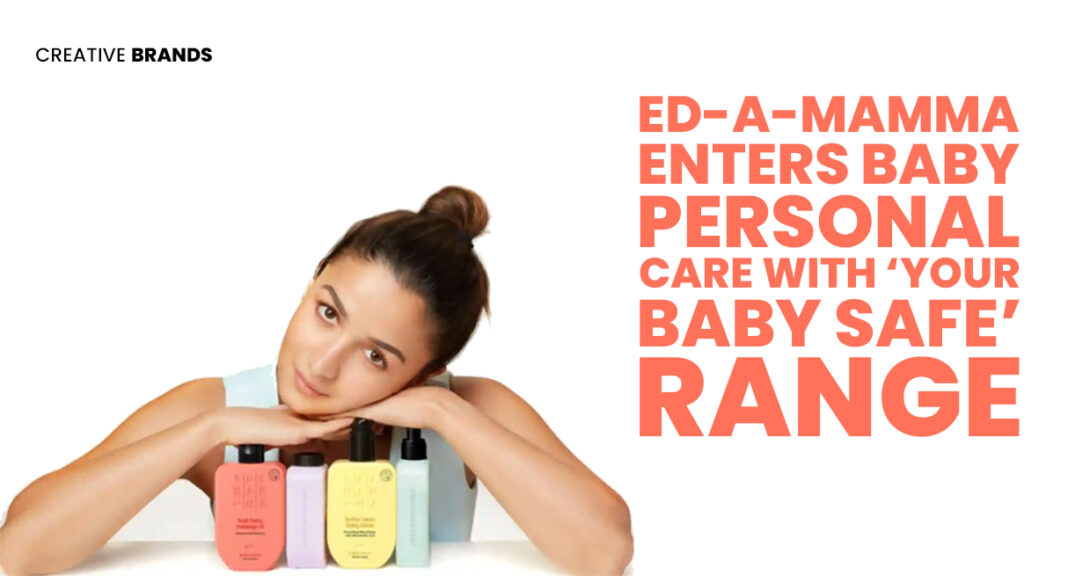
Ed-a-Mamma, founded by Alia Bhatt, has expanded beyond kids’ apparel into baby and children’s personal care with its new ‘Your Baby Safe’ line. Featuring skin, bath, hygiene and laundry products made with plant-based ingredients, the launch positions the brand in a competitive, fast-growing market driven by clean-label demand among urban parents.
Ed-a-Mamma, founded by Alia Bhatt, has expanded beyond kids’ apparel into baby and children’s personal care with its new ‘Your Baby Safe’ line. Featuring skin, bath, hygiene and laundry products made with plant-based ingredients, the launch positions the brand in a competitive, fast-growing market driven by clean-label demand among urban parents.
Ed-a-Mamma, the children’s lifestyle brand founded by actor Alia Bhatt, is expanding its universe. What started as a clothing label for kids has steadily evolved through books, toys, and bedding, and now the brand is stepping into the fast-growing world of baby and kids’ personal care. The move positions Ed-a-Mamma as a multi-category platform for young families rather than just a fashion label — a shift that mirrors how parenting consumption has itself diversified in recent years.
The new range, branded Your Baby Safe, marks the company’s first foray into skincare, bath, hygiene, and laundry products, targeting infants and young children. The lineup includes everyday essentials such as baby wash, baby lotion, massage oil, talc-free powder, anti-rash balm, wet wipes, and laundry detergent. According to the company, the products are dermatologically tested, pediatrician-recommended, hypoallergenic, and made with plant-derived ingredients. They also avoid a growing list of additives that parents increasingly scrutinize: parabens, sulphates, talc, mineral oils, artificial dyes, and other harsh chemicals.
In India’s competitive and emotionally charged baby-care category, this positioning matters. For decades, multinational FMCG players like Johnson & Johnson and Hindustan Unilever have dominated baseline demand for infant skincare and hygiene. Over time, herbal and naturals-focused Indian brands — from Dabur to Himalaya Wellness — have carved out their own share. More recently, digital-native brands have shifted the discourse further toward clean labels, ingredient traceability, and certifications, fueled by millennial parenthood and social media communities that trade advice more freely than ever.
That Ed-a-Mamma is entering the category now says as much about market timing as it does about the brand’s ambitions. The premium baby-care segment has grown steadily in urban centers, driven by rising parental awareness around ingredient safety, new standards of quality set globally, and increased willingness to pay for gentler formulations. The category also benefits from high repeat purchase cycles and strong brand loyalty once trust is established in the earliest years of a child’s life.
Ed-a-Mamma’s bet is that its existing cultural resonance — built through storytelling, sustainability cues, and Bhatt’s own public association with motherhood — can convert into credibility in a space that requires significant parental trust. The challenge will be less about awareness and more about delivering on efficacy, safety, and value at a time when the benchmark for “clean” has been pushed higher by both global and local challengers.
As the brand broadens its footprint, the expansion underscores an emerging pattern within India’s consumer landscape: lifestyle brands designed for children are growing into ecosystem brands for families. Fashion may have been the initial hook, but the long-term retention lies in becoming a partner in daily rituals — from dressing and reading to bath time and bedtime. If Your Baby Safe finds traction, Ed-a-Mamma could further blur the lines between apparel, personal care, and parenting culture, setting up a new kind of full-stack kid/lifestyle play for a generation of digitally connected parents.
Whether this category leap will pay off commercially will unfold over time, but the strategy reflects a clear understanding of where today’s young families are spending — and what they are demanding.
Discover more from Creative Brands
Subscribe to get the latest posts sent to your email.