


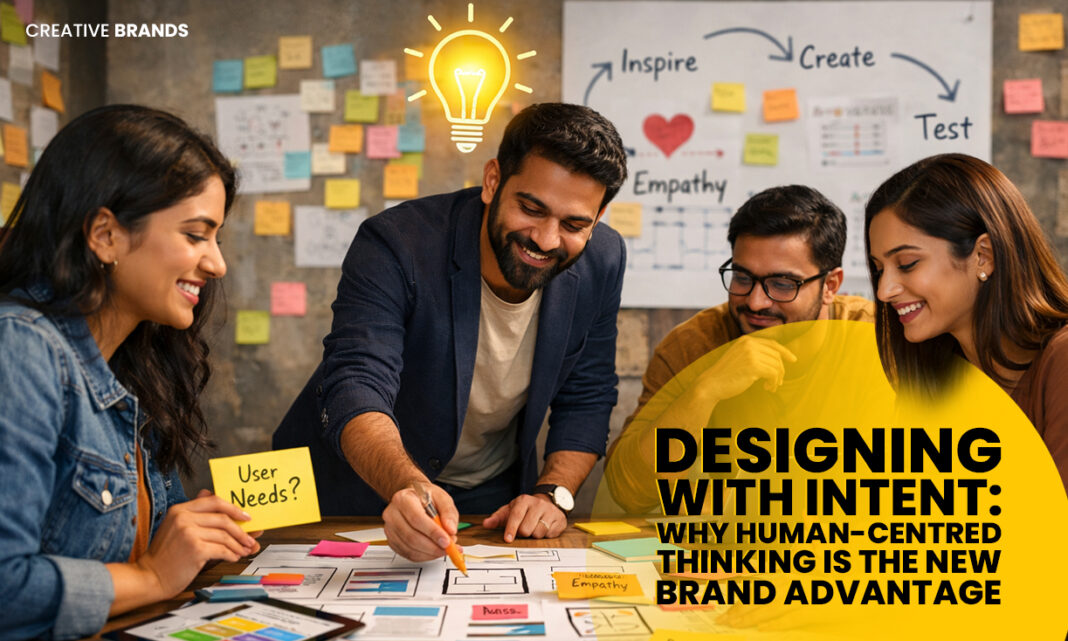
As brands navigate rapid change and rising consumer expectations, design thinking is emerging as a powerful differentiator. Rooted in empathy and experimentation, it helps organisations build meaningful experiences, foster trust and stay relevant—by placing human insight at the heart of innovation, culture, and long-term brand growth.
In an age defined by speed, scale, and relentless disruption, the most powerful ideas are no longer the loudest or the most complex. They are the ones that begin quietly, by observing people, understanding emotions and asking better questions. Design thinking, once confined to studios and creative agencies, has steadily emerged as a defining philosophy for brands seeking relevance, resilience, and meaning. Today, it is not just shaping products and services; it is reshaping how organisations think, lead and connect.
At its heart, design thinking is a return to human fundamentals. It rejects the notion that progress must always start with technology ora top-down strategy. Instead, it insists that innovation begins with empathy—by stepping into the lives of people and seeing the world through their eyes. For brands navigating fragmented attention spans and heightened consumer expectations, this shift has become not just desirable but essential. The most admired brands today are those that listen deeply, respond intuitively and design experiences that feel personal, purposeful and emotionally intelligent.
The growing influence of design thinking can be felt across industries. In boardrooms, conversations are moving beyond spreadsheets and market share charts to include customer journeys, moments of friction and emotional touchpoints. Leaders are discovering that growth does not always come from adding more features or spending more on visibility, but from simplifying interactions and removing pain points customers have silently endured for years. This subtle but profound change in perspective is redefining what brand value truly means.
For consumer-facing brands, design thinking has become a lens through which trust is built. In a marketplace crowded with claims and campaigns, authenticity stands out. Brands that invest time in understanding how people live, feel and decide are better equipped to create solutions that fit naturally into everyday life. Whether it is a financial service that demystifies money for first-time users or a wellness brand that prioritises mental ease over aspiration-driven messaging, human-centred design is quietly becoming the differentiator that matters.
The appeal of design thinking also lies in its flexibility. It is not a rigid framework but a mindset—one that encourages experimentation, iteration and learning. In a brand context, this means being comfortable with prototypes rather than perfection, and conversations rather than conclusions. Campaign ideas are tested early, products are refined through feedback, and failures are treated not as setbacks but as signals. This culture of continuous improvement allows brands to remain agile in a world where consumer behaviour can change overnight.
Startups have long embraced this approach out of necessity. Operating with limited resources and high uncertainty, they rely on rapid learning cycles and close customer engagement. But what is noteworthy today is how legacy brands are adopting the same principles. Large organisations, once slowed by hierarchy and process, are learning to behave more like designers—curious, observant and open to change. Design thinking has become a bridge between scale and sensitivity, helping established brands stay relevant without losing their core identity.
Beyond commerce, the philosophy is influencing how brands engage with society. Purpose-driven storytelling is no longer about grand statements; it is about meaningful action informed by real human insight. Brands applying design thinking to sustainability, inclusion and community engagement are moving past token gestures to create impact that resonates. By involving stakeholders in the design of solutions—be it employees, consumers or communities—brands are building credibility and long-term goodwill.
Education and internal culture are also being transformed through this lens. Progressive organisations are reimagining training, collaboration and leadership development using design-led methods. Workshops replace lectures, co-creation replaces instruction, and curiosity replaces certainty. Employees are encouraged to think like problem-solvers rather than task executors, fostering a sense of ownership and creativity. For brands, this internal alignment is crucial; authentic external experiences can only be built on thoughtful internal cultures.
The relevance of design thinking becomes even more pronounced in the context of emerging technologies. As artificial intelligence, automation and data analytics reshape industries, brands face a critical question: how do they remain human in an increasingly digital world? Design thinking offers the answer by ensuring technology serves people, not the other way around. It reminds brands that while algorithms can optimise, only empathy can truly connect.
Yet, the rise of design thinking also brings responsibility. When reduced to jargon or superficial exercises, it loses its power. True design-led brands understand that empathy cannot be rushed and insight cannot be faked. It requires time, humility and a willingness to unlearn. The brands that succeed are those that embed this philosophy deeply—into decision-making, leadership behaviour and long-term vision.
In India, this approach holds particular significance. With its diversity of cultures, languages and socio-economic realities, the country demands solutions that are nuanced and inclusive. Design thinking encourages brands to move away from one-size-fits-all narratives and towards locally grounded experiences. It values context over convention and people over assumptions, making it especially relevant for brands operating at scale in complex markets.
Ultimately, design thinking is less about design and more about intent. It is about choosing to care—about people, experiences and outcomes. For brands, this mindset transforms the relationship with consumers from transactional to relational. It creates moments that feel intuitive rather than intrusive, thoughtful rather than forceful.
As brands look to the future, the question is no longer whether design thinking belongs in business, but how deeply it is woven into the brand’s DNA. In a world overflowing with noise, the brands that endure will be those that listen first, design with empathy and lead with purpose. In doing so, they will not just keep pace with change—they will shape it, one human insight at a time.
Discover more from Creative Brands
Subscribe to get the latest posts sent to your email.