


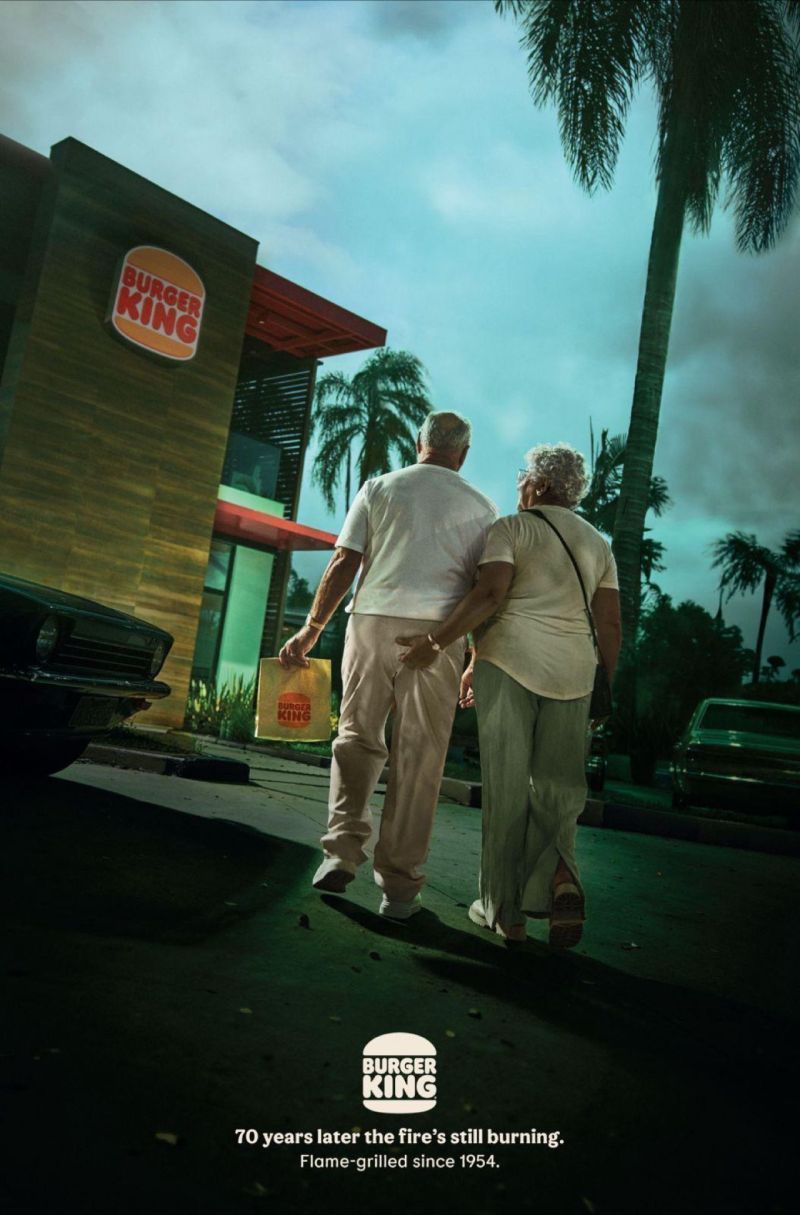
For its 70th anniversary, Burger King surprised the industry by spotlighting seniors instead of Gen Z, reframing longevity as a tender love story anchored in its flame-grilled legacy. The campaign turned age into emotional advantage, proving heritage can feel modern, human, and creatively bold without relying on youth-led trends.
Burger King marked its 70th anniversary with a campaign that was as unexpected as it was emotionally resonant: instead of chasing Gen Z, the fast-food giant placed seniors at the center of its storytelling. In an era where brands often default to youth-led narratives, Burger King’s choice to highlight older love, memory, and longevity signalled a different kind of provocation — one rooted in heritage rather than hype, and authenticity rather than trend-chasing.
The campaign reframed the brand’s own longevity as a love story. Drawing directly from its iconic flame-grilled identity, the work linked the slow burn of flame to the slow burn of lifelong affection, creating a narrative that felt intimate and tender for a brand known for irreverence. The creative leap was subtle but strategic: flame became a metaphor for loyalty, consistency, and the kind of everyday rituals — from shared meals to quiet habits — that last across decades.
What made the campaign especially notable was its refusal to flatten seniors into nostalgia props. Instead, they were protagonists. Burger King cast older couples and individuals who spoke about relationships that had endured and evolved, mirroring the company’s own seven-decade arc. The visuals were warm, stylised, and cinematic without being sentimental to the point of cliché. By leaning into the quiet poetry of ageing — wrinkles, rituals, long silences, knowing glances — the campaign found emotional weight without drifting into melancholy. It was, in its own way, celebratory.
From a marketing perspective, the choice was bold. The category is notoriously youth-driven, and most global brands are racing toward TikTok-native storytelling, meme language, and creator-first activations. Burger King’s detour signalled confidence: a belief that heritage, done right, can be a differentiator. Instead of apologising for being 70, the brand turned age into a selling point. The flame had not dimmed; it had been burning all along.
Thematically, the campaign also reframed the relationship between food and memory. Fast food is often discussed in terms of speed and price, but in this narrative it became a vessel of intimacy. Meals served as markers of time, and the brand became a quiet witness to private histories. The work suggested that longevity in love — whether with a partner or with a favourite burger — is built on small, repeated acts.
The strategic subtext was hard to miss: heritage brands can modernise emotionally without abandoning their roots. Rather than reinventing visual identity or rewriting product stories, Burger King let the fire do the talking. The campaign played with the double meaning of flame — passion and grilling — allowing the brand’s 1954 origin story to feel current without resorting to retro aesthetics.
Reception across industry circles was largely positive, especially among marketers looking for alternatives to Gen Z-first positioning. The work demonstrated that seniors are not merely an “untapped demographic” but a storytelling asset — capable of lending credibility, depth, and humanity to a category that often skews toward disposable culture. For a brand that has lived through cultural shifts in music, fashion, marketing, technology, and dining, featuring seniors was not just conceptually clever; it was statistically accurate. They were, quite literally, the generation that grew up with flame-grilled Whoppers.
Viewed through a competitive lens, the campaign also carved out distinctive emotional territory. While rivals fight over novelty drops, mascot reinventions, or seasonal collaborations, Burger King fought for meaning. At 70, it made the argument that fast food can have legacy — not only in products, but in sentiment.
By the time the anniversary messaging landed, the flame-grilled love story had done its work. Burger King had turned age into advantage, nostalgia into a narrative, and familiarity into a surprise. In choosing seniors over Gen Z, the brand found something far more compelling than virality: it found a way to make heritage feel alive.
Discover more from Creative Brands
Subscribe to get the latest posts sent to your email.