


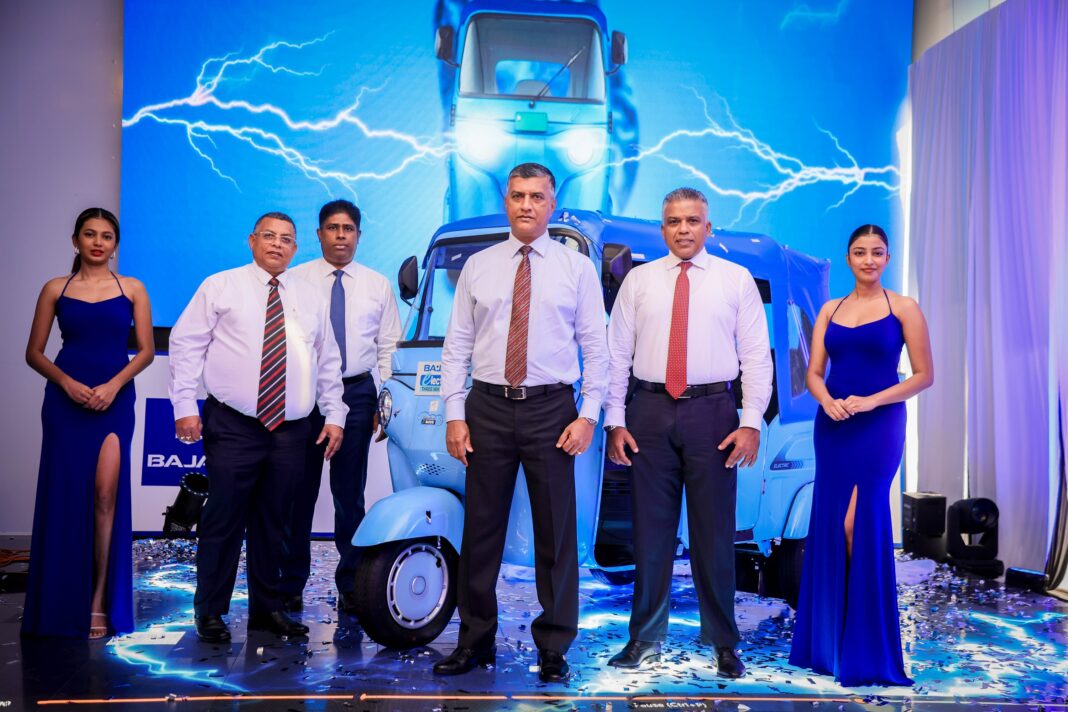
David Pieris Motor Company has launched the Bajaj Electric Three-Wheeler in Sri Lanka, offering a certified range of up to 176 km per charge—the longest in its category. With fast charging, durable engineering and extensive nationwide support, the model aims to accelerate the country’s transition toward sustainable and cost-efficient commercial mobility.
Sri Lanka’s shift toward sustainable transportation gained significant momentum with David Pieris Motor Company (Private) Limited (DPMC) unveiling the BAJAJ Electric Three-Wheeler—an advancement that signals the next chapter in the island’s mobility transformation. As environmental urgency and fuel-cost pressures reshape urban transport, the launch introduces what is positioned as a practical, future-ready and commercially viable electric solution for operators who form the backbone of Sri Lanka’s public mobility network.
Long synonymous with the island’s roadways and trusted for its ruggedness, BAJAJ has remained Sri Lanka’s leading three-wheeler brand for decades. The introduction of its electric avatar marks more than a product upgrade; it represents a strategic push by DPMC to catalyse mainstream electric mobility adoption in a market where affordability and reliability weigh heavily on consumer decisions. For thousands of three-wheeler owners and drivers whose livelihoods depend on predictability and low expenses, the arrival of a high-range electric model addresses longstanding barriers around battery durability, charging convenience and total cost of ownership.
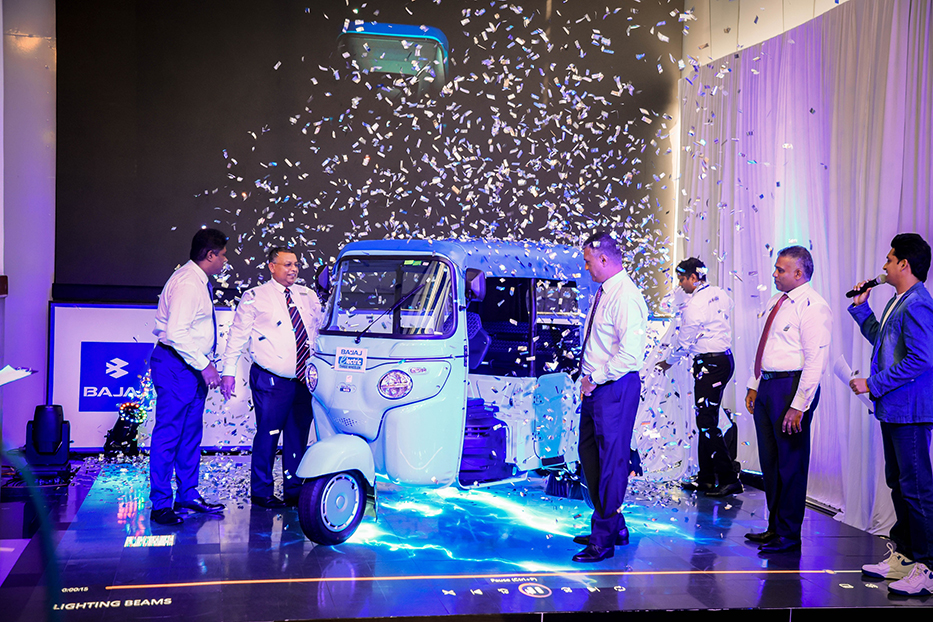
At the heart of the launch is performance—a factor often questioned in relation to electric three-wheelers. The BAJAJ electric model delivers a certified range of up to 176 kilometres on a single charge, currently the longest range available in its category in Sri Lanka. This extended capacity has immediate implications for daily commercial users, reducing range anxiety and enabling longer operating hours without interruptions. Charging flexibility further enhances usability; the onboard charger allows operators to charge from ordinary power outlets at homes, shops or workplaces. A full charge takes approximately 4.5 hours, while 80% can be achieved within three hours—timelines that align comfortably with typical driver schedules, whether overnight or between shifts.
Technical resilience is another defining element of the new vehicle. Its battery system carries an IP67 water resistance rating, critical for a tropical country prone to monsoon rains, street-level flooding, and challenging road conditions. Combined with Bajaj’s heritage of durable engineering, this specification positions the vehicle for real-world Sri Lankan usage rather than idealised urban environments. Safety, often overlooked in this segment, benefits from improved structural elements and electronic assist features such as hill-hold—useful for steep gradients common across the island’s terrain.
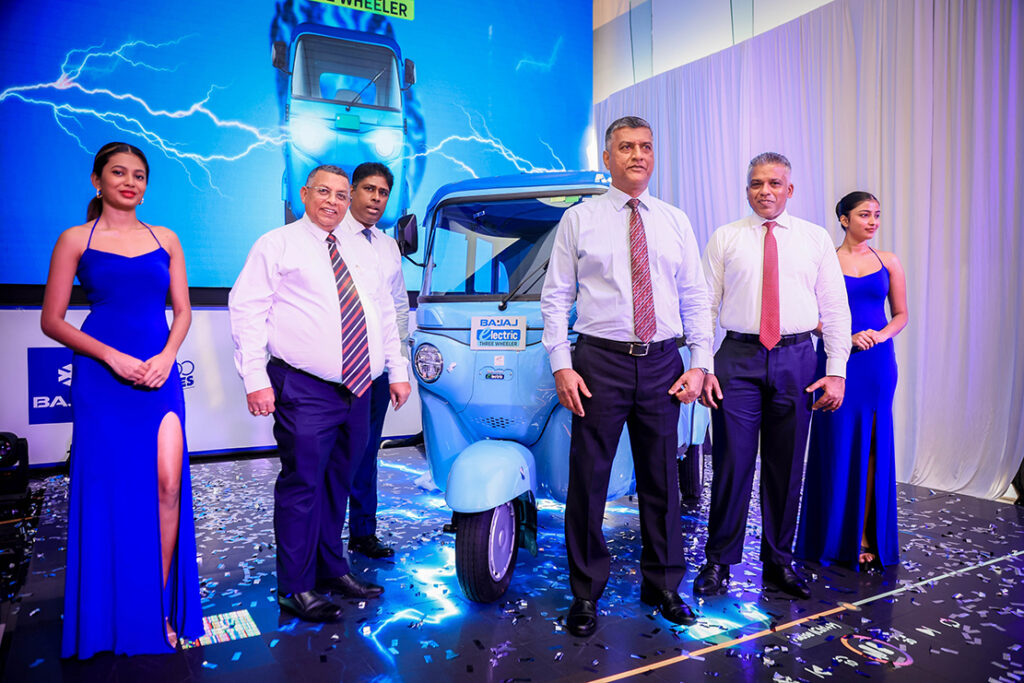
The electric three-wheeler’s cabin and operational design complement its performance credentials. LED lighting enhances visibility and reduces energy draw, while the fully digital instrument cluster brings modernity to a familiar platform. The spacious seating layout supports comfort during long hours on the road—an essential requirement for commercial drivers who often spend 10 to 12 hours in their vehicles. The metal body structure reinforces durability, responding to market expectations for longevity, especially in fleet and rental operations.
Infrastructure and customer support play an outsized role in EV adoption, and DPMC’s nationwide service and spare parts network gives the vehicle a notable advantage. With decades of brand trust behind it and the distinction of being Sri Lanka’s most trusted three-wheeler brand, Bajaj enters the EV segment with a confidence gap already bridged. Bolstering the offering further is 24/7 roadside assistance via 011 4 700551—an assurance that directly addresses fears about breakdowns and battery-related uncertainties that have slowed EV conversions in the informal transport sector.
The debut of the Bajaj electric three-wheeler arrives at a time when national policy, market forces and environmental realities are converging around electrification. For Sri Lanka, the model may accelerate the shift toward cleaner streets, reduced fuel import dependence and more cost-efficient livelihoods for drivers. For global mobility players, it reinforces the island’s potential as a proving ground for innovative transport solutions in developing markets.
Discover more from Creative Brands
Subscribe to get the latest posts sent to your email.