


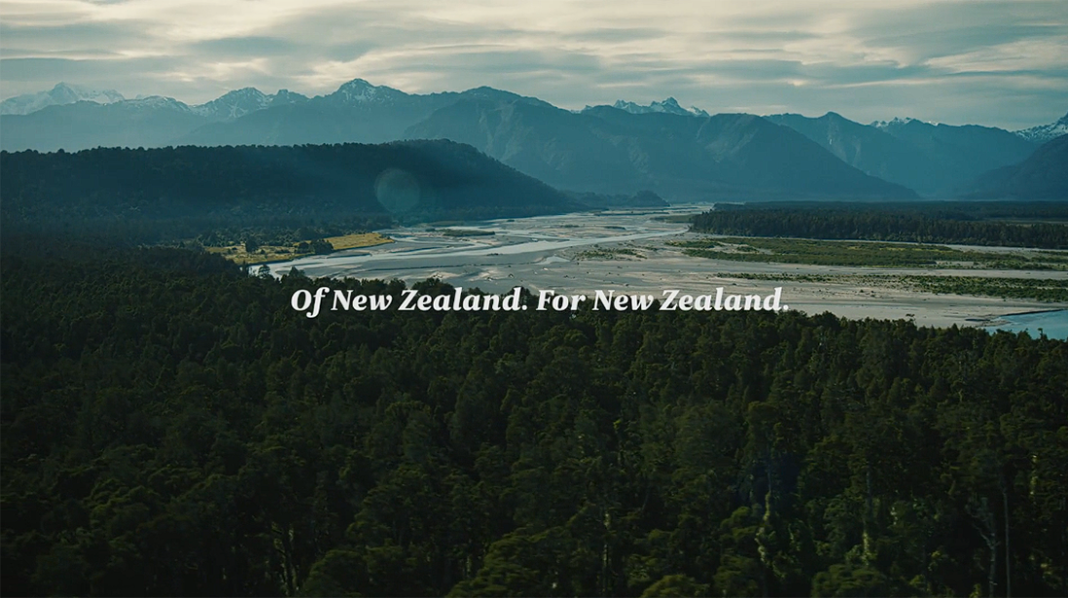
Air New Zealand has launched a new campaign via FCB Aotearoa celebrating the people and communities it connects daily. Featuring real employees and a new rendition of Pōkarekare Ana by Marlon Williams, the film marks the airline’s 85th year with a heartfelt tribute to identity, belonging and national pride.
Air New Zealand has returned to the heart of its identity with a new brand film that places people, place and shared journeys at the centre of its story. Created by FCB Aotearoa and directed by Tom Gould, the campaign is a quietly powerful celebration of the airline’s role in connecting the lives, communities and businesses that make up Aotearoa New Zealand. Rather than focusing on aircraft, destinations or technical prowess, the film turns its lens on the human moments that define what it means to fly home, to leave, and to belong.
At the core of the film are real Air New Zealand employees whose lives are deeply intertwined with the airline’s history. Among them is flight attendant Anne-Maree Tait, who appears alongside her daughter, symbolising the generational ties that many New Zealanders share with the national carrier. Another central figure is Jamie Kean, described fondly as a ground crew legend, whose nearly 50-year association with the airline reflects decades of service, change and continuity. Their presence gives the campaign an authenticity that cannot be manufactured, grounding the narrative in lived experience rather than scripted performance.
The emotional backbone of the film is a newly recorded rendition of Pōkarekare Ana, performed by celebrated Kiwi musician Marlon Williams. The waiata, deeply woven into New Zealand’s cultural memory, has long been associated with Air New Zealand’s storytelling, and its return here feels both nostalgic and contemporary. Williams’ version is restrained and intimate, allowing the melody to breathe while carrying the weight of history, longing and homecoming. As the song unfolds, the film captures moments from across the country, from everyday interactions to quiet, reflective scenes that collectively express the warmth, pride and spirit of New Zealanders.
For Williams, the project is both personal and symbolic. Having spent countless hours flying internationally, he speaks candidly about the emotional shift that comes with boarding an Air New Zealand flight after a long tour, describing it as being “halfway home already.” His connection to Pōkarekare Ana runs deep, shaped by memories of Dame Kiri Te Kanawa’s rendition featured in a 1990s Air New Zealand advertisement. That version left a lasting imprint, and stepping into what he describes as a continuum of storytelling feels like an honour rather than a commercial exercise. For Williams, the song represents not just a musical tradition, but a shared emotional language that speaks to journeys, identity and the creative heritage of the country.
Visually, the film avoids spectacle in favour of sincerity. Produced by The Sweetshop, it moves through landscapes and communities with a sense of patience, allowing moments to linger rather than rush toward a climax. There is a quiet confidence in the way the story unfolds, trusting viewers to recognise themselves in what they see. The airline’s presence is felt through people rather than branding, reinforcing the idea that Air New Zealand is less a corporation and more a connective thread running through everyday life.
That idea is echoed strongly in the words of Jeremy O’Brien, Air New Zealand’s Chief Customer and Digital Officer, who frames the campaign as a heartfelt expression of the airline’s place in the fabric of national life. He emphasises that every day, Air New Zealand’s people play a role in connecting friends, whānau, businesses and communities, whether those journeys are short domestic hops or long-haul flights across the world. In the airline’s 85th year, the campaign becomes both a reflection and a reminder of the generations of Kiwis who have entrusted the airline with their stories, milestones and memories.
O’Brien speaks of responsibility as much as pride, acknowledging the weight that comes with being the national carrier. The campaign, he notes, was designed to tell that story in a way that feels true to who Air New Zealand is, not only as an airline but as a representation of the country itself. In an era where brand communications often chase novelty or disruption, this approach feels deliberately grounded, rooted in values rather than trends.
Central to those values is the airline’s stated purpose of lifting Aotearoa and its people. According to O’Brien, that purpose is carried out every day by Air New Zealand’s own workforce, who bring skill, care and mana to their roles, whether they are in the air, on the ground or behind the scenes. The campaign positions these individuals not as supporting characters, but as the embodiment of the brand itself. Their professionalism and humanity are presented as inseparable, suggesting that operational excellence and cultural integrity can, and should, coexist.
The timing of the campaign is significant. As airlines globally navigate the pressures of economic uncertainty, evolving customer expectations and the lingering impacts of disruption to travel, Air New Zealand’s decision to focus inward, on its people and communities, feels both strategic and sincere. It reinforces trust at a moment when trust is increasingly valuable, reminding audiences that the airline’s strength lies not only in its network or technology, but in the relationships it sustains.
FCB Aotearoa’s creative approach reflects a deep understanding of this context. Rather than attempting to redefine the brand, the agency has amplified what already exists, drawing out emotional truths that resonate widely without losing specificity. The use of te reo Māori, the choice of music, and the casting of real employees all contribute to a narrative that feels culturally respectful and emotionally resonant, without slipping into sentimentality.
The film also subtly acknowledges the changing face of New Zealand, presenting diversity as an organic reality rather than a statement. Communities are shown as they are, connected by movement, work and shared experience. Air New Zealand appears not as a distant facilitator, but as an active participant in these connections, present in moments of departure and return, celebration and routine.
In bringing all these elements together, the campaign serves as both a celebration and a reaffirmation. It honours the past, from iconic songs to decades-long careers, while remaining firmly rooted in the present. It speaks to New Zealanders at home and abroad, to those who fly frequently and those for whom each journey carries particular significance. Above all, it reminds viewers that travel is not just about distance covered, but about the people and places that give those journeys meaning.
As Air New Zealand marks 85 years of operation, the film stands as a thoughtful expression of continuity, care and cultural pride. In choosing to tell its story through the voices and faces of its own people, accompanied by a song that has travelled through generations, the airline has created a piece of communication that feels less like advertising and more like a shared moment of recognition. It is a reminder that at its best, a national carrier does more than move passengers from one place to another; it reflects who a nation is, and who it hopes to be.
Discover more from Creative Brands
Subscribe to get the latest posts sent to your email.