


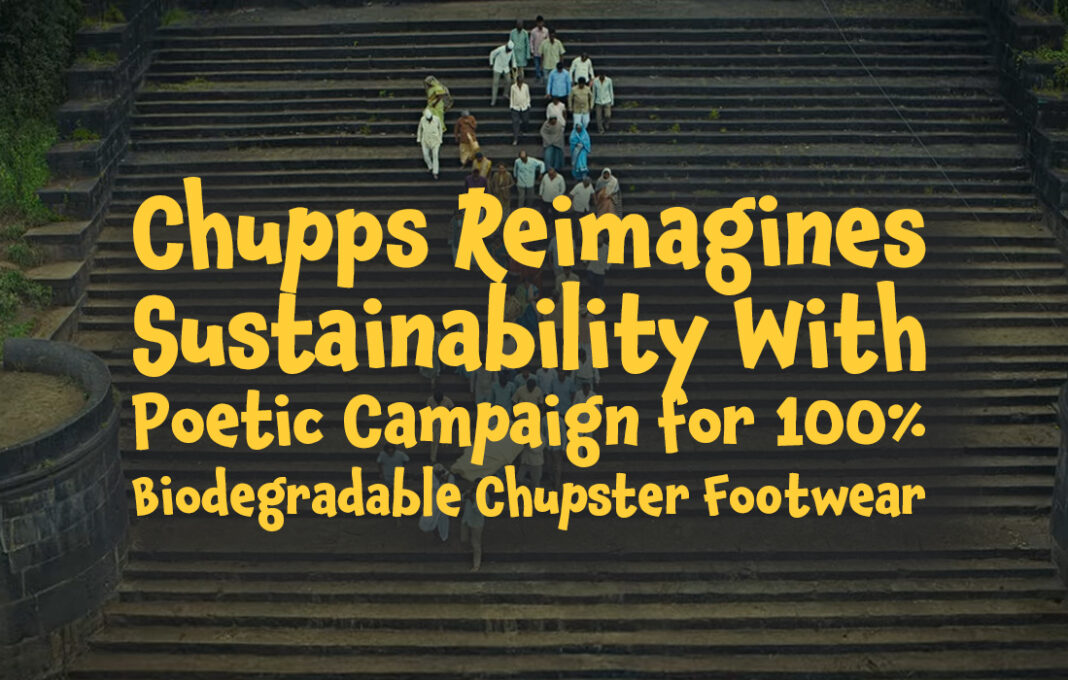
Chupps has launched a powerful four-film multimedia campaign for its 100% biodegradable Chupster range, conceptualised by INTO Creative. Using a poignant life-cycle metaphor, the campaign reframes sustainability as “designing for endings,” urging consumers to rethink fashion, responsibility and the idea of returning gracefully to nature.
What if endings were not about loss, but about returning to where everything began? That question sits at the emotional and philosophical core of Chupps’ latest multimedia campaign, a striking narrative launched with the introduction of its 100 per cent biodegradable Chupster footwear range. In an industry often obsessed with permanence, durability and scale, Chupps has chosen to frame its newest product around impermanence, cycles and humility before nature. Conceptualised by INTO Creative, the four-film ad series uses a bold visual metaphor to draw parallels between the human life cycle and a product designed to completely biodegrade within 24 months of disposal, inviting viewers to reconsider sustainability not as an abstract ideal but as a return to nature’s original intent.
The films unfold with an arresting juxtaposition: the gravity of a funeral set against the understated presence of fashion. Rather than celebrating youth, speed or aspiration, the campaign leans into the inevitability of endings, positioning them as natural, meaningful and even necessary. This framing marks a distinct departure from traditional footwear advertising, which often focuses on performance metrics or lifestyle cues. Instead, Chupps has chosen to humanise product truth by aligning it with a universal human experience. The result is a set of films that are visually compelling, emotionally charged and deliberately unsettling in their honesty.
The narrative ambition of the campaign reflects what Chupps calls its long-standing commitment to “designing for endings.” Over the years, the brand has repeatedly used sustainability not as an add-on but as a starting point, whether through biodegradable billboards or responsibly engineered materials in its footwear. The Chupster range represents a culmination of that thinking: a product designed from inception with its end-of-life in mind. By ensuring that the footwear can return to the earth within two years of disposal, Chupps challenges the dominant logic of consumer goods that prioritises longevity without accountability for environmental aftereffects.
Yashesh Mukhi, founder of Chupps Footwear, frames this philosophy as a response to the accelerating pace of consumption in India. As the consumer industry grows rapidly, he argues, so too does the threat of climate ruin. From his perspective, sustainability cannot be limited to marginal improvements or symbolic gestures. It must involve a fundamental rethinking of responsibility. Planning for the end-of-life of a product, rather than ignoring it, becomes a moral and strategic obligation. For Mukhi, the Chupster range is an attempt to restore balance rather than merely reduce harm, allowing products to exit the world as gracefully as they enter it.
This ethos finds its most powerful expression through the creative approach led by Santosh Padhi, popularly known as Paddy, founder and chief creative officer of INTO Creative. Paddy, who also wrote and co-directed the films, describes the campaign as a deliberate attempt to push the boundaries of sustainability storytelling. In his view, being fashionable today requires bravery and edginess, particularly in categories that have traditionally played it safe. By blending the harsh reality of death with fashion, the campaign seeks to make the idea of biodegradability unforgettable. The shock is intentional, not sensational, serving as a means to make audiences confront the consequences of what they consume and discard.
The four films, though unified by theme, are visually and tonally distinct from one another. Each is shot in the interiors of Satara in Maharashtra, a choice that lends the visuals a raw, organic texture far removed from polished studio settings. The landscapes, faces and rituals captured on camera contribute to a sense of authenticity that reinforces the central message. Nature is not presented as an abstract concept but as a living presence that frames both human life and material existence. The cinematic drama is understated yet immersive, allowing silence, texture and rhythm to carry as much meaning as dialogue.
Adding further depth is the use of lyrics by the late Khwaja Fariduddin Ganjshakar, whose words bring a spiritual and philosophical layer to the films. The poetry reinforces themes of impermanence, return and humility, making the idea resonate beyond the immediacy of advertising. The choice of such lyrics elevates the campaign from product communication to cultural commentary, positioning sustainability within a broader reflection on life, death and continuity.
The production itself was not without challenges. Paddy has acknowledged the crucial role played by his long-time friend Amol Jadhav and his production unit, whose support made it possible to execute the vision despite significant constraints during the shoot. The collaboration highlights the collective effort behind creating work that dares to move away from familiar tropes, relying instead on conviction and trust in the idea.
The campaign’s launch on December 5, World Soil Day, was itself symbolic, reinforcing the connection between the product’s biodegradable promise and the earth it is designed to return to. Running across digital platforms, social media and cinema screens through December and January, the films are intended to reach audiences in multiple contexts, from personal mobile viewing to shared theatrical spaces. Beyond media placements, the campaign also includes plans for interactive community engagements that will explore the philosophy behind designing for endings, signalling that Chupps sees this not as a one-off narrative but as an ongoing conversation.
In an era where sustainability messaging is often diluted by overuse and vague claims, the Chupster campaign stands out for its willingness to confront discomfort. It does not offer easy optimism or quick fixes. Instead, it asks viewers to reflect on their own relationship with consumption and impermanence. By aligning a product’s lifecycle with the most fundamental cycle of human existence, Chupps positions biodegradability not as a technical feature but as an ethical stance.
The risk, of course, lies in how such a narrative is received. Funerals and death are rarely associated with footwear brands, and the decision to merge these themes could alienate as much as it engages. Yet that risk appears central to the brand’s intent. Chupps seems less interested in broad appeal than in meaningful impact, betting that audiences are ready for more honest conversations about sustainability and responsibility.
As consumer brands in India grapple with the tension between growth and environmental accountability, campaigns like this signal a potential shift in how product stories are told. Rather than promising endurance at all costs, Chupps offers an alternative vision where value lies in knowing when and how something should end. In doing so, it reframes sustainability as an act of respect: for the earth, for future generations and for the natural cycles that precede and outlast us all.
Discover more from Creative Brands
Subscribe to get the latest posts sent to your email.