


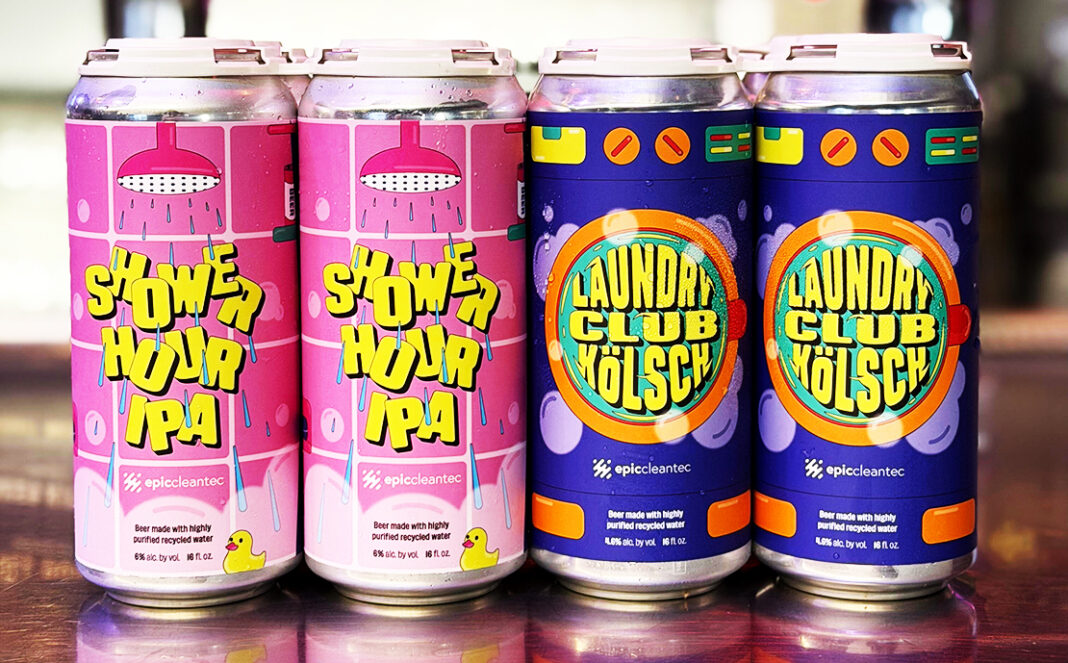
Epic Cleantec has unveiled two beers—Shower Hour IPA and Laundry Club Kölsch—crafted using highly purified recycled water from showers and laundry systems. By turning greywater into premium brews, the company hopes to change public perceptions around water reuse. CEO Aaron Tartakovsky says the initiative showcases how scalable reuse can support a sustainable future.
When people imagine the origins of a good beer, most picture pristine mountain springs, centuries-old wells, or crystal-clear lakes feeding the brewing kettles. What they don’t imagine—at least not yet—is their morning shower. But in a world grappling with climate uncertainty, water scarcity and the urgent need for sustainable systems, a bold idea from Epic Cleantec is inviting drinkers to rethink everything they thought they knew about what makes a quality beer. And surprisingly, it tastes like the future.
Epic Cleantec, a San Francisco–based water reuse innovator, has launched two craft beers brewed using water most people would never expect to drink—highly purified recycled water sourced directly from showers and laundry systems. The two brews, playfully named Shower Hour IPA and Laundry Club Kölsch, are the result of a collaboration between Epic and local brewers willing to challenge assumptions and help ignite a culture shift. But this isn’t a stunt or a marketing gimmick. It’s part of a broader mission to help cities rethink how water moves through their buildings and how much of it needlessly goes to waste.
At the heart of the experiment is a simple question: If water can be purified to exceptional standards using advanced onsite reuse technologies, why shouldn’t it be used to brew great beer?
Epic Cleantec’s system begins in high-rise buildings, where greywater—that is, water from showers, sinks, and laundry—flows into a dedicated purification system instead of heading straight to the sewer. It is then processed through multiple stages of treatment employing ultrafiltration, biological treatment, reverse osmosis and UV disinfection. The result, according to Epic, is water that is “exceptionally pure,” cleaner than many conventional municipal sources and ideal for applications where water quality is paramount—like brewing.
“We’re giving people a fun, approachable way to see recycled water in a new light,” says Aaron Tartakovsky, CEO and co-founder of Epic Cleantec. “If one great beer can change minds, imagine the impact when this technology scales.” And he isn’t exaggerating. The beers, far from novelty items, have been praised by tasters for their clarity, crispness and flavor. Shower Hour IPA has the bright, citrusy notes craft fans love, while Laundry Club Kölsch is clean, light and refreshing—exactly what you’d expect from a well-made German-style Kölsch.
What sets this initiative apart is not just the science, but the psychology behind it. Water reuse has long struggled with a cultural hurdle often referred to as the “yuck factor.” Even with world-class purification, many people are uneasy about drinking water that once flowed down a drain. But Tartakovsky believes that relatable, enjoyable experiences—like sipping a cold beer—can dismantle that discomfort more effectively than technical reports or public policy campaigns.
“Innovation isn’t just about the technology,” he says. “It’s about bringing people along. Once they taste the beer and understand the process, the hesitation disappears.” Indeed, brewers who have worked with Epic’s water describe it as remarkably consistent and clean, often more predictable than the municipal water they usually rely on. The idea of using water that previously touched soap suds or shampoo lather fades away when the final product is poured—crisp, aromatic and decidedly drinkable.
For Epic Cleantec, the beers serve as ambassadors for a much larger vision: transforming the way cities think about water management. Today, most buildings use water once and send it to centralized treatment plants miles away, losing energy, resources and opportunities for efficiency. Epic’s onsite systems flip that model by capturing, treating and reusing water within the building itself. This approach can reduce potable water demand by as much as 95 percent, relieve pressure on aging infrastructure and help cities adapt to population growth and climate challenges.
The timing could not be more urgent. Water stress is no longer a distant threat but a lived reality for communities worldwide. Extreme weather, megadroughts and unpredictable rainfall patterns have forced governments and urban planners to consider decentralized solutions that make cities more resilient. In this landscape, Epic Cleantec’s work feels less like a novelty and more like a glimpse into the infrastructure of tomorrow.
Still, changing public perception is critical, and the beer project demonstrates how creativity can reshape conversations around sustainability. Food and drink have always played a powerful role in cultural shifts, and Epic’s brews cleverly use this to their advantage. By turning recycled water into something enjoyable and sharable, they turn a technological concept into a sensory, emotional experience.
The beers also weave into a larger narrative emerging from the craft brewing world: brewers, particularly smaller ones, have been searching for ways to reduce water use, cut waste and shrink their environmental impact. Traditional brewing can consume several gallons of water for every gallon of beer produced, a ratio that is increasingly difficult to justify in drought-prone regions. Epic Cleantec’s collaboration hints at an alternative future where water reuse becomes not only feasible but a point of pride among sustainability-minded brewers.
But beyond the technical ingenuity and environmental arguments, the story of Shower Hour IPA and Laundry Club Kölsch is a story of imagination. It challenges the belief that solutions to big problems must be complicated or unappealing. It replaces fear with curiosity, turning something as mundane as shower water into a symbol of possibility.
Visitors who sample the beers are often surprised to learn the origin of the water only after tasting them. As one early taster remarked at a launch event, “If this is what recycled water tastes like, we should’ve started drinking it years ago.” That kind of reaction is exactly what Epic Cleantec hopes to cultivate—not just acceptance, but enthusiasm.
The beers are not yet sold at scale, but the company sees them as catalysts rather than commercial products. They have already sparked conversations in urban planning circles, sustainability conferences and craft brewing forums. And as more cities mandate onsite water reuse in new developments, the public will inevitably encounter recycled water in their daily lives, whether they realize it or not.
“If we can get people to trust recycled water in beer,” Tartakovsky says with a smile, “imagine how easy it will be for them to trust it in everything else.”
In a way, Shower Hour IPA and Laundry Club Kölsch are less about beverages and more about future-proofing the planet. They’re reminders that innovation often begins with a single sip, a single idea, a willingness to rethink the ordinary. They’re also reminders that sustainability doesn’t have to be dry or intimidating—it can be flavorful, bold and fun.
Beer drinkers have long cherished the drink for its ability to bring people together. Now, Epic Cleantec is using that same spirit to bring them into the conversation about water, resilience and the choices that will shape the next century. With every pour of recycled-water beer, they’re proving that progress can be refreshing—literally.
And maybe, just maybe, the next time someone steps out of a warm shower or switches off the washing machine, they’ll see not waste, but potential. They might even imagine it bubbling happily in a pint glass, representing a future where nothing is wasted and everything, even the most ordinary drop, can be transformed.
Discover more from Creative Brands
Subscribe to get the latest posts sent to your email.