


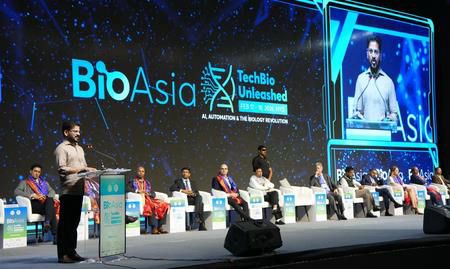
Trade and Investment Queensland is leading a 17-company delegation to BioAsia 2026 in Hyderabad, marking its third consecutive year at the conference. The visit underscores deepening Australia–India collaboration in clinical research, advanced therapeutics, medtech, and AI-driven healthcare, supported by growing bilateral trade and innovation partnerships.
As Asia’s largest life sciences conference opens in Hyderabad, Queensland is making a confident return to India with a strong message: the future of global healthcare innovation will be built through deeper, cross-border collaboration. Trade and Investment Queensland (TIQ), the business agency of the Government of Queensland, is leading a 17-company delegation to BioAsia 2026, marking its third consecutive year at the marquee event and reinforcing the state’s strategic focus on India’s rapidly evolving life sciences ecosystem.
The delegation’s presence signals more than continuity; it reflects an expanding and increasingly sophisticated partnership between Queensland and India across biotechnology, clinical research, medical devices, digital health, and AI-led healthcare innovation. What began as export-oriented engagement has evolved into a co-creation model, where both regions contribute complementary strengths to a shared innovation agenda.
The shift mirrors broader changes in global supply chains, particularly under the widely adopted “China Plus One” strategy. As multinational companies diversify manufacturing and research footprints, India has emerged as a key strategic partner—not merely as a large market, but as a hub for innovation, clinical development, and advanced manufacturing. Queensland, with its strong research base and established clinical trial infrastructure, sees this transformation as an opportunity for deeper integration.
India today contributes over 4 per cent of global clinical trial volume and is projected to grow at a compound annual growth rate of 8 per cent between 2025 and 2030. Its vast, diverse, and largely treatment-naïve patient population makes it an attractive destination for large-scale, late-phase trials. At the same time, Australia has carved out a niche in early-phase research, offering streamlined regulatory pathways and faster recruitment timelines. Together, the two regions form a complementary clinical research corridor across the Asia-Pacific.
The numbers underscore this momentum. In 2024, India emerged as the world’s third-largest clinical research destination, registering an estimated 18,000 new clinical trials in a single year—a 50 per cent increase over the previous year. Meanwhile, Australia recorded 3,200 new clinical trials in 2025, further consolidating its leadership in Phase 1 research. For Indian companies seeking trusted partners in early-stage innovation and regulatory excellence, Queensland presents a compelling proposition.
Abhinav Bhatia, Senior Trade & Investment Commissioner – South Asia at Trade and Investment Queensland, believes the relationship is entering a more mature phase. “India is rapidly shifting from being a volume-driven generics manufacturer to a sophisticated manufacturer of complex molecules and multi-step chemical processes,” he said. “As this journey gains momentum, engagement with Queensland is a logical next step. Queensland’s research capabilities, mature clinical trials environment, and innovation ecosystem are a symbiotic fit for India’s capabilities and manufacturing prowess.”
This evolution is also anchored in a supportive policy framework. The signing of the Australia-India Economic Cooperation and Trade Agreement (ECTA) has provided fresh impetus to bilateral economic engagement, easing trade barriers and facilitating smoother investment flows. In high-value sectors such as health and life sciences, the agreement has created a more enabling environment for joint research, technology transfer, and commercial partnerships.
Mary Overington, Trade and Investment Commissioner at Austrade, emphasised the strategic depth of the broader partnership. “Australia and India share a strategic partnership that is becoming even stronger in the domain of science, innovation, and advanced manufacturing,” she noted. “The ECTA has further strengthened this partnership by facilitating smoother investment flows and deeper institutional partnerships. The convergence of life sciences and health is one where we are prioritising our collaboration to leverage Australia’s regulatory and research excellence with India’s scale and innovation strength.”
The Queensland delegation to BioAsia 2026 reflects this convergence in action. The 17 participating organisations include research institutions, universities, clinical research organisations, and life sciences companies. Over the course of the conference, they are engaging Indian stakeholders across four priority areas: clinical trials and translational research; advanced therapeutics and biologics; medtech and digital health; and AI-driven health solutions.
Translational research—bridging laboratory discoveries with clinical applications—is a particular focus. Queensland’s universities and research institutes have developed strong capabilities in taking early-stage discoveries through proof-of-concept and into first-in-human studies. For Indian pharmaceutical and biotech companies scaling up innovation pipelines, such expertise can significantly reduce development timelines and risk.
Advanced therapeutics and biologics represent another growth frontier. As India’s pharmaceutical industry moves up the value chain into complex biologics and speciality molecules, partnerships with Queensland-based research centers and biotech firms offer access to advanced platforms, regulatory insights, and global commercialisation pathways. The collaboration has the potential to accelerate the development of next-generation therapies while ensuring cost-effective manufacturing and global distribution.
The medtech and digital health segments are equally dynamic. With India’s digital health ecosystem expanding rapidly—supported by national health data infrastructure and a vibrant startup landscape—Queensland companies are exploring opportunities in diagnostics, remote monitoring, and integrated care solutions. AI-driven healthcare applications, from predictive analytics to clinical decision support, are emerging as a shared priority area, aligning with both regions’ ambitions to harness data for improved patient outcomes.
Beyond formal meetings and panel discussions, the visit is also about building long-term relationships. Several Queensland companies are already operating in India, contributing to investment and job creation in areas such as diagnostics, biologics services, and health testing. Their on-ground experience provides a foundation for scaling collaboration and demonstrating the tangible benefits of cross-border engagement.
For India, the partnership with Queensland and Australia offers access to world-class research infrastructure, transparent regulatory systems, and pathways to global markets. For Queensland, India provides scale, manufacturing depth, and an increasingly innovation-driven pharmaceutical sector eager to collaborate. Together, they are positioned to shape a more resilient and diversified Asia-Pacific life sciences landscape.
BioAsia 2026 serves as a fitting platform for this renewed commitment. As researchers, policymakers, investors, and industry leaders converge in Hyderabad, the Queensland delegation’s consistent presence over three consecutive years signals intent and reliability. It reflects a long-term strategy rather than episodic engagement.
At a time when global healthcare systems are grappling with rising costs, supply chain disruptions, and the need for faster innovation cycles, such partnerships take on added significance. By combining Queensland’s research excellence with India’s manufacturing scale and clinical trial capacity, the collaboration promises not only commercial gains but also broader advances in healthcare access and outcomes.
As the conference unfolds, the message from Queensland is clear: the next chapter of life sciences innovation will be written through shared expertise, mutual investment, and sustained partnership. In returning to India for the third consecutive year, Trade and Investment Queensland is reaffirming that the relationship is no longer exploratory—it is strategic, expanding, and firmly focused on the future of global health.nects Queensland companies with global opportunities and fosters collaborations that drive innovation and sustainable growth.
Discover more from Creative Brands
Subscribe to get the latest posts sent to your email.