


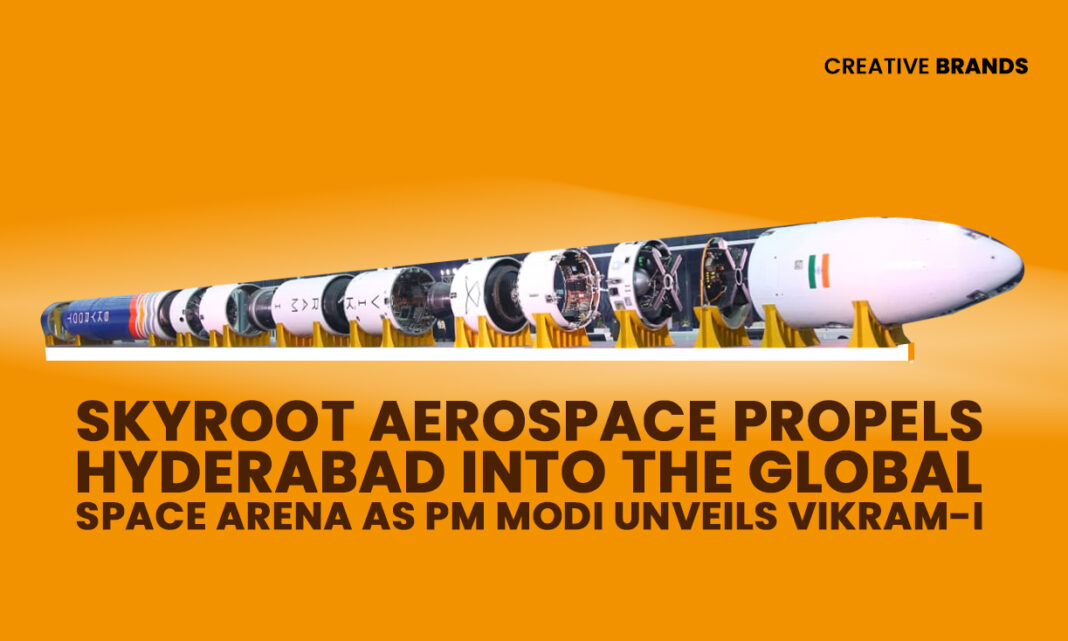
Skyroot Aerospace’s Infinity Campus inauguration and the unveiling of Vikram-I mark a historic leap for India’s private space sector. With a 200,000 sq ft facility and orbital launch capability, the Hyderabad startup positions the region as a hub for advanced aerospace innovation, job creation, and high-throughput rocket production powering India’s commercial space future.
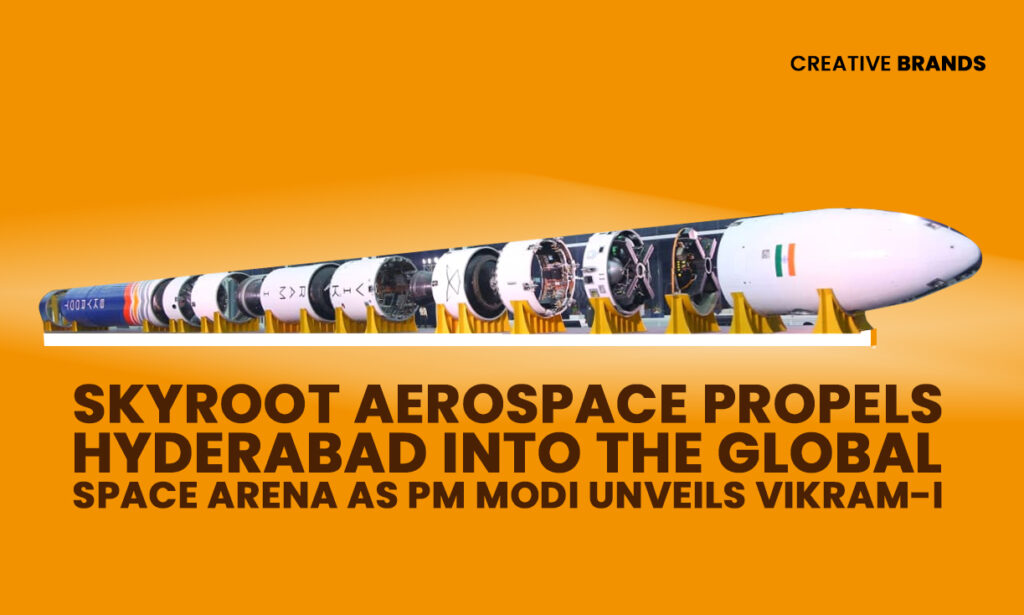
Skyroot Aerospace’s latest breakthrough marks not just a defining moment for the company but a transformative chapter for India’s rapidly evolving private space industry. When Prime Minister Narendra Modi virtually unveiled Vikram-I—India’s first privately developed orbital launch vehicle—and inaugurated Skyroot’s expansive Infinity Campus in Hyderabad, it signaled a new era in the nation’s space ambitions. For decades, India’s space narrative has been led by ISRO and driven by publicly funded missions. With Skyroot’s achievement, the spotlight has widened to include private players who are now shaping the trajectory of the country’s technological future. Vikram-I is more than a rocket; it is a symbol of what entrepreneurial vision, engineering prowess, and national support can accomplish when aligned with purpose.
The unveiling of Vikram-I puts Skyroot on the map as a global contender in the booming commercial satellite launch industry. Designed to carry satellites into orbit, the vehicle represents a leap from the company’s earlier success in 2022, when Skyroot launched Vikram-S, the first privately built sub-orbital rocket in India. That mission had already positioned the startup as a pioneer in the emerging private space ecosystem. Vikram-I now elevates the company to an entirely new class—orbital launch capability. This transition, achieved in record time, underscores the momentum of India’s private aerospace sector driven by young talent and bold ambition.
A central pillar of this progress is Skyroot’s newly inaugurated Infinity Campus in Hyderabad, a sprawling 200,000-square-foot facility with integrated end-to-end capabilities. This is not just an office or a factory—it is a self-contained ecosystem where rockets are imagined, designed, built, integrated, and tested under one roof. Housing advanced manufacturing units, assembly lines, testing labs, and research facilities, the campus has been engineered to support Skyroot’s audacious goal: to build one orbital rocket every month. Such a high-throughput production model positions the company among the few globally capable of consistent, scalable launch output, aligning with the rising global demand for satellite deployments across communication, security, climate monitoring, navigation, and commercial applications.
Hyderabad’s ascent as a key player in India’s aerospace revolution is equally noteworthy. The city, already recognized for its IT prowess, pharmaceutical dominance, and innovation-driven economy, now stands at the center of India’s emerging private space race. Skyroot’s Infinity Campus strengthens the region’s technological landscape, creating opportunities for high-skilled employment in areas such as mechanical engineering, avionics, materials science, and propulsion systems. As India witnesses a surge in space-tech startups, Hyderabad’s ability to host and nurture them is becoming a defining advantage. With the Infinity Campus, the city is not just providing infrastructure; it is cultivating a vibrant ecosystem where ambitious ideas can take flight.
The impact extends beyond infrastructure and economics. Skyroot’s success taps into a deeper narrative of India’s young engineering talent pushing the boundaries of possibility. The company was founded by former ISRO scientists but is powered by a workforce that blends experience with youthful energy. The rapid progress from sub-orbital to orbital-class vehicles illustrates how innovation accelerates when expertise is complemented by startup agility. In a global landscape where private companies such as SpaceX, Rocket Lab, and Blue Origin have rewritten the playbook for space access, Skyroot is positioning India as a credible competitor in commercial space transportation.
Vikram-I itself embodies this spirit of disruption. Built with advanced carbon-fiber structures, 3D-printed engines, and modular manufacturing approaches, the rocket represents modern engineering executed with precision. Its design optimizes performance while controlling production costs, a critical advantage in the fiercely competitive launch market. Furthermore, its small-to-medium payload capacity aligns with current global trends where microsatellites, cubesats, and small satellite constellations are driving demand. This makes Vikram-I strategically positioned to serve domestic and international customers seeking reliable, affordable access to orbit.
Prime Minister Modi’s participation in the unveiling amplifies the national importance of Skyroot’s milestone. His endorsement signals the government’s growing confidence in private space enterprises as strategic partners in advancing India’s technological leadership. Policy reforms in recent years—including the establishment of IN-SPACe and liberalization of the space sector—have paved the way for startups like Skyroot to innovate more freely, collaborate more closely with ISRO, and attract significant private investment. The result is a thriving ecosystem where private capabilities are evolving in tandem with public-sector expertise.
Skyroot’s achievement is a manifestation of these policy shifts bearing fruit. The journey from Vikram-S to Vikram-I is not merely a progression of rocket models; it is evidence of what becomes possible when talent, investment, and forward-thinking regulation converge. It also signals a shift in the broader narrative of India’s space ambitions. No longer confined to large national missions alone, the country is now expanding its footprint in commercial space services, satellite launch markets, and global collaborations led not only by ISRO but by innovative private enterprises.
The Infinity Campus itself is poised to become a crucible for future breakthroughs. Its production capacity, research depth, and collaborative environment make it a magnet for talent and partnerships. As global interest in small-satellite launches surges, companies like Skyroot are well placed to benefit—especially with a dedicated facility capable of consistent, high-quality manufacturing. This creates long-term potential for export revenue, international contracts, and strategic collaborations that further elevate India’s profile in the global space economy.
For the Telangana region, Skyroot’s success embodies the promise of next-generation industries taking root in the state. The aerospace sector, once concentrated in a few traditional hubs, is now unfolding across new geographies. Hyderabad’s evolution into a center for space-tech innovation is a testament to its infrastructure, talent pool, and forward-looking governance. The Infinity Campus is expected to catalyze active collaborations with local universities, research institutes, and manufacturing partners, further strengthening the regional technology ecosystem.
Ultimately, Skyroot Aerospace’s milestone is not simply about one company or one rocket—it is about what it symbolizes for India’s future in space. Vikram-I represents the confidence of a new generation, the rise of private enterprise, and the expanding horizons of national ambition. It demonstrates that India’s next era of space achievements will emerge not only from government agencies but also from the ingenuity of startups willing to think boldly and execute relentlessly.
As Skyroot prepares for the next phases of testing, customer onboarding, and launch readiness, its journey stands as a beacon for many more startups poised to follow in its footsteps. With Hyderabad as its launchpad and India as its proving ground, Skyroot is helping rewrite the script of the country’s space story—one rocket, one facility, and one breakthrough at a time.
Discover more from Creative Brands
Subscribe to get the latest posts sent to your email.