


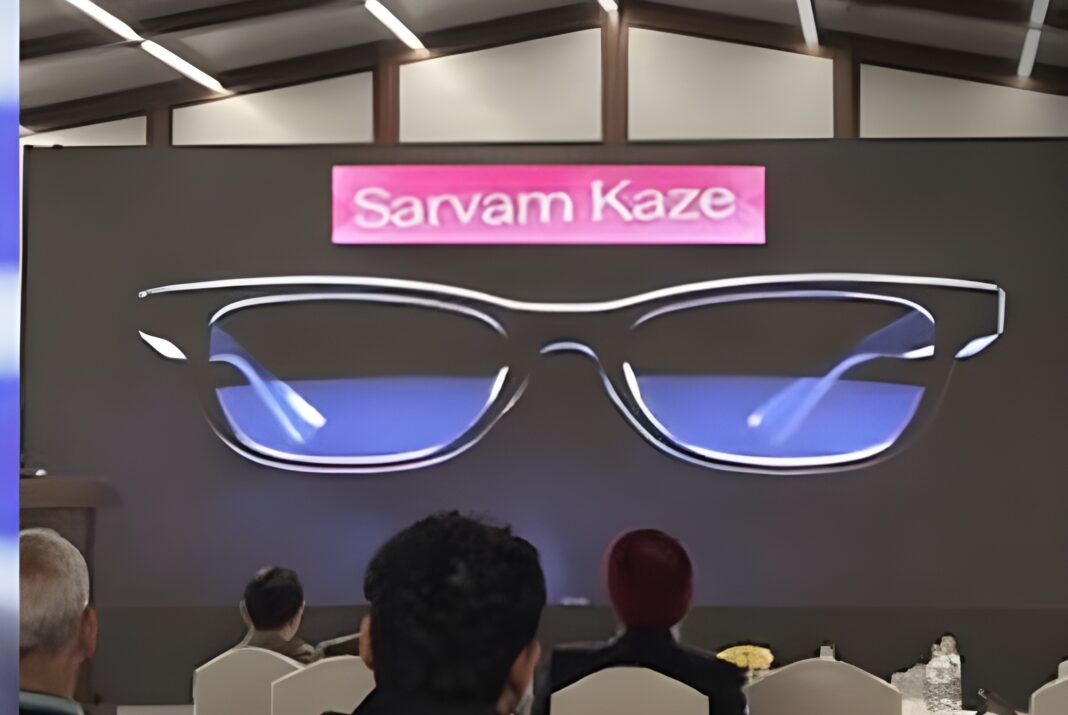
Sarvam AI has launched its debut hardware product, ‘Sarvam Kaze’, a wearable device powered by artificial intelligence. Announced by founder Pratyush Kumar, the device shifts AI from screens to real-world interaction. Prime Minister Narendra Modi was the first user, underscoring India’s growing role in AI innovation and hardware development.
Sarvam AI, the Indian artificial intelligence startup known for building large language models, has unveiled its first hardware product—a wearable device called Sarvam Kaze. The launch marks a significant pivot for the company, moving beyond software APIs into the complex and capital-intensive world of consumer hardware. Founder Pratyush Kumar announced the development on social media platform X, describing it as a step towards bringing the company’s AI models “into your hands with our devices designed and built here in India.”
The announcement carried symbolic weight, as Kumar revealed that the first person to try the device was Prime Minister Narendra Modi. That gesture not only underscored the government’s interest in emerging technologies but also positioned Sarvam’s innovation as a matter of national pride. For a startup that has so far been known for its software capabilities, the leap into hardware represents both ambition and risk.
Sarvam Kaze is designed to listen, understand, respond, and even capture what the user sees. The company claims it represents a shift in how people interact with AI—moving away from screen-based engagement to something wearable, immersive, and seamlessly integrated into daily life. In essence, Kaze aims to make AI less of a tool accessed through devices and more of a companion that exists alongside the user in real time.
Kumar emphasized that the device is not just a consumer gadget but a platform. Developers will be able to build custom experiences for Kaze using Sarvam’s ecosystem, hinting at the creation of an app marketplace around the hardware. This approach mirrors the strategies of global tech giants who have sought to combine proprietary hardware with developer-driven ecosystems, ensuring that devices evolve beyond their initial capabilities.
Globally, only a handful of AI-focused companies have attempted such integration. Sarvam now joins the ranks of startups and tech majors experimenting with AI wearables, including Meta’s Ray-Ban smart glasses, Lenskart’s B Smartglasses, Humane’s AI Pin, and Rabbit’s R1. Each of these products represents a different vision of how AI can be embedded into everyday life, whether through eyewear, pins, or handheld devices. Sarvam’s Kaze adds an Indian voice to this conversation, signaling that the country’s AI ecosystem is ready to compete on the global stage.
The move, however, is not without challenges. Building hardware is notoriously difficult compared to offering software APIs. Hardware development requires significant capital investment, supply chain management, and operational expertise. For startups, the risks are amplified: production costs, distribution hurdles, and consumer adoption all pose potential obstacles. Sarvam’s decision to enter this space suggests confidence in its technological foundation and a willingness to take on the complexities of scaling hardware.
The timing of the launch is also notable. AI wearables are still in their infancy, with most products struggling to define clear use cases that resonate with mainstream consumers. While enthusiasts and early adopters may be drawn to the novelty, widespread adoption depends on whether these devices can deliver tangible value in everyday scenarios. Sarvam Kaze’s promise of listening, understanding, responding, and capturing what the user sees suggests potential applications in productivity, accessibility, and entertainment. Yet, the real test will be how seamlessly it integrates into routines without feeling intrusive or redundant.
For India, the launch carries broader implications. The country has long been seen as a hub for software talent, but hardware innovation has often lagged behind. By designing and building Kaze in India, Sarvam is making a statement about local capability and ambition. It reflects a growing confidence among Indian startups to not only participate in global technology trends but to shape them. The involvement of Prime Minister Modi as the first user further amplifies this narrative, aligning the product with national aspirations of technological leadership.
Sarvam’s journey into hardware also highlights the evolving nature of AI startups. Initially, many focused on building foundation models and offering them as APIs to developers and enterprises. This approach was relatively low-cost and scalable. However, as competition in the software space intensifies, differentiation becomes harder. By creating proprietary hardware, Sarvam is carving out a unique identity—one that ties its models directly to consumer experiences. This strategy could help the company stand out in a crowded market, though it also raises the stakes considerably.
The future of Sarvam Kaze will depend on several factors: the robustness of its technology, the appeal of its design, the strength of its developer ecosystem, and the company’s ability to manage the operational demands of hardware. If successful, it could establish Sarvam as a pioneer in India’s AI hardware landscape, inspiring other startups to follow suit. If not, it will serve as a cautionary tale about the risks of venturing beyond software.
For now, the launch has generated excitement and curiosity. Sarvam has positioned Kaze as more than just a device—it is a vision of how AI can move from abstract algorithms to tangible, wearable companions. Whether this vision resonates with consumers remains to be seen, but the boldness of the move is undeniable. In stepping into hardware, Sarvam has signaled that it is not content with being a participant in the AI revolution; it wants to be a leader shaping its future.
Discover more from Creative Brands
Subscribe to get the latest posts sent to your email.