


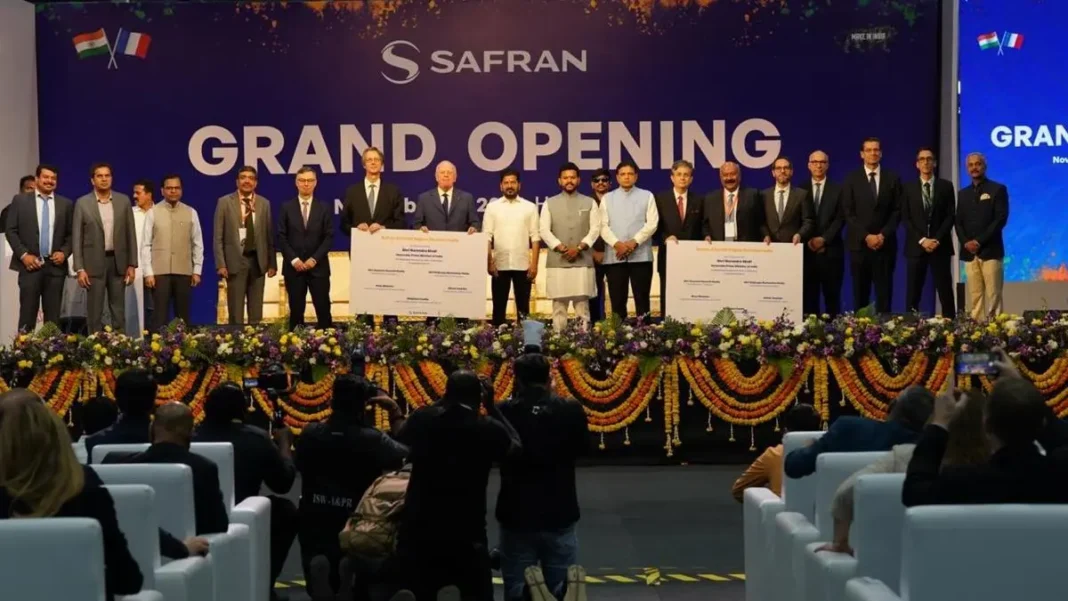
Global aerospace leader Safran is accelerating preparations for its advanced MRO facility in Hyderabad, hiring 60 technicians and launching a robust training programme. Set to become operational this year, the centre will handle up to 300 engine shop visits annually, strengthening India’s aviation maintenance ecosystem and global standing.
Global aerospace major Safran is stepping up preparations for its cutting-edge Maintenance, Repair and Overhaul (MRO) facility in Hyderabad, marking a significant milestone in India’s quest to bolster indigenous aviation capabilities. Inaugurated last November, the facility is slated to become operational later this year and is already witnessing a surge in hiring and training activity as the company builds the foundation for long-term growth.
The Hyderabad MRO centre, once fully ramped up, will have the capacity to handle up to 300 aircraft engine shop visits annually. This scale positions it among the most significant engine MRO investments in the region and signals a strategic shift in how global aerospace players view India—not merely as a market, but as a high-value operational hub.
In preparation for launch, Safran has begun hiring 60 technicians to support initial operations. The recruitment drive underscores the company’s focus on creating a highly skilled domestic workforce capable of servicing advanced aircraft engines to global standards. Rather than relying heavily on expatriate expertise, Safran’s approach reflects a commitment to local capability-building, aligning with India’s broader vision of self-reliance in critical sectors.
The facility represents far more than an infrastructure expansion. It is designed as an integrated ecosystem where technical precision, global best practices, and continuous learning converge. At the heart of this strategy is an on-site training centre that will train more than 100 Indian technicians and engineers every year. The structured training programme will cover engine diagnostics, advanced repair methodologies, quality control systems, and safety protocols aligned with international aviation regulations.
By institutionalising knowledge transfer, Safran is ensuring that India’s aviation workforce keeps pace with rapid technological advancements in aircraft propulsion systems. Engine maintenance is one of the most complex and safety-critical aspects of aviation, demanding rigorous certification standards and meticulous execution. The Hyderabad centre aims to become a benchmark for operational excellence in this domain.
To reinforce this ambition, Safran will provide hands-on exposure for Indian personnel at its global engine facilities in France and Mexico. These international stints are intended to immerse Hyderabad-based technicians and engineers in mature operational environments, where they can gain experience working on diverse engine platforms under seasoned experts. Upon returning, they will bring global insights back to India, elevating local standards and fostering a culture of continuous improvement.
This two-way integration between global expertise and local execution reflects Safran’s long-term commitment to India. It also strengthens the country’s standing in the global aviation supply chain, reducing dependency on overseas MRO services that historically required Indian airlines to ferry engines abroad for servicing—an expensive and time-consuming process.
Hyderabad’s selection as the site for this advanced MRO facility is no coincidence. Over the past decade, the city has steadily transformed into a dynamic aerospace and defence hub, attracting global manufacturers, component suppliers, and engineering firms. The convergence of advanced manufacturing, precision engineering talent, and supportive state policies has made Telangana a magnet for aerospace investment.
Safran’s growing footprint further cements Hyderabad’s evolution from a back-end support base to a strategic centre driving aviation innovation. The presence of high-value MRO capabilities not only enhances operational efficiency for airlines but also creates a multiplier effect across the local economy. Skilled jobs, vendor ecosystems, logistics networks, and ancillary services are expected to expand in tandem with the facility’s growth.
The economic implications extend beyond employment figures. By developing indigenous engine maintenance capabilities, India reduces foreign exchange outflows associated with overseas repairs and shortens aircraft turnaround times. Faster engine servicing translates into improved fleet availability for airlines, boosting operational resilience in an industry where downtime directly impacts profitability.
Moreover, the focus on training and upskilling positions India to compete globally in high-precision aerospace services. Aviation MRO is a sector that demands strict adherence to safety and regulatory frameworks, continuous technological upgrades, and specialised technical know-how. By embedding global standards into local training modules and cross-border exposure programmes, Safran is helping to create a new generation of Indian aerospace professionals capable of meeting—and exceeding—international benchmarks.
The Hyderabad facility also aligns with broader global trends in aviation. As airlines expand fleets and engine technologies become more sophisticated, demand for reliable, geographically diversified MRO centres is rising. Establishing advanced capabilities in India allows Safran to serve not only domestic carriers but also potentially tap into regional markets across Asia-Pacific and the Middle East.
For Telangana, the development reinforces its ambition to become a premier aerospace cluster in Asia. The state’s focus on infrastructure, policy incentives, and skill development has attracted sustained investment from global majors. Safran’s latest expansion adds momentum to this trajectory, signalling confidence in the region’s industrial ecosystem and long-term stability.
Industry observers note that such investments represent a shift in global aerospace strategy, where companies increasingly seek resilient supply chains and decentralised service networks. By building deep-rooted capabilities in India rather than operating through limited liaison offices or contract-based facilities, Safran is embedding itself into the country’s industrial fabric.
As the Hyderabad MRO facility prepares to commence operations, the emphasis on talent, training, and technology remains central. The hiring of 60 technicians marks only the beginning of a larger workforce expansion as capacity ramps up. Over time, the centre’s ability to handle up to 300 engine shop visits annually will position it as a cornerstone of India’s aviation maintenance ecosystem.
In the broader narrative of India’s aerospace ambitions, Safran’s investment stands as a powerful endorsement of the country’s potential. By combining global expertise with local talent, the Hyderabad facility is set to become more than just a maintenance hub—it is poised to serve as a catalyst for innovation, capability-building, and economic growth.
As aircraft engines power flights across continents, the expertise underpinning their reliability will increasingly trace back to India. With operations set to begin this year, Safran’s Hyderabad MRO centre represents a decisive step toward a future where India not only flies high but also maintains and engineers the engines that make flight possible.
Discover more from Creative Brands
Subscribe to get the latest posts sent to your email.