



Publicis London has launched its first campaign for Foster’s, part of HEINEKEN UK’s lager portfolio. Titled Love You Cans, the work replaces the iconic wordmark on Foster’s cans with cheeky nicknames, inviting mates to connect through playful banter. The campaign celebrates British humour and camaraderie in a fresh, unconventional way.
Publicis London has unveiled Love You Cans, its debut campaign for Foster’s, the well-known lager brand within HEINEKEN UK’s portfolio. In a striking departure from tradition, the campaign sees the iconic Foster’s can stripped of its familiar wordmark and replaced with something far more unconventional: the unmistakably British language of mates, expressed through rude nicknames. It is a bold creative move that aims to reframe how men reach out to one another, using humour and camaraderie as the bridge.
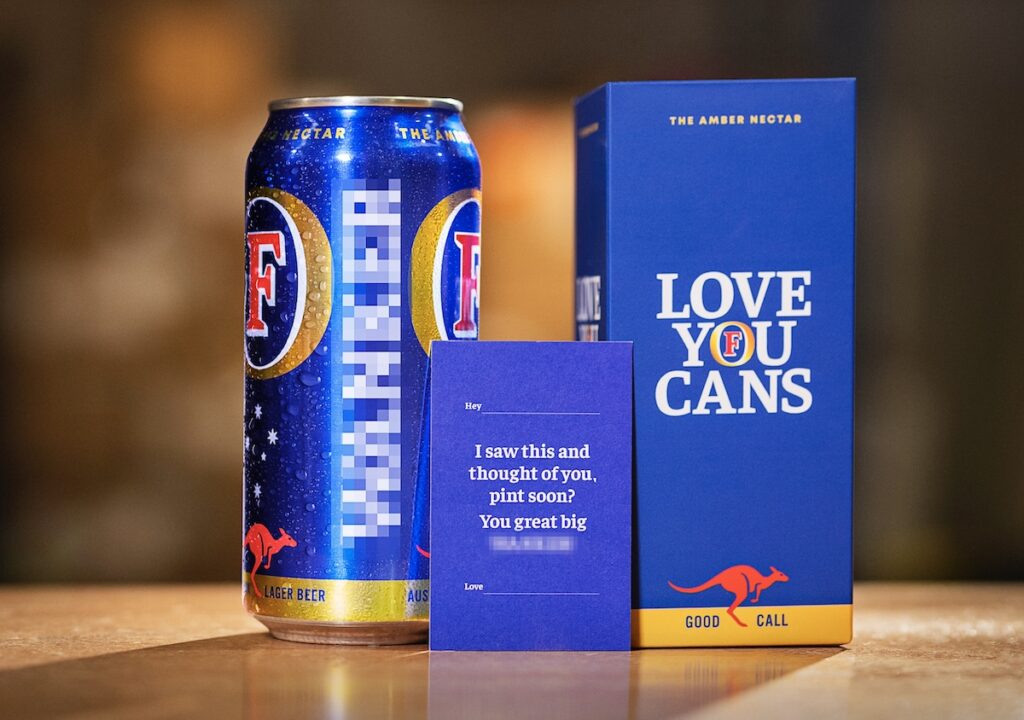
For decades, Foster’s has been synonymous with easy-going refreshment, often positioned as a beer for mates to share in moments of light-hearted fun. Yet, in a crowded market where lager brands jostle for attention, Publicis London’s decision to abandon the wordmark in favour of banter is both daring and culturally astute. The campaign taps into a peculiarly British tradition: the affectionate insult. From playgrounds to pubs, nicknames that sound rude but are meant warmly have long been a way for men to express closeness without overt sentimentality. By placing these nicknames directly on the cans, Foster’s is inviting drinkers to use the product itself as a vehicle for connection.
The creative execution is simple but striking. Instead of the familiar Foster’s branding, cans now feature phrases that might raise eyebrows but are instantly recognisable as the language of mates. The idea is not to shock but to amuse, to spark a smile and perhaps a conversation. In doing so, the campaign positions Foster’s as more than just a lager—it becomes a social tool, a way of saying “I’m thinking of you” without resorting to earnest declarations.
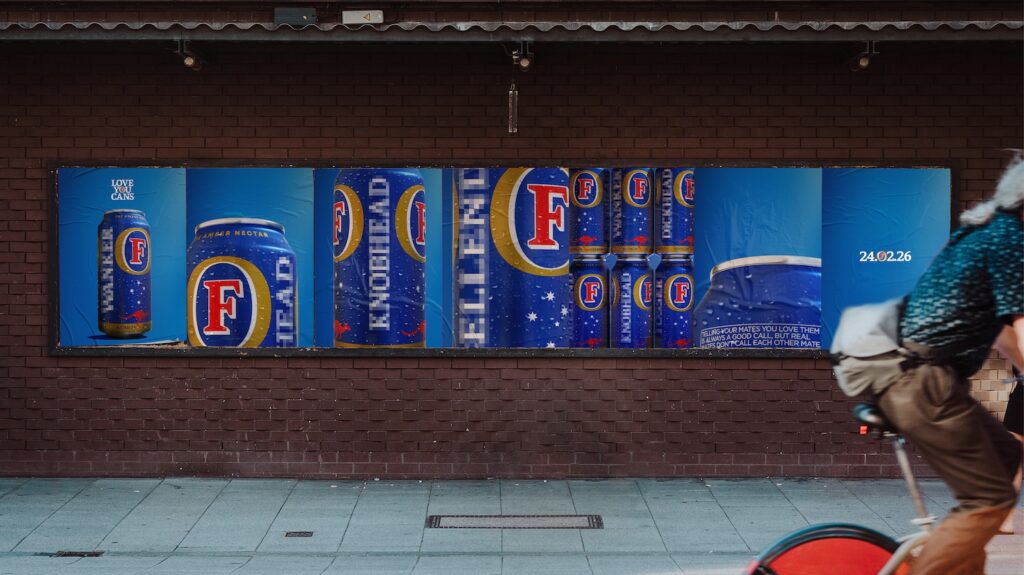
Publicis London’s work reflects a broader shift in advertising, where brands are increasingly willing to disrupt their own visual identities to create cultural relevance. Dropping a wordmark is no small decision; it risks confusing consumers or diluting brand recognition. Yet, in this case, the gamble is calculated. Foster’s has long enjoyed strong recognition in the UK, and the brand equity is robust enough to withstand a temporary absence of its logo. What replaces it is not random but deeply rooted in British humour, ensuring that the campaign feels authentic rather than gimmicky.
The timing of Love You Cans is also significant. In a post-pandemic world where social connections have been re-evaluated, the campaign acknowledges that men often struggle to express affection directly. By providing a playful medium, Foster’s is offering a solution that feels natural and unforced. A can with a cheeky nickname becomes a gesture, a way of reaching out without awkwardness. It is advertising that understands not just the product but the cultural context in which it is consumed.
From a branding perspective, the campaign demonstrates confidence. HEINEKEN UK is allowing Foster’s to step outside the conventional boundaries of lager advertising, which often rely on imagery of refreshment, sociability, or aspirational lifestyle. Instead, Love You Cans leans into humour and authenticity, qualities that resonate strongly with British audiences. It is not about polished perfection but about the messy, funny reality of friendship.
The creative team at Publicis London has clearly recognised the power of simplicity. There are no elaborate visuals or complex narratives—just cans with nicknames. Yet, the impact lies in the recognition. Everyone has heard, or perhaps used, such nicknames among friends. By putting them front and centre, the campaign creates instant relatability. It is advertising that does not need explanation; the audience understands it instinctively.
Critically, the campaign also reflects a growing trend in design and branding: the willingness to deconstruct and rebuild iconic assets. Where once logos and wordmarks were considered untouchable, today’s brands are more experimental. They recognise that identity is not just about visual consistency but about cultural resonance. Foster’s, through Love You Cans, is demonstrating that its identity is strong enough to bend without breaking.
The campaign’s success will ultimately be measured not just in sales but in cultural impact. If mates begin to use the cans as intended—sending them as gestures, sharing them as jokes—then Foster’s will have achieved something rare: turning packaging into a medium of communication. It is a reminder that advertising at its best does not simply sell but creates behaviour.
Publicis London’s debut for Foster’s is therefore more than a campaign launch; it is a statement of intent. It signals that the agency is willing to take risks, to challenge conventions, and to find creative solutions rooted in cultural truth. For Foster’s, it is a chance to refresh its image, to remind audiences that it is not just a lager but a brand woven into the fabric of British sociability.
In the end, Love You Cans is both cheeky and clever. It strips away the corporate polish and replaces it with something recognisable, funny, and human. It is advertising that understands its audience, not by telling them what to feel but by reflecting how they already communicate. For Foster’s, it is a bold step into a new chapter, one where the can itself speaks the language of mates.
Discover more from Creative Brands
Subscribe to get the latest posts sent to your email.