

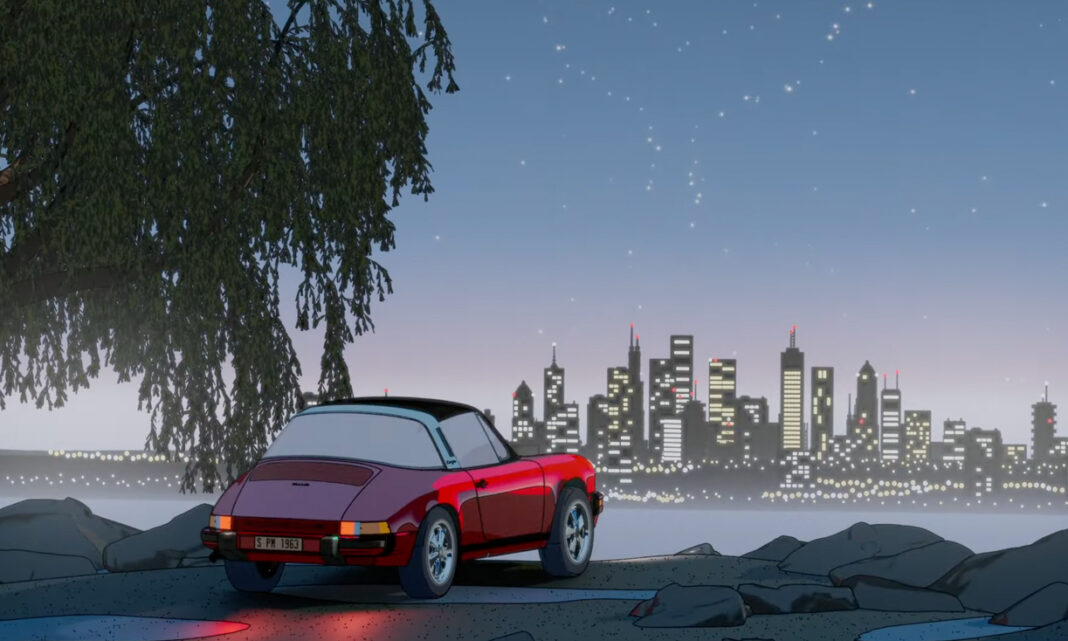
While brands like Coca-Cola and McDonald’s embraced AI-driven holiday campaigns, Porsche went analogue. Its hand-drawn film The Coded Love Letter rejected synthetic perfection in favour of craft, emotion, and hidden details—proving that human-made storytelling can still cut through a feed dominated by algorithms.
As brands raced into the holiday season armed with ever-smarter algorithms and generative tools, the advertising landscape became a familiar blur of hyper-polished visuals, predictive personalisation, and AI-assisted storytelling. The Coca-Cola Company and McDonald’s, two of the world’s most influential marketers, leaned heavily into data-driven creativity, deploying campaigns shaped by machine learning and automation to meet audiences where they scroll. In the midst of this high-tech crescendo, Porsche took a strikingly different turn. Instead of code, it chose pencils. Instead of speed, it chose patience. And instead of synthetic perfection, it chose the imperfect, deliberate warmth of human craft.
Porsche’s holiday film, titled The Coded Love Letter, arrived quietly but landed loudly. In a digital feed crowded with glossy AI-generated imagery and algorithmic efficiency, the film stood out precisely because it resisted the temptation to optimise for speed or spectacle. It was hand-drawn, painstakingly animated, and filled with subtle details that rewarded attention rather than demanding it. At a time when many brands were using artificial intelligence to demonstrate how advanced they had become, Porsche used traditional artistry to remind audiences of something more elemental: emotion, intention, and the enduring power of human touch.
The film unfolds like a visual whisper rather than a shout. Each frame bears the unmistakable marks of hand-drawn animation—lines that are slightly uneven, movements that feel organic rather than mechanically smooth. Instead of the uncanny realism that often accompanies AI-generated visuals, The Coded Love Letter embraces charm and restraint. The pacing is unhurried, inviting viewers to slow down and notice details that might otherwise be lost in the rapid churn of social media content. Hidden Easter eggs are embedded throughout the animation, subtle nods that reward repeat viewing and spark conversation among fans who enjoy decoding them together.
This approach was not accidental. Porsche has long positioned itself as a brand rooted in engineering excellence and performance, but also in heritage and craftsmanship. By choosing hand-drawn animation in an era dominated by generative tools, the brand made a statement that extended beyond marketing tactics. It suggested that progress does not always mean abandoning the old for the new, and that innovation can coexist with tradition. In doing so, Porsche reframed the conversation around technology itself—not as something to be rejected, but as something that does not always need to be centre stage.
The contrast with other holiday campaigns was stark. Coca-Cola’s seasonal efforts leaned into AI-assisted visuals and algorithmic storytelling to scale creativity across markets. McDonald’s similarly embraced data and automation to personalize messaging and streamline production. These strategies were effective in their own right, reflecting how major brands are integrating artificial intelligence into their creative pipelines. But they also contributed to a growing sense of sameness, where even the most impressive visuals can feel interchangeable when filtered through the same technological lens.
Against this backdrop, The Coded Love Letter felt almost radical. It did not chase virality through novelty alone, nor did it rely on the spectacle of technology to command attention. Instead, it trusted viewers to appreciate nuance and craftsmanship. The result was a campaign that resonated deeply, earning praise across social platforms and industry circles alike. Comments celebrated its warmth, its authenticity, and its refusal to follow the prevailing trend. In slowing down, Porsche paradoxically captured attention more effectively than many faster, louder campaigns.
The success of the film also speaks to a broader cultural moment. As artificial intelligence becomes increasingly embedded in creative industries, audiences are becoming more discerning. There is growing awareness of the difference between content generated at scale and content created with care. While AI offers remarkable efficiencies, it can also produce visuals that feel eerily perfect, lacking the imperfections that signal human involvement. Porsche’s campaign tapped into this sentiment, offering a counterpoint that felt refreshing rather than regressive.
Hidden within the film’s narrative and visuals is a metaphor that aligns neatly with its title. A love letter, after all, is traditionally something handwritten, personal, and intimate. By calling it “coded” yet rendering it through hand-drawn animation, Porsche bridged the worlds of engineering and emotion. It acknowledged its identity as a technologically sophisticated brand while affirming that its core appeal lies in how it makes people feel. The Easter eggs scattered throughout the animation further reinforced this idea, inviting viewers to engage actively rather than passively consume.
From a strategic perspective, the campaign demonstrated that restraint can be a powerful differentiator. In choosing not to foreground AI, Porsche did not position itself as anti-technology. Instead, it showed confidence in its brand values, trusting that audiences would respond to sincerity over spectacle. This confidence paid off, as the film quickly garnered organic attention and positive sentiment, with viewers sharing it not because an algorithm prompted them to, but because it genuinely moved them.
The internet’s applause was telling. In comment sections and reposts, viewers expressed relief at seeing something that felt “real” amid a sea of digital polish. Industry observers noted how the campaign challenged assumptions about what it takes to win attention in a crowded feed. Rather than racing to adopt the latest tools, Porsche demonstrated that thoughtful storytelling and high-quality craft can still cut through the noise.
As brands look ahead to future campaigns, The Coded Love Letter may well be remembered as a quiet turning point. Not because it rejected artificial intelligence outright, but because it reminded marketers that technology is a means, not an end. The tools available to creatives will continue to evolve, but the fundamentals of storytelling—emotion, connection, and authenticity—remain unchanged. Porsche’s holiday film succeeded because it honored those fundamentals, even as others chased efficiency and scale.
In an era defined by speed and automation, slowing down can feel risky. Yet Porsche’s choice to pick up pencils instead of algorithms proved that taking the human route can still lead to resonance and reward. The campaign stands as a testament to the idea that craft, when executed with intention, can hit harder than code. And in doing so, it offered a gentle but powerful reminder: sometimes, the most innovative move is to go back to basics.
Stay updated with Viral Vault on Instagram and Facebook for more stories at the intersection of culture, creativity, and brand storytelling.
Discover more from Creative Brands
Subscribe to get the latest posts sent to your email.