


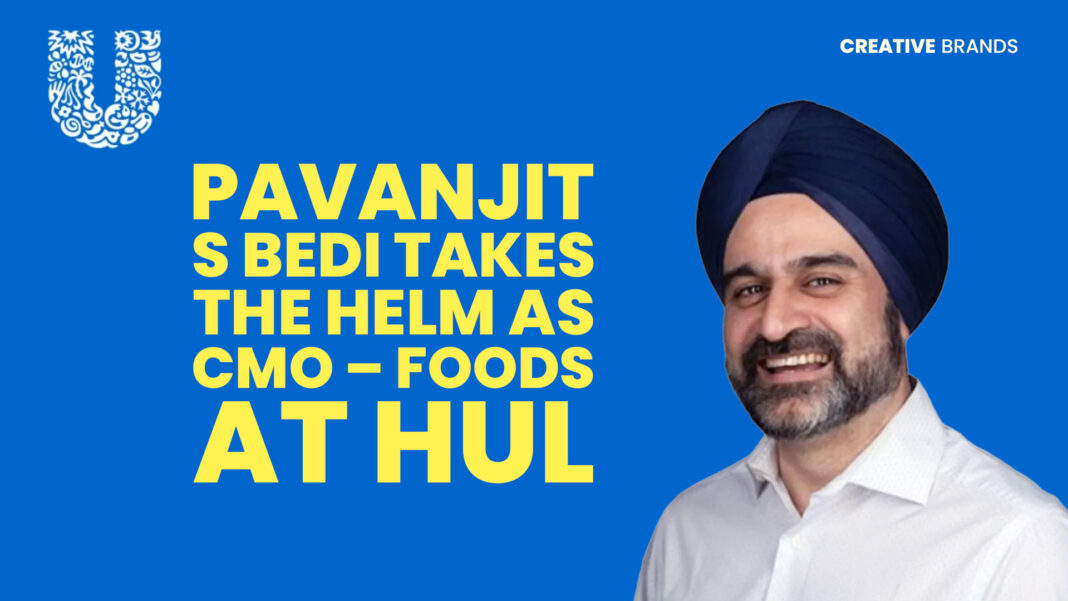
Pavanjit S Bedi has been appointed Chief Marketing Officer – Foods at Hindustan Unilever Limited. With evolving consumer behaviours reshaping India’s food landscape, Bedi steps into a pivotal role focused on building brands that balance timeless appeal with contemporary relevance, scale with agility, and cultural resonance with innovation.
Pavanjit S Bedi has announced that he will step into the role of Chief Marketing Officer – Foods at Hindustan Unilever Limited (HUL), marking a significant leadership move within one of India’s most influential fast-moving consumer goods companies. In a market where food brands sit at the intersection of tradition, aspiration and rapid lifestyle change, the appointment comes at a time of profound transformation in how India eats, shops and engages with brands.
Expressing his enthusiasm about the new role, Bedi described the Foods portfolio as one of the few categories that seamlessly blends cultural relevance with scale, while also offering immense room for reinvention. In India, food is not merely a consumer category; it is deeply embedded in identity, rituals and daily life. For a marketer, this presents a rare combination of emotional depth and commercial opportunity. Leading such a portfolio means navigating both legacy and innovation, ensuring that trusted brands continue to resonate while adapting to new expectations.
HUL, the Indian subsidiary of global consumer goods giant Unilever, has long been a powerhouse in the country’s food and beverage space. Its brands occupy kitchen shelves across urban metros and rural heartlands alike, reaching millions of households daily. The scale is enormous, but so too is the complexity. Rising disposable incomes, expanding digital access, health consciousness, premiumisation trends and the growing influence of regional tastes have fundamentally altered the playing field.
Bedi’s move into the CMO – Foods position signals an emphasis on marketing leadership that understands this duality: the need to protect enduring brand equity while boldly reshaping narratives for a new generation. Consumer behaviours in India are evolving faster than ever before. The once-linear path to purchase has splintered across e-commerce platforms, quick commerce apps, modern trade outlets and neighbourhood kiranas. Social media influences discovery; online reviews shape perception; and health labels are scrutinised with unprecedented care.
Against this backdrop, Bedi sees both challenge and opportunity. Building brands that feel timeless yet unmistakably contemporary requires more than clever campaigns. It demands deep consumer insight, cultural sensitivity and a willingness to experiment. Food brands today must address conversations around nutrition, sustainability and authenticity while still delivering on taste and value. They must speak the language of Gen Z without alienating multi-generational households that rely on them daily.
For HUL’s Foods business, reinvention does not mean abandoning heritage. Rather, it involves reframing it. India’s culinary landscape is dynamic, influenced by global exposure, migration patterns and digital trends. Fusion recipes, plant-based alternatives and convenience-driven formats are reshaping consumption. Yet, at the same time, there is renewed pride in regional flavours and traditional cooking methods. Successful marketing in this space lies in embracing both ends of that spectrum.
As CMO – Foods, Bedi will be tasked with steering brand strategy across a portfolio that operates at massive scale. The role calls for balancing growth ambitions with agility, leveraging data analytics while maintaining emotional storytelling. In recent years, marketing within large FMCG organisations has undergone its own transformation. Digital-first thinking, performance marketing metrics and real-time consumer feedback loops now complement classic brand-building principles. Leaders must be as comfortable reading dashboards as they are crafting narratives.
The Indian market amplifies this complexity. With its vast demographic diversity, no single strategy fits all. Tier II and Tier III cities are driving significant consumption growth, often with distinct cultural nuances. Younger consumers are experimenting more, yet they remain anchored to family traditions. Health-conscious urban professionals seek fortified or low-calorie options, while value-sensitive buyers prioritise affordability and trust. For a CMO, aligning these varied segments under cohesive brand architectures is a formidable task.
Bedi’s career trajectory within marketing positions him at the confluence of strategic planning and creative execution. His emphasis on brands that are “both timeless and unmistakably contemporary” suggests a focus on enduring purpose paired with modern expression. In practical terms, this could translate into refreshed packaging, sharper digital engagement, partnerships that tap into pop culture, and product innovations aligned with emerging dietary trends.
The broader context also matters. India’s food sector is witnessing intense competition from nimble startups and regional players who often operate with speed and hyper-local relevance. At the same time, multinational giants bring scale, research capabilities and distribution strength. The Foods portfolio at HUL sits squarely within this competitive arena. Its advantage lies in trust built over decades, but maintaining that trust requires constant renewal.
Marketing leadership today extends beyond advertising. It involves collaborating closely with research and development teams, supply chain functions and sales networks. It demands sustainability commitments that are credible and measurable. Consumers increasingly expect brands to reflect their values — from responsible sourcing to community impact. A modern CMO must integrate these elements into brand narratives in ways that feel authentic rather than performative.
Bedi’s announcement underscores optimism about the future of the Foods business in India. The combination of cultural significance and scale makes it one of the most compelling arenas for brand-building. As Indian consumers continue to redefine convenience, health and indulgence, the marketing playbook must evolve in tandem.
Stepping into the role at HUL, Bedi inherits not just a portfolio, but a platform that touches millions of lives daily. The opportunity lies in shaping how those brands grow with the country — staying rooted in familiarity while embracing the possibilities of reinvention. In a nation where food is memory, aspiration and daily ritual all at once, the task of building relevant, resonant brands has never been more challenging — or more exciting.
Discover more from Creative Brands
Subscribe to get the latest posts sent to your email.