



A new Kerala Tourism advertisement has sparked laughter and pride among Malayalis, cleverly countering a controversial film trailer that demonises the community. Social media erupted with witty responses, celebrating Kerala’s culinary heritage—especially its famed beef dishes—and reminding critics that no one needs to be “force-fed” food they already crave.
When an advertisement manages to cut through noise and prejudice with humour, it becomes more than just marketing—it becomes cultural commentary. Kerala Tourism’s latest campaign has done precisely that, offering a refreshing counterpoint to the polarising trailer of KeralaStory2, which attempted to demonise Malayalis with caricatured accusations of force-feeding beef. The irony, of course, is that beef is not something Malayalis need to be coerced into eating. It is a beloved staple, woven into the state’s culinary identity, and cherished by locals and visitors alike.
The trailer’s insinuation—that Malayalis are somehow guilty of pushing beef onto others—was met with incredulity and amusement. For many, the claim was not only absurd but also laughably detached from reality. Kerala’s food culture is celebrated across India, and beef dishes like Kerala-style beef fry or curry are among the most sought-after delicacies by travellers. As one Malayali quipped online, “No one has to be force-fed stuff they are dying to eat.”
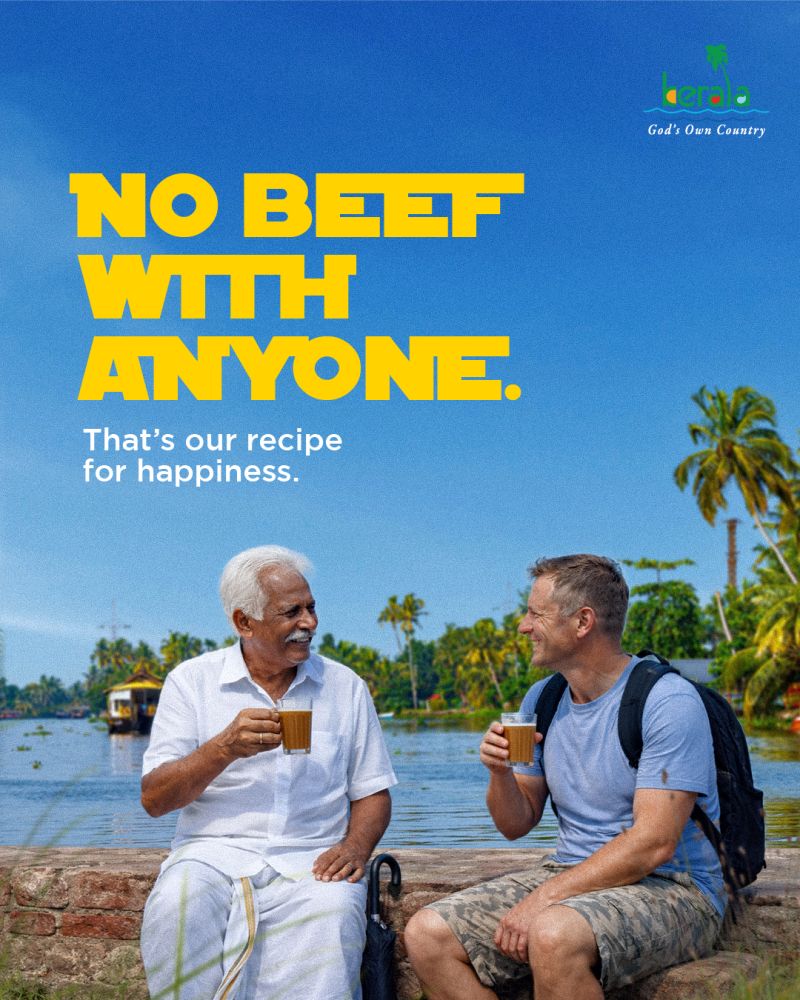
This sentiment captures the essence of the backlash. Far from being defensive, Malayalis responded with wit, turning the accusation into a badge of pride. Social media platforms lit up with memes, jokes, and playful retorts, showcasing the community’s ability to laugh at attempts to vilify them. The humour was sharp but never bitter, rooted in the confidence of a people whose culture and cuisine speak for themselves.
Kerala Tourism’s advertisement tapped into this energy. Instead of issuing a stern rebuttal, it leaned into the absurdity of the claim, presenting Kerala as a place where food is not just sustenance but joy, where visitors willingly trip over each other to savour the flavours. The campaign’s brilliance lies in its refusal to dignify the trailer’s narrative with outrage. Instead, it celebrated what makes Kerala irresistible: its hospitality, its diversity, and above all, its cuisine.
Food has always been central to Kerala’s identity. From the spice-laden curries to the delicate appams, from seafood feasts to vegetarian sadyas, the state’s culinary repertoire is vast and inclusive. Beef, in particular, holds a special place, not only in Malayali households but also in the imaginations of food lovers across India. North Indian travellers often recount their delight at discovering Kerala’s beef dishes, marvelling at the depth of flavour and the artistry of preparation. The idea that anyone would need to be “force-fed” such food is, therefore, not just wrong but comically implausible.
The timing of the advertisement could not have been better. In an era where cultural narratives are often hijacked by divisive rhetoric, Kerala Tourism chose to highlight unity through taste. It reminded audiences that food is a bridge, not a battleground. By showcasing Kerala’s cuisine as something universally appealing, the campaign positioned the state as a destination where differences dissolve at the dining table.
The responses online underscored this point. Malayalis, known for their sharp humour, took to platforms like X and Instagram to lampoon the trailer. Some posted mock “warnings” about the irresistible nature of Kerala beef fry, while others joked about friends from other states begging for second helpings. The laughter was infectious, spreading beyond Kerala’s borders and drawing attention to the absurdity of the original claim.
What makes this episode significant is not just the clash between a film trailer and an advertisement, but the larger narrative it represents. Kerala has long been portrayed in popular culture as a state with strong political opinions, vibrant traditions, and a distinct identity. Attempts to caricature or demonise it often backfire because the community responds with resilience and creativity. In this case, humour became the weapon of choice, disarming critics and winning over audiences.
The advertisement also reflects a broader trend in tourism marketing: the shift from generic promotion to cultural storytelling. Kerala Tourism has consistently positioned the state as “God’s Own Country,” but here it went further, engaging directly with contemporary debates and turning them into opportunities for self-expression. By embracing the controversy with wit, it ensured that the campaign would resonate not only with potential tourists but also with Malayalis themselves, who saw their pride reflected in the messaging.
For Kerala, this is more than just a publicity win. It is a reaffirmation of its cultural confidence. In a country where food often becomes a flashpoint for identity politics, Kerala’s response stands out for its refusal to be cowed. Instead of retreating, it showcased its cuisine as a source of joy and connection. The laughter that followed was not just about mocking a trailer—it was about reclaiming the narrative.
As the dust settles, one thing is clear: Kerala Tourism has demonstrated the power of humour in storytelling. By turning a potentially divisive moment into an opportunity for celebration, it reminded audiences that culture is best experienced through openness, not suspicion. And in doing so, it reinforced what travellers have always known: that Kerala is a place where food, laughter, and hospitality come together in unforgettable ways.
In the end, the silly accusation of force-feeding beef has only strengthened Kerala’s image. It has highlighted the state’s culinary treasures, showcased the wit of its people, and given tourism a campaign that feels authentic and alive. For Malayalis, the episode is a reminder that their culture cannot be reduced to caricature. For everyone else, it is an invitation to taste, laugh, and discover Kerala for themselves.
Discover more from Creative Brands
Subscribe to get the latest posts sent to your email.