


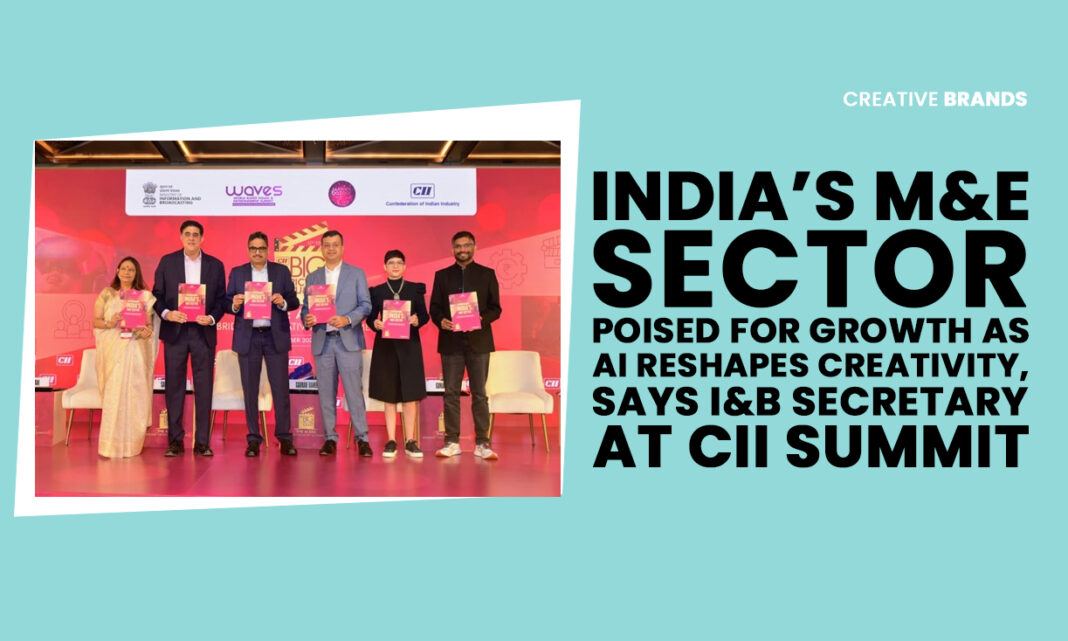
At the 12th CII Big Picture Summit in Mumbai, I&B Secretary Sanjay Jaju highlighted the rapid transformation of India’s Media & Entertainment sector amid the rise of AI. He urged the industry to embrace technology, expand global reach, and leverage government initiatives like IICT to strengthen India’s creative economy.
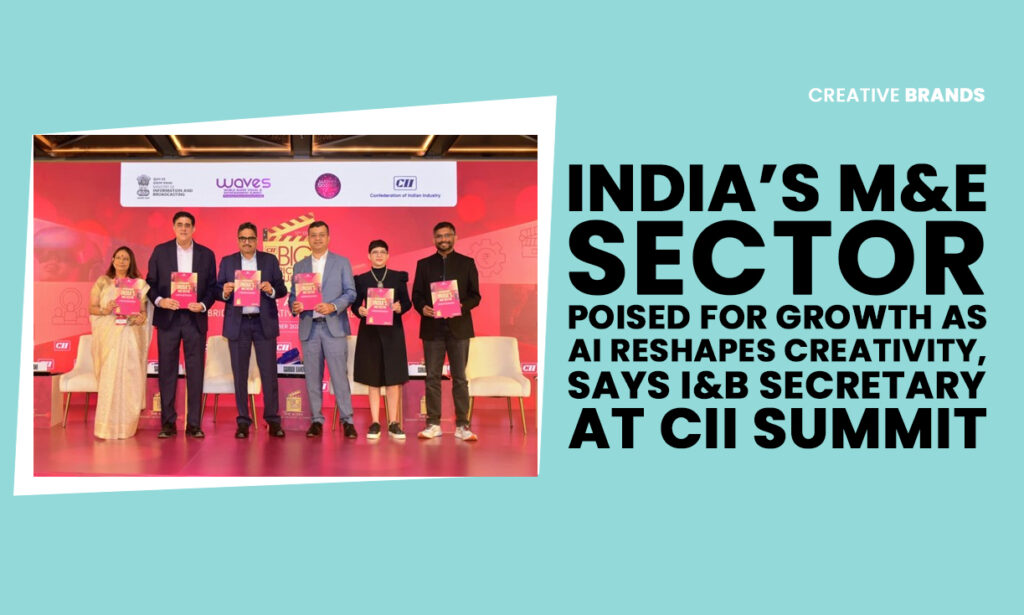
The Indian Media and Entertainment (M&E) sector stands at a defining moment, balancing immense promise with unprecedented disruption as the age of Artificial Intelligence sweeps across creative industries. This duality of opportunity and challenge formed the core of the inaugural address delivered today by Shri Sanjay Jaju, Secretary, Union Ministry of Information and Broadcasting (I&B), at the 12th CII Big Picture Summit in Mumbai. Speaking on the theme “The AI Era – Bridging Creativity and Commerce,” Shri Jaju set an optimistic yet pragmatic tone for the future, urging the industry to recognize technology not as a threat but as an accelerator for growth, innovation, and global influence. His address also marked the release of CII’s White Paper on “Priority Policy Reforms for a Globally Competitive Creative Economy of India,” a document poised to shape the sector’s policy trajectory in the coming years.
Describing the evolving landscape of creativity and content in India, Shri Jaju invited stakeholders to view the Summit as part of a continuous movement rather than an isolated congregation. He referred to the Prime Minister’s insistence on the idea of ‘waves’, where every new wave of progress builds upon the one before it. According to him, the gathering in Mumbai symbolised an evolving national effort toward deeper, more sustainable creative engagement, one that must question its current direction and collectively imagine its future. This spirit of reflection and reinvention, he said, was essential as India prepares to assert itself more confidently on the global entertainment map.
Shri Jaju’s address was rooted in a larger understanding of entertainment’s role in society, which he described as fundamental, comparable to the importance of food, clothing, and shelter. Entertainment, he noted, is not merely an economic activity but a cultural necessity—one that contributes to social cohesion, emotional well-being, and international connectivity. By pointing to the sector’s ability to “connect people, foster harmony, and link nations,” he reminded the audience that cinema, music, digital content, and narratives have long served as India’s cultural ambassadors, building bridges where politics or diplomacy might falter.
The Secretary offered a snapshot of the sector’s current economic footprint, noting that the creative economy provides livelihoods, directly or indirectly, to over 10 million people and contributes nearly Rs 3 lakh crore to India’s GDP. Despite this impressive scale and India’s rich heritage in storytelling—from the oral traditions of Shruti to the written and visual legacies showcased in the Bharat Pavilion at the WAVES Summit—India still commands only 2 percent of the global M&E market. For Shri Jaju, this gap between cultural strength and global market presence marks the sector’s biggest challenge. With India’s storytelling legacy unmatched in depth and diversity, the task at hand is not one of creative scarcity but of global positioning. The country must learn to transform its cultural richness into globally resonant stories and commercially competitive entertainment products.
The emergence of Artificial Intelligence, he noted, has already begun to reshape this task. AI tools today influence everything from content creation and visual effects to editing, distribution, and personalized viewing experiences. While acknowledging the anxieties around automation and technological disruption, Shri Jaju emphasized that resisting AI would be counterproductive. If India hesitates, he warned, its share in the global entertainment market may diminish further. Instead, he urged filmmakers, studios, storytellers, designers, and digital creators to approach AI with curiosity and ambition. The future, he said, belongs to “stories immersed with technology,” stories that marry imagination with tools capable of expanding the boundaries of visual and narrative expression. AI, in his framing, is not a substitute for creativity but a catalyst that can elevate Indian storytelling to international standards of sophistication and scale.
As India positions itself as a rising economic power, Shri Jaju stressed the importance of ensuring that its stories travel far beyond national borders. Storytelling, he argued, forms the backbone of soft power—an area where India has both natural strength and untapped potential. Whether it is cinema that resonates across continents or digital content that shapes global conversations, Indian creators have an opportunity to define the next era of cultural diplomacy. The question is not whether India can compete globally, but whether it can consistently produce content with the emotional and technological resonance needed to succeed in global markets.
On the government’s part, Shri Jaju emphasized a commitment to acting as a facilitator rather than a controller. The role of the State, he clarified, is to build an enabling ecosystem marked by fairness, incentives, and support for skill development. It is the industry, however, that must lead the sector forward. One of the most concrete steps in this direction is the establishment of the Indian Institute of Creative Technologies (IICT) in Mumbai, recently approved by the Union Cabinet. Conceived as a model of government-industry collaboration, IICT aims to bridge the skills gap that has widened in recent years due to rapid technological transitions. With its permanent campus set to come up in Film City, Goregaon, within two years, and the NFDC campus already operational, the Institute is expected to nurture the next generation of creators who understand both tradition and technology. Its industry-led curriculum framework, Shri Jaju said, has already begun receiving recognition for its innovation and relevance.
He also highlighted the significance of platforms like the WAVES Bazaar, which bring creators, investors, and buyers together under a single roof. Such platforms democratize opportunity, enabling emerging storytellers and creative entrepreneurs to access financial support, mentorship, and market exposure. In an era where talent often outpaces access, such initiatives may become crucial in shaping the country’s creative trajectory.
The event also saw the presence of leading industry figures including Shri Gaurav Banerjee, Chair of the CII National Council on Media & Entertainment and MD & CEO of Sony Pictures Networks India; Shri Rajan Navani, Co-Chair of the Council and MD & CEO of Jetsynthesys; and Ms. Gunjan Soni, Co-Chair of the Council and Country MD, YouTube India. Their participation reflected a unified industry commitment to steering India’s creative future in alignment with technological shifts.
The White Paper released during the Summit outlined a clear roadmap of policy interventions and strategic priorities required to strengthen India’s position in the global creative economy. Its recommendations aim to foster innovation, accelerate growth, and create an internationally competitive entertainment industry capable of leveraging India’s cultural and technological advantages. The day also marked the inauguration of the CII M&E Investors’ Meet and the CII WAVES Bazaar, further signalling the sector’s momentum toward expansion, collaboration, and global ambition.
The message was unmistakable: India stands on the threshold of a new creative era—one defined by technology, driven by imagination, and powered by the collective vision of government and industry. The wave has begun; the challenge now is to ride it with confidence, creativity, and global purpose.
Discover more from Creative Brands
Subscribe to get the latest posts sent to your email.