


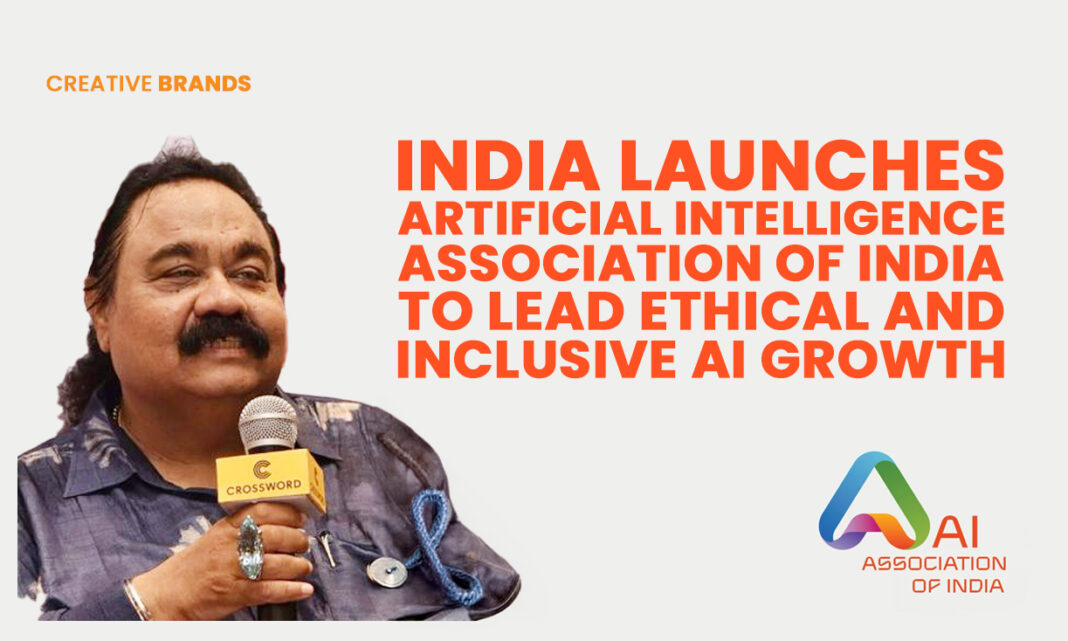
India has launched the Artificial Intelligence Association of India (AIAI), the country’s first dedicated AI industry body, led by National Convenor Dr. Sandeep Goyal. AIAI aims to promote ethical, inclusive and innovation-driven AI adoption across creative and technology sectors. A governing board of senior corporate and creative leaders will be announced soon.
India has taken a decisive step toward shaping the future of artificial intelligence with the launch of the Artificial Intelligence Association of India (AIAI), the nation’s first dedicated industry body focused entirely on advancing responsible AI development and deployment. As AI becomes increasingly embedded in everything from creative work to core technology infrastructure, the formation of AIAI signals a strategic effort to bring coherence, oversight, and collaboration to a field that has so far grown in fragmented silos. The new association will be led by National Convenor Dr. Sandeep Goyal, a widely respected voice in media, technology, and innovation, who has framed the organisation’s mission as one rooted in ethics, inclusion, and the long-term interests of both industry and society.
The establishment of AIAI comes at a moment when India is witnessing an unprecedented surge in AI adoption across sectors. From advertising, marketing, and entertainment to software development, fintech, healthcare, and education, the influence of AI is expanding at a rapid pace. Yet this growth has also stirred questions about regulation, data governance, bias mitigation, and the future of human creativity. The new industry body seeks to provide a structured platform for dialogue, standard-setting, and capacity building to ensure that AI evolves in a way that strengthens, rather than destabilizes, India’s digital ecosystem. In creating a unified voice for stakeholders, AIAI aims to bridge gaps between creators, technologists, policymakers, and corporations that often operate at different velocities and with varying levels of understanding of AI’s implications.
Dr. Goyal has emphasized that the association will not merely be a forum for industry promotion but a guardian of ethical principles. As generative AI tools reshape workflows in design, filmmaking, advertising, journalism, and content creation, concerns about authenticity, intellectual property rights, and the displacement of creative labour have become more pronounced. AIAI intends to address these challenges through guidelines, frameworks, and collaborative efforts that recognize both the power and the risks of AI. The organization hopes to facilitate research into bias detection, fair datasets, and culturally contextual AI models that reflect India’s linguistic and demographic diversity. In doing so, it seeks to ensure that the nation’s enormous population—spanning multiple languages, communities, and levels of digital literacy—can participate meaningfully in the AI revolution.
Another key focus of AIAI is fostering innovation-led growth. India’s startup landscape has already produced a wave of homegrown AI solutions aimed at everything from rural healthcare delivery to agricultural forecasting and automated financial services. Yet many emerging companies lack access to policy clarity, mentorship, or platforms for industry-wide collaboration. AIAI aims to fill this vacuum by creating a community where innovators can connect with investors, academic researchers, and regulatory bodies. Dr. Goyal has noted that India has the potential to become a global AI powerhouse, but achieving this goal requires coordinated efforts and a shared sense of responsibility. The association’s long-term roadmap is expected to include initiatives such as training programs, knowledge-sharing summits, and the development of ethical standards that align with both global best practices and India’s unique socio-economic conditions.
The governing board of AIAI, which will be announced soon, is expected to include senior leaders from major corporations, technology companies, entertainment and media groups, and other creative disciplines. This multidisciplinary structure reflects a growing understanding that AI can no longer be viewed as a niche technology concern; instead, it is a foundational force shaping how businesses operate, how content is produced, and how people interact with digital systems. The involvement of leaders from creative industries is particularly noteworthy, as India’s media and entertainment sector—one of the largest in the world—stands at a critical crossroads. With AI tools now capable of generating scripts, music, imagery, and even entire video sequences, there is an urgent need for norms that protect originality while encouraging responsible experimentation.
Equally significant is AIAI’s focus on inclusion. As millions of Indians gain access to digital services, the risk of algorithmic exclusion becomes more pronounced. AI systems, if trained on skewed or incomplete data, can inadvertently reinforce social inequities or overlook marginalized communities. AIAI aims to strengthen awareness of these issues and promote the use of datasets that better represent India’s varied population. The association plans to work with researchers, civil society organizations, and government agencies to encourage AI developers to be mindful of linguistic diversity, gender sensitivity, and socio-economic realities. This commitment to inclusion is seen as central to ensuring that AI benefits all sections of society rather than amplifying existing divides.
While the launch of AIAI is being welcomed by industry observers, it also places considerable responsibility on the shoulders of its leadership. The tasks ahead—establishing standards, influencing policy, coordinating cross-sector dialogues, and shaping public understanding of AI—are complex and multifaceted. The challenges are compounded by the speed at which generative AI technologies are advancing, often faster than regulatory frameworks can keep up. Yet supporters argue that the creation of a dedicated industry body is exactly what India needs to navigate this transformative moment with foresight and accountability.
The next few months will likely shape AIAI’s visibility and credibility. The announcement of the governing board, followed by its first programs and policy recommendations, will provide a clearer picture of how the organisation intends to operate and how effectively it can bring together diverse stakeholders. For now, its formation alone represents a milestone: India has made a formal commitment to stewarding the future of AI through a lens that balances innovation with ethics and opportunity with responsibility.
By launching the Artificial Intelligence Association of India, the country is signaling not just that it wants to participate in the global AI race, but that it wants to shape the rules, values, and frameworks that will define the technology’s next era. As AI continues to accelerate change across industries, AIAI stands poised to guide India through a technological evolution that is as cultural and ethical as it is computational.
Discover more from Creative Brands
Subscribe to get the latest posts sent to your email.