


The 83rd Golden Globes opened award season with all-black elegance, gothic couture, and daring naked-dress fashion from stars like Selena Gomez, Ariana Grande, and Teyana Taylor. Alongside the glamour, many attendees wore “BE GOOD” pins honouring Renee Good, adding a poignant activist layer to a night defined by style, grief, and resolve.
The Golden Globe Awards opened the 2026 awards season with an evening that felt, at times, like a fashion spectacle and, at others, a political statement. On the surface, Hollywood’s brightest arrived in a sea of timeless elegance: all-black ensembles evoked classic glamour, while daring “naked dress” choices pushed the boundaries of red-carpet style. But beneath the glitz and glitter was a current of solemn reflection and social advocacy, as stars used their visibility to spotlight a tragedy unfolding back home.
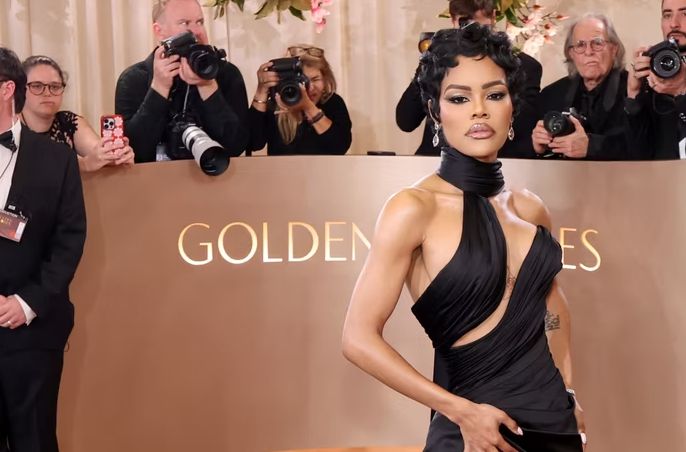
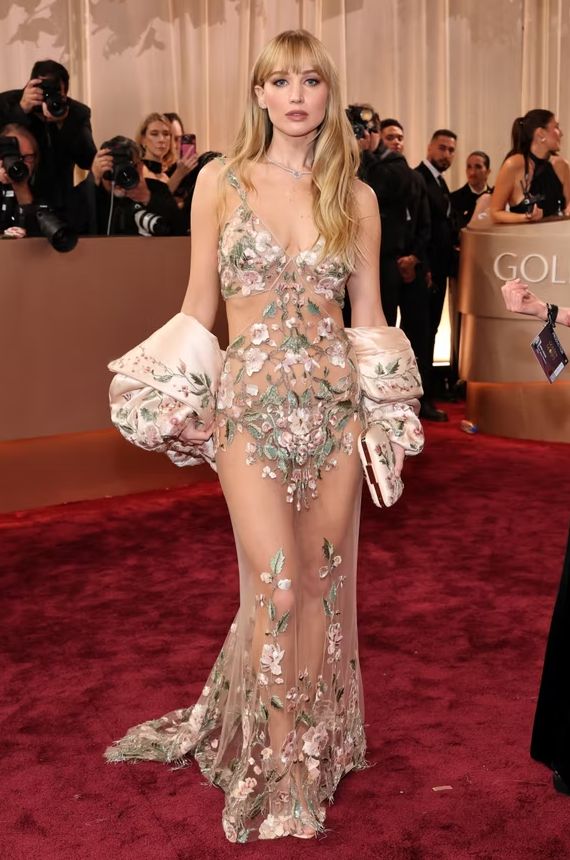
Selena Gomez and Ariana Grande embodied the night’s sartorial dichotomy between old and avant-garde. Gomez, nominated for her work this season, turned heads in a custom CHANEL creation that balanced refined tailoring with dramatic flair. Grande, equally luminous, chose a sculptural Vivienne Westwood gown that fused structure and sensuality in a way only the British couturier can. Both looked every bit the fashion icons they’ve become, channelling the timeless sophistication of red-carpet eras gone by. Meanwhile, Teyana Taylor’s Best Supporting Actress win for One Battle After Another came as she walked the red carpet in a striking, backless SCHIAPARELLI gown — a bold statement that married classic couture with modern daring.
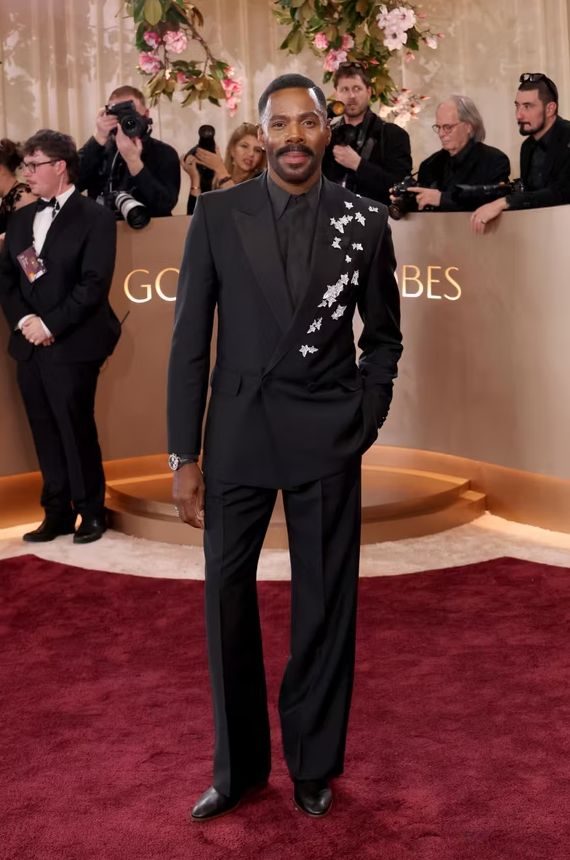
The evening’s glamour wasn’t without its edgier moments. Jenna Ortega embraced a “goth chic” aesthetic in an intricate creation by Dilara Findikoglu, her outfit rife with dark romanticism and dramatic detailing. Colman Domingo’s approach to “all black” was equally theatrical: a head-to-toe Valentino suit accented with shimmering silver appliqués that glinted under the camera flashes.
Yet, as photographers snapped and actors posed, many of the industry’s biggest names carried — or wore — something less conventional than couture. Throughout the night, attention repeatedly turned to simple pins emblazoned with the words “BE GOOD,” worn in memory of Renee Nicole Good, the Minneapolis poet and mother whose death earlier this week in a confrontation with a U.S. Immigration and Customs Enforcement (ICE) agent has ignited national debate.
Good, 37, was fatally shot by an ICE officer on January 7 in south Minneapolis during an enforcement action that escalated into a deadly encounter. Federal authorities described the incident as a response to a perceived threat, while local officials and witnesses have raised serious questions about the justification for the use of lethal force. The case has since become a flashpoint in discussions about federal law enforcement practices and civil liberties, prompting vigils, protests, and calls for accountability from community leaders and lawmakers alike.
Against that backdrop, Hollywood’s embrace of the “BE GOOD” message — a phrase drawn from Good’s name and life — became a quiet but powerful thread running through the evening. Mark Ruffalo, Wanda Sykes, Jean Smart and others were photographed sporting the pins, a gesture that drew both applause and provoked conversation about the role of celebrity activism.
The emotion was palpable in moments. Performers and presenters paused between awards to recognise the tragedy, and segments of the broadcast touched on themes of empathy and justice. While acceptance speeches largely stayed focused on craft and camaraderie, the symbolic weight of the night’s fashion and advocacy choices lingered.
Viewers at home noticed the trend on social media almost immediately, with many interpreting the predominance of black attire — a classic choice for awards shows — as a form of collective mourning and respect. Conversations about why so many celebrities chose to wear black and carry “BE GOOD” pins quickly spread across platforms, blending traditional entertainment commentary with urgent civic concerns.
For many in the audience, the juxtaposition was striking. Here was an entertainment industry celebrated for its glamour, yet unwilling to separate itself entirely from the pressing issues shaping the country. Whether through the structured elegance of CHANEL or the quiet resonance of a memorial pin, the Golden Globes became, in equal measure, a fashion tableau and a cultural moment — one that reflected both the aspiration and the fracture lines of the moment.
As the night closed and the trophies were handed out, the echoes of the evening’s dual themes — style and social conscience — remained. For Hollywood, the start of the 2026 awards season was not just about honouring art but also about acknowledging the world beyond the spotlight, and the complex, often painful issues that lie there.The Golden Globe Awards opened the 2026 awards season with an evening that felt, at times, like a fashion spectacle and, at others, a political statement. On the surface, Hollywood’s brightest arrived in a sea of timeless elegance: all-black ensembles evoked classic glamour, while daring “naked dress” choices pushed the boundaries of red-carpet style. But beneath the glitz and glitter was a current of solemn reflection and social advocacy, as stars used their visibility to spotlight a tragedy unfolding back home.
Selena Gomez and Ariana Grande embodied the night’s sartorial dichotomy between old and avant-garde. Gomez, nominated for her work this season, turned heads in a custom CHANEL creation that balanced refined tailoring with dramatic flair. Grande, equally luminous, chose a sculptural Vivienne Westwood gown that fused structure and sensuality in a way only the British couturier can. Both looked every bit the fashion icons they’ve become, channelling the timeless sophistication of red-carpet eras gone by. Meanwhile, Teyana Taylor’s Best Supporting Actress win for One Battle After Another came as she walked the red carpet in a striking, backless SCHIAPARELLI gown — a bold statement that married classic couture with modern daring.
The evening’s glamour wasn’t without its edgier moments. Jenna Ortega embraced a “goth chic” aesthetic in an intricate creation by Dilara Findikoglu, her outfit rife with dark romanticism and dramatic detailing. Colman Domingo’s approach to “all black” was equally theatrical: a head-to-toe Valentino suit accented with shimmering silver appliqués that glinted under the camera flashes.
Yet, as photographers snapped and actors posed, many of the industry’s biggest names carried — or wore — something less conventional than couture. Throughout the night, attention repeatedly turned to simple pins emblazoned with the words “BE GOOD,” worn in memory of Renee Nicole Good, the Minneapolis poet and mother whose death earlier this week in a confrontation with a U.S. Immigration and Customs Enforcement (ICE) agent has ignited national debate.
Good, 37, was fatally shot by an ICE officer on January 7 in south Minneapolis during an enforcement action that escalated into a deadly encounter. Federal authorities described the incident as a response to a perceived threat, while local officials and witnesses have raised serious questions about the justification for the use of lethal force. The case has since become a flashpoint in discussions about federal law enforcement practices and civil liberties, prompting vigils, protests, and calls for accountability from community leaders and lawmakers alike.
Against that backdrop, Hollywood’s embrace of the “BE GOOD” message — a phrase drawn from Good’s name and life — became a quiet but powerful thread running through the evening. Mark Ruffalo, Wanda Sykes, Jean Smart and others were photographed sporting the pins, a gesture that drew both applause and provoked conversation about the role of celebrity activism.
The emotion was palpable in moments. Performers and presenters paused between awards to recognise the tragedy, and segments of the broadcast touched on themes of empathy and justice. While acceptance speeches largely stayed focused on craft and camaraderie, the symbolic weight of the night’s fashion and advocacy choices lingered.
Viewers at home noticed the trend on social media almost immediately, with many interpreting the predominance of black attire — a classic choice for awards shows — as a form of collective mourning and respect. Conversations about why so many celebrities chose to wear black and carry “BE GOOD” pins quickly spread across platforms, blending traditional entertainment commentary with urgent civic concerns.
For many in the audience, the juxtaposition was striking. Here was an entertainment industry celebrated for its glamour, yet unwilling to separate itself entirely from the pressing issues shaping the country. Whether through the structured elegance of CHANEL or the quiet resonance of a memorial pin, the Golden Globes became, in equal measure, a fashion tableau and a cultural moment — one that reflected both the aspiration and the fracture lines of the moment.
As the night closed and the trophies were handed out, the echoes of the evening’s dual themes — style and social conscience — remained. For Hollywood, the start of the 2026 awards season was not just about honouring art but also about acknowledging the world beyond the spotlight, and the complex, often painful issues that lie there.
Discover more from Creative Brands
Subscribe to get the latest posts sent to your email.