


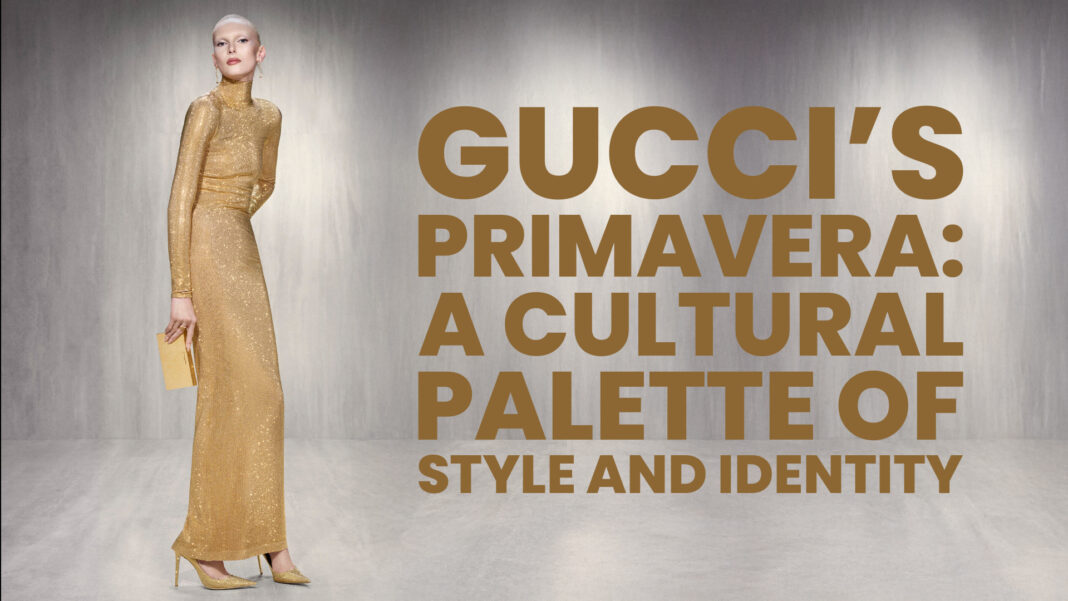
Gucci’s Primavera collection is more than fashion—it is a cultural dialogue. By embracing archetypes, identities, and diverse dress codes, the House positions itself as both a brand and a shared touchpoint. Primavera reflects Gucci’s ambition to speak to those it already inspires and those it hopes to reach.
Gucci has long been more than a luxury fashion house. It is a cultural symbol, a name that resonates far beyond the confines of runways and boutiques. With its latest collection, Primavera, Gucci underscores this identity, presenting not just garments but a narrative of inclusivity, multiplicity, and stylistic freedom. Primavera is conceived as a palette—a spectrum of propositions that speak to the many archetypes, tastes, and identities that make up the brand’s global audience. It is a collection that acknowledges Gucci’s existing community while extending an invitation to those who may not yet have found themselves reflected in its aesthetic.
Primavera is aptly named. The word itself evokes renewal, growth, and the blossoming of ideas. In fashion, spring is often a metaphor for fresh beginnings, and Gucci’s Primavera embodies this spirit. It is not a singular vision but a mosaic of styles, each designed to resonate with different sensibilities. The collection is less about dictating trends and more about offering possibilities—an open dialogue between the House and its audience.
At its core, Primavera is a recognition of fashion as a shared cultural touchpoint. Gucci understands that clothing is not merely about fabric and cut; it is about identity, belonging, and expression. The collection reflects this by embracing diversity in dress codes, from the flamboyant to the understated, the avant-garde to the classic. Each piece is a proposition, a suggestion of how one might inhabit Gucci’s world while remaining true to one’s own.
This approach is significant in the current cultural landscape. Fashion today is less hierarchical than it once was. The days when houses dictated seasonal trends to passive consumers have given way to an era of dialogue, where audiences actively shape and reinterpret what brands present. Gucci’s Primavera acknowledges this shift. By offering a palette rather than a prescription, the House empowers individuals to choose, combine, and create their own narratives.
The collection also speaks to Gucci’s broader ambition: to remain relevant across generations and geographies. In recent years, the brand has leaned into its role as a cultural interlocutor, engaging with art, music, and digital communities. Primavera continues this trajectory, positioning Gucci not just as a maker of clothes but as a participant in global conversations about identity and creativity.
Visually, Primavera is eclectic yet cohesive. The garments range from tailored silhouettes that nod to tradition, to experimental forms that challenge conventions. There are references to heritage, but they are reimagined through contemporary lenses. Fabrics are rich, colours vibrant, and details intricate, yet the overall effect is one of accessibility. This is not fashion that intimidates; it invites.
The archetypes represented in Primavera are particularly striking. Gucci has always played with personas—the eccentric, the romantic, the rebel, the visionary. Primavera expands this lexicon, offering styles that speak to a wider array of identities. It is a reminder that fashion is not monolithic. People approach clothing with different desires: some seek empowerment, others comfort, others still a sense of belonging. Primavera accommodates these varied impulses, ensuring that Gucci’s world is capacious enough to hold them all.
In doing so, the collection also reflects broader cultural currents. Identity today is fluid, multifaceted, and often resistant to categorisation. Primavera mirrors this reality. It does not attempt to fix people into boxes but instead offers garments that can be adapted, layered, and reinterpreted. A single piece might serve as a statement for one person and a subtle accent for another. This flexibility is central to Gucci’s vision of fashion as a shared cultural touchpoint.
The language of Primavera is also worth noting. By framing the collection as a palette, Gucci invokes the metaphor of art. Just as a painter selects colours to create a composition, individuals are invited to select garments to compose their identities. This artistic framing elevates fashion from commerce to culture, positioning Gucci as a curator of possibilities rather than a mere purveyor of products.
Primavera’s resonance lies in its ability to balance heritage with innovation. Gucci has a storied past, and its legacy is part of its allure. Yet the brand is also attuned to the present, aware of the need to evolve in response to shifting cultural dynamics. Primavera embodies this balance. It honours the House’s traditions while opening space for new voices, new identities, and new ways of being.
The collection’s cultural significance extends beyond fashion. In a world where identity politics, representation, and inclusivity are central conversations, Primavera offers a model of how brands can engage meaningfully. By acknowledging diversity and offering stylistic propositions that speak to different communities, Gucci positions itself as a participant in these dialogues. Fashion becomes a medium through which broader cultural values are expressed and negotiated.
For consumers, Primavera is both an offering and an invitation. It is an offering in the sense that it provides tangible garments, each crafted with Gucci’s signature attention to detail. But it is also an invitation—to see oneself within the brand’s universe, to experiment with identity, to engage in the cultural dialogue that Gucci is facilitating.
The impact of such a collection is not limited to those who purchase the garments. Fashion operates symbolically, and Gucci’s Primavera will likely influence broader cultural aesthetics. The archetypes it presents, the identities it embraces, and the stylistic freedoms it encourages will ripple outward, shaping conversations in art, media, and everyday life.
Ultimately, Primavera is a testament to Gucci’s understanding of its role in contemporary culture. The House is not content to be a brand in the narrow sense. It seeks to be a cultural touchpoint, a shared space where identities converge and narratives unfold. Primavera embodies this ambition, offering a palette of style that is as diverse as the people it seeks to inspire.
In presenting Primavera, Gucci reminds us that fashion is not just about clothing. It is about connection, dialogue, and the ongoing negotiation of identity. The collection is a celebration of multiplicity, a recognition that style is personal yet shared, individual yet collective. It is Gucci’s way of saying that in the vast landscape of culture, there is room for everyone—and that fashion, at its best, is a language through which this inclusivity can be expressed.
Discover more from Creative Brands
Subscribe to get the latest posts sent to your email.