


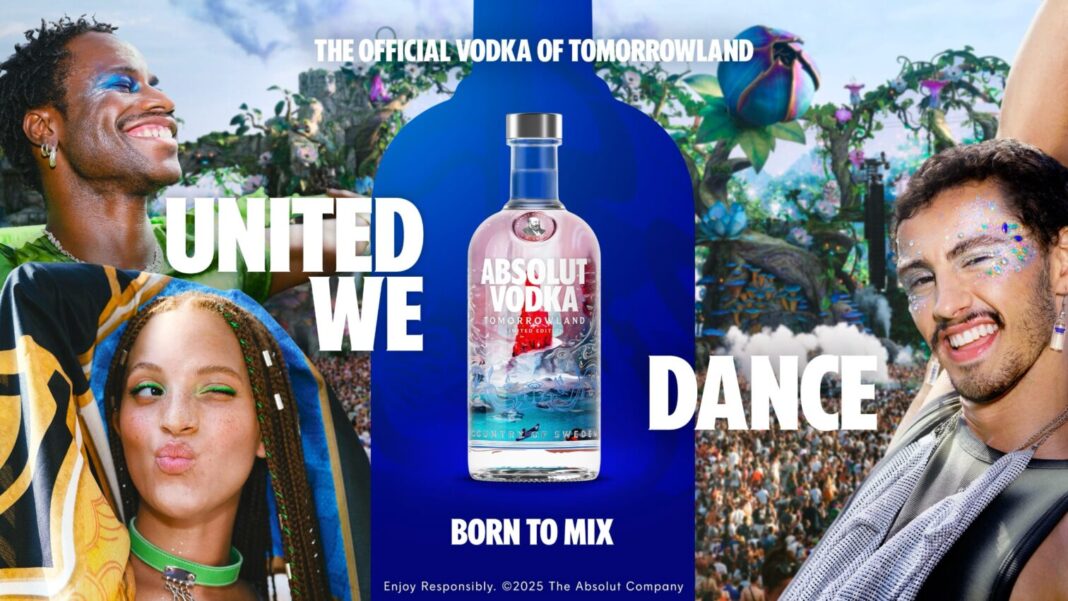
Absolut’s nine-year collaboration with Tomorrowland has grown from a modest partnership into a global initiative using music and culture to drive social change. From Belgium to Brazil, the campaign explores how festivals can foster inclusion, safety and connection, with loneliness emerging as a powerful issue to confront through shared experiences.
Loneliness is not the emotion most people associate with festivals. These gatherings are usually imagined as places of joy, music and collective celebration. Yet, for many, the sheer scale of such events can amplify feelings of isolation. Recognising this paradox, Absolut and Tomorrowland have spent nearly a decade building a partnership that not only celebrates diversity and inclusion but also addresses loneliness head-on, using the universal language of music to create meaningful connections.
Tomorrowland, held just outside Antwerp in Belgium, is one of the world’s most iconic music festivals. Each year, 450,000 people from more than 200 countries descend on the site over two weekends, with tickets selling out within minutes. It is a spectacle of sound, light and human energy, but it is also a space where the challenges of modern life—fragmentation, disconnection, and loneliness—can be felt. Absolut saw this not as a contradiction but as an opportunity.
What began in 2017 as a minor collaboration has since evolved into a global initiative. Absolut x Tomorrowland activations now take place not only in Belgium but also in France, Colombia, Brazil and Dubai. The partnership has grown in ambition, scale and purpose, reflecting a shared vision: to create a more inclusive future through music and culture. Annika Skohg, Global Marketing Manager for Experiences & Partnerships at Absolut, explains that the collaboration is rooted in the belief that festivals are powerful platforms for social change. “Music brings people together in ways few other things can. It transcends language, geography and background. That makes festivals uniquely positioned to tackle issues like loneliness and safety,” she says.
The partnership has experimented with different approaches to foster connection. From immersive installations to interactive experiences, Absolut x Tomorrowland has sought to create spaces where strangers can meet, share and feel part of something larger. These activations are not just about entertainment; they are designed to spark conversations and build bridges. In a world where loneliness is increasingly recognised as a public health concern, such interventions carry weight.
Skohg notes that one of the key learnings from the collaboration has been the importance of authenticity. Festival-goers are quick to sense when a brand’s involvement is superficial. Absolut’s commitment to diversity and inclusion, coupled with Tomorrowland’s ethos of unity, has helped ensure that the partnership resonates with audiences. “It’s not about plastering logos across stages. It’s about creating experiences that genuinely add value to people’s lives,” she says.
The initiative has also highlighted the role of scale. Tomorrowland’s vast reach—both physical and digital—means that messages of inclusion and connection can travel far beyond the festival grounds. Livestreams, social media and global activations extend the impact, turning what happens in Belgium into a worldwide conversation. For Absolut, this is crucial. “We want to show that festivals are not just about escapism. They can be catalysts for positive change,” Skohg explains.
Loneliness, in particular, has emerged as a pressing issue. Studies show that despite being more connected digitally, many people feel increasingly isolated. Festivals, paradoxically, can heighten this sense of being alone in a crowd. Absolut x Tomorrowland has sought to counter this by designing experiences that encourage interaction and belonging. Whether through shared rituals, collaborative art or simply spaces that invite conversation, the partnership aims to remind people that they are part of a community.
The collaboration also touches on safety, another critical concern at large-scale events. Absolut and Tomorrowland have worked to ensure that inclusivity extends to creating environments where people feel secure. This includes initiatives around responsible drinking, safe spaces and awareness campaigns. By addressing both the emotional and physical dimensions of festival-going, the partnership underscores its holistic approach to social impact.
Looking ahead, Skohg suggests that the partnership will continue to evolve, guided by the lessons of the past nine years. The focus will remain on issues that matter most to audiences—connection, inclusion, safety—and on finding creative ways to address them. “Festivals are mirrors of society. They reflect our challenges but also our hopes. By working together, we can make them places where people not only celebrate but also feel seen and supported,” she says.
The Absolut x Tomorrowland story is a reminder that brands can play a meaningful role in cultural spaces when they approach them with sincerity and purpose. It shows that partnerships need not be transactional; they can be transformative. In tackling loneliness, the collaboration has tapped into one of the defining issues of our time, demonstrating that even in the midst of music and revelry, there is room for reflection, connection and change.
As the festival landscape continues to expand globally, the lessons from Absolut x Tomorrowland may inspire others to think differently about what these gatherings can achieve. Beyond the beats and the spectacle, festivals can be places where people confront the realities of modern life together—and perhaps leave feeling a little less alone.
Discover more from Creative Brands
Subscribe to get the latest posts sent to your email.