


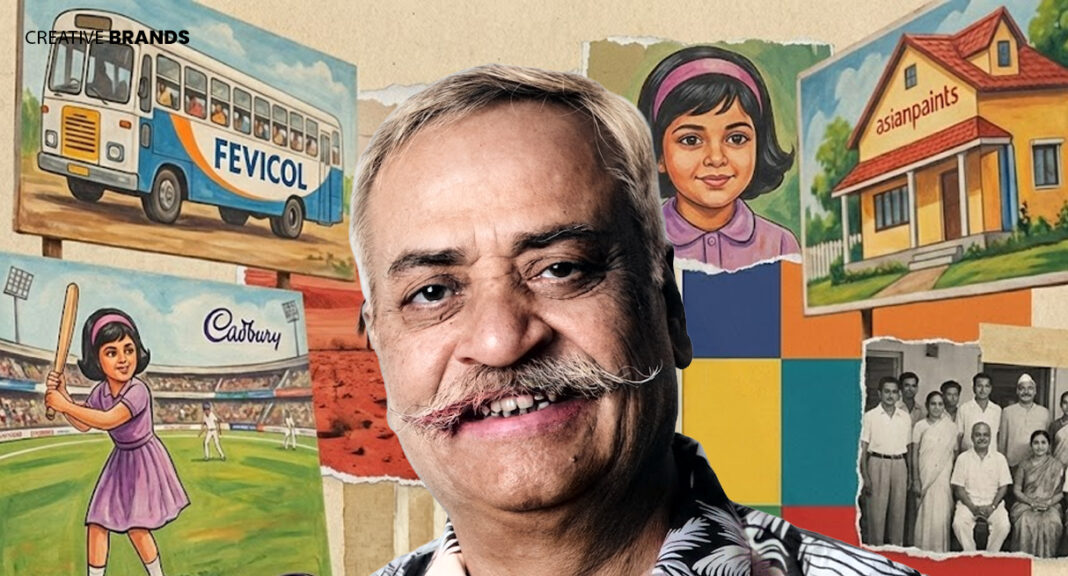
The Indian government’s posthumous Padma Bhushan for Piyush Pandey is more than a personal honor. It is a recognition of advertising as cultural craft, and of Pandey’s unmatched role in shaping India’s public language. His campaigns at Ogilvy India transformed communication, bridging commerce and culture across four decades.
When the Indian government announced a posthumous Padma Bhushan for Piyush Pandey, the news was met not with surprise but with a quiet nod of inevitability. For decades, Pandey had been more than an advertising executive. He was a cultural architect, a man whose words and ideas seeped into the everyday speech of millions, whose campaigns became shorthand for aspirations, humor, and identity in a country constantly reinventing itself. His death in 2025 left a void in the creative world, but the honor bestowed upon him in 2026 has ensured that his legacy is formally inscribed in the nation’s memory.
Pandey’s career at Ogilvy India spanned more than forty years, during which he rose from a copywriter to the chairman of the company’s creative arm. But titles never defined him. What defined him was the ability to listen to the rhythms of Indian life and translate them into campaigns that spoke directly to people. In a country where advertising was once seen as a borrowed craft, mimicking Western styles and tones, Pandey insisted on rooting communication in the soil of India’s languages, idioms, and humor. He believed that brands could not merely sell products; they had to converse with people in their own voice.
His campaigns were not just clever slogans but cultural events. The “Mile Sur Mera Tumhara” anthem, though not strictly a commercial advertisement, bore his creative fingerprints and became a national hymn of unity. His work for Fevicol turned a simple adhesive into a metaphor for unbreakable bonds, with humorous visuals that remain etched in popular memory. The Cadbury Dairy Milk ads, with their joyous depictions of everyday celebrations, redefined how Indians saw chocolate—not as a luxury but as a part of life’s small victories. Each of these campaigns did more than sell; they became part of the national conversation, quoted in classrooms, echoed in cricket stadiums, and remembered in family living rooms.
What set Pandey apart was his refusal to treat advertising as a mere commercial transaction. He saw it as storytelling, as a way of reflecting the country back to itself. In his hands, advertising became a mirror that showed Indians their quirks, their humor, their resilience, and their aspirations. He was not afraid to use colloquial language, to embrace the earthy humor of small towns, or to celebrate the diversity of voices across the country. In doing so, he democratized advertising, pulling it away from elite English-speaking enclaves and placing it firmly in the hands of the masses.
The Padma Bhushan, therefore, is not just a recognition of one man’s career. It is a recognition of advertising as a cultural craft, a discipline that shapes how people think, speak, and imagine themselves. For decades, cinema and politics were seen as the primary arenas where India’s public language was forged. Pandey proved that advertising, too, could be a powerful force in shaping identity. His campaigns did not preach or dictate; they invited participation, laughter, and recognition. They made people feel seen.
Colleagues often described Pandey as a man of warmth and humility, someone who never lost touch with the ordinary rhythms of life despite his towering stature in the industry. He was known to draw inspiration from street conversations, cricket matches, and family gatherings. His office was not a fortress of corporate jargon but a space where ideas flowed freely, often sparked by anecdotes and jokes. He believed that creativity thrived not in isolation but in immersion—in listening, observing, and absorbing the world around him.
His influence extended beyond advertising into the broader cultural sphere. Politicians, filmmakers, and writers often acknowledged the impact of his campaigns on the national psyche. In many ways, Pandey’s work blurred the lines between art and commerce, showing that a thirty-second spot could carry as much emotional weight as a film scene or a political speech. He elevated the status of advertising professionals, proving that they were not merely salespeople but cultural commentators.
The recognition of Pandey with a Padma Bhushan also signals a shift in how India views creativity. By honoring an advertising executive alongside artists, scientists, and social leaders, the state has acknowledged that the stories told through brands are not trivial. They shape aspirations, influence behavior, and contribute to the collective imagination. In a country where consumer culture is deeply intertwined with identity, Pandey’s work stands as a testament to the power of words and images to move people.
His passing in 2025 was mourned across industries, with tributes pouring in from colleagues, competitors, and admirers. Many recalled how his campaigns had touched their lives, not just as consumers but as citizens. For younger professionals in advertising, he remains a guiding figure, a reminder that creativity must be rooted in authenticity. His insistence on speaking in the language of the people continues to inspire a generation that seeks to balance global aspirations with local realities.
The Padma Bhushan is, in some ways, the culmination of a journey that began in the lanes of Jaipur, where Pandey grew up. His early love for cricket and storytelling shaped his worldview, teaching him the importance of play, humor, and connection. These values carried into his professional life, where he treated every campaign as a chance to tell a story that mattered. His journey from a small-town boy to the country’s most celebrated advertising mind is itself a story of aspiration, one that mirrors the narratives he so often crafted for brands.
As India continues to evolve, Pandey’s legacy will remain relevant. In an age of digital communication, where algorithms and data often dominate, his work is a reminder that at the heart of advertising lies human connection. Technology may change the platforms, but the need to speak authentically to people remains constant. Pandey’s campaigns, rooted in humor and humanity, offer lessons for a future where brands must navigate both global markets and local identities.
The Padma Bhushan, then, is not just a medal pinned to a memory. It is a statement about the role of creativity in shaping society. It is an acknowledgment that advertising, when done with sincerity and imagination, can be as profound as literature, cinema, or politics. And it is a tribute to a man who gave India not just slogans but stories, not just campaigns but conversations.
Piyush Pandey’s voice may no longer echo in the brainstorming rooms of Ogilvy, but it continues to resonate in the language of everyday India. His humor, his warmth, and his ability to see the extraordinary in the ordinary have left an indelible mark. The Padma Bhushan is a fitting honor, but the true recognition lies in the millions of smiles, jokes, and memories his work has created. In celebrating him, India celebrates itself—the vibrant, diverse, and endlessly creative nation that he so beautifully captured in his words and ideas.
Discover more from Creative Brands
Subscribe to get the latest posts sent to your email.