


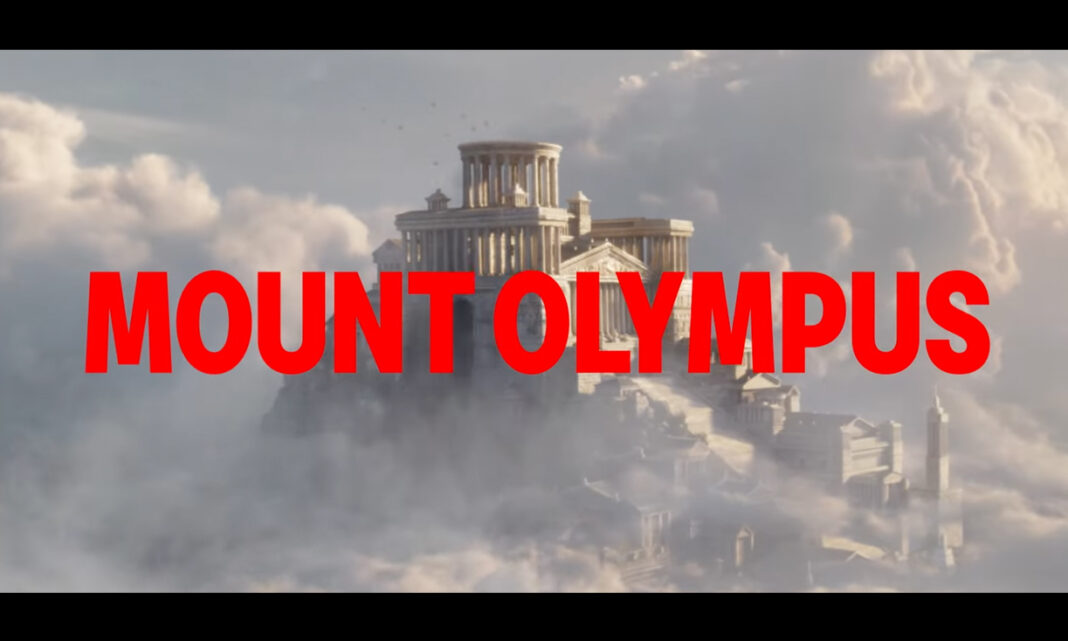
Renault and Publicis Conseil launch the new Clio full hybrid E-Tech with a cinematic campaign that reimagines Clio as the Greek Muse of History. Blending myth, technology and emotion, the film positions Renault’s iconic bestseller as a symbol of renewal, innovation and forward-moving history.
Clio was a name chosen long before it became shorthand for one of Europe’s most recognisable cars. In Greek mythology, Clio is the Muse of History, the keeper of memory, the figure entrusted with ensuring that stories are told, preserved and passed on. For Renault, whose Clio has sold nearly 17 million units across six generations, that name has come to feel prophetic. With the launch of the new Renault Clio full hybrid E-Tech, the brand is returning not just to a model update, but to the origin of its own narrative, using myth, cinema and modern technology to reassert why this small car has remained culturally resonant for 35 years.
To mark the arrival of the sixth-generation Clio, now available to order and in dealerships, Renault and its long-time creative partner Publicis Conseil have unveiled “The Muse”, an ambitious campaign that treats the car less as a product and more as a character. At the centre of the campaign is an epic, anachronistic film that reimagines Clio not simply as a vehicle, but as the Muse of History herself, transported into a contemporary world she finds stagnant and uninspiring. The result is a piece of brand storytelling that leans heavily into cinema, mythology and emotion, positioning the Clio as both an object of desire and a symbol of renewal.
The film, directed by Rupert Sanders of WANDA, unfolds like a modern myth. We meet Clio, the Muse of History, observing a world that feels frozen, repetitive and stripped of wonder. Her fatigue is not physical but existential; history, she seems to feel, has lost its forward motion. In a bold creative leap, the Muse decides to intervene, to imagine something that can restore momentum, emotion and desire. From this act of creation emerges the new Renault Clio full hybrid E-Tech, born not out of metal and machinery alone, but out of the human need for progress and meaning.
This narrative device allows Renault to do something unusual in the automotive category. Instead of framing innovation purely in terms of performance metrics or technical superiority, the film links technological advancement to cultural renewal. The Clio becomes a catalyst, a way of restarting the flow of history rather than merely moving through it. The tone is reinforced by a deep, confident voiceover that grounds the mythic imagery, while the sound design immerses the viewer in what feels less like an advertisement and more like a short cinematic experience. New Order’s “Crystal” plays a pivotal role, its driving rhythm structuring the film’s rising tension and emotional arc.
Visually, the film is a succession of striking, carefully composed scenes, each designed to feel both timeless and contemporary. Ancient references collide with modern aesthetics, mirroring the way the Clio itself blends heritage with innovation. This is not accidental. For Renault, the Clio is more than a long-running model; it is the brand’s best-seller, a car that has accompanied generations of drivers through changing social, economic and technological landscapes. By personifying Clio as a Muse, Renault is acknowledging that longevity in the automotive world is as much about storytelling and emotional connection as it is about engineering.
The campaign’s return to the origin of the Clio name also serves as a reminder that history, to remain alive, must be continually rewritten. Renault positions the new Clio as the next chapter in a story that began decades ago, but which is now being reinterpreted for a world shaped by electrification, connectivity and digital intelligence. This philosophy is evident not only in the campaign’s creative ambition, but also in the car itself.
The new Renault Clio adopts a bolder, sportier and more emotional design, reflecting Renault’s modern and tech-savvy design language. The exterior communicates confidence and dynamism, while the redesigned interior signals a shift towards a more digital, connected driving experience. Central to this is the openR link multimedia system with Google built in, a first in this vehicle category. By integrating Google services directly into the car, Renault is responding to a generation of drivers who expect seamless access to navigation, information and entertainment, wherever they are.
With over 100 available apps, voice control via Google Assistant and real-time navigation through Google Maps, the Clio aims to make technology feel intuitive rather than intrusive. The emphasis is on smoother journeys, reduced friction and a sense that the car understands its driver. This focus on user experience extends to comfort and ambience, with features such as the Harman Kardon high-fidelity audio system and four Multisense driving modes allowing drivers to tailor the car’s behaviour and atmosphere to their preferences.
Safety, another key chapter in the Clio’s evolving story, is addressed through an impressive suite of 29 advanced driver assistance systems. These systems are designed not only to react in critical moments, but also to educate and improve driving behaviour over time. Features like Safety Score and Safety Coach provide personalised feedback, reinforcing Renault’s positioning of the Clio as a car that looks after its occupants while encouraging more responsible driving.
At the heart of the new Clio’s technological leap is its powertrain. The E-Tech 160 hp full hybrid engine represents Renault’s latest thinking in hybrid mobility, offering a balance of performance, efficiency and everyday usability. The system delivers responsive, instant acceleration, while enabling up to 80 per cent of city and suburban driving to be completed in 100 per cent electric mode. The battery regenerates automatically while driving, eliminating the need for external charging, and the car offers up to 1,000 kilometres of range without recharging, addressing one of the most persistent anxieties around electrified vehicles.
In the context of the campaign, these technical achievements take on symbolic weight. The hybrid system becomes a metaphor for continuity and transition, combining electric and combustion power much as the Clio itself combines history and innovation. It is this layering of meaning that makes “The Muse” more than a launch film. It is an attempt to remind audiences that cars, particularly iconic ones, are woven into personal and collective histories.
By choosing to tell the story of the new Clio through myth and cinema, Renault and Publicis Conseil are making a statement about brand identity in an age of rapid technological change. Rather than distancing itself from its past, Renault is embracing it, reframing heritage as a source of creative energy rather than nostalgia. The Muse of History, once weary of a static world, finds renewal through invention, and in doing so, invites drivers to become part of the next chapter.
After 35 years and nearly 17 million vehicles, the Clio’s story is far from finished. With the new full hybrid E-Tech version, Renault is not only updating a best-seller, but reaffirming why it continues to matter. History, the campaign suggests, is not something we look back on. It is something we drive forward.
Discover more from Creative Brands
Subscribe to get the latest posts sent to your email.