


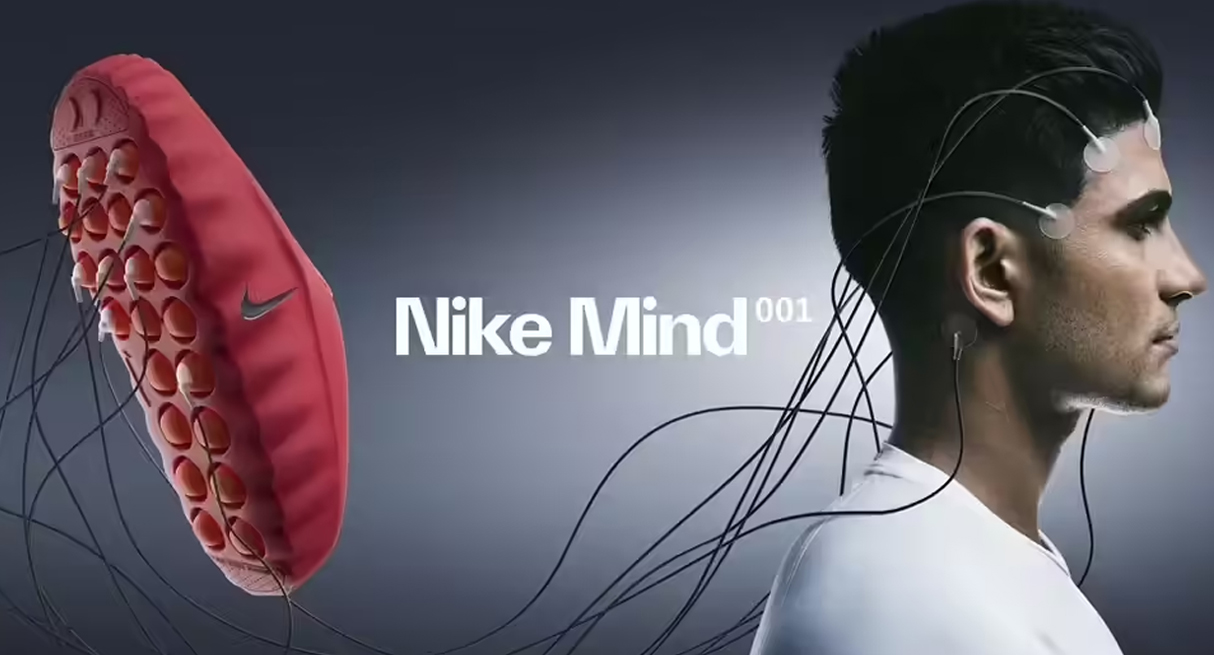
Nike’s latest cricket-focused message positions captain Shubman Gill as a leader defined by composure and mental clarity. Emphasising “Lead calm. Play fearless,” the brand highlights how a centered mind sharpens focus, steadies decision-making and elevates team confidence—reflecting a broader shift in sports culture toward psychology, sensory awareness and emotionally intelligent performance.
Nike’s latest communication around its cricket proposition arrives in the form of a quiet mantra: “Mind sharpens focus, activates the senses, and keeps the captain grounded, because when Shubman Gill is centered, the team can rise with confidence. Lead calm. Play fearless.” In the age of high-velocity batting lineups, power metrics and team management analytics, the focus on mental equilibrium might seem counterintuitive—until it isn’t. For a generation of Indian cricket followers familiar with the aerodynamic spectacle of Gill’s cover drive or the mathematical precision of his white-ball shot selection, the brand’s message fits into a broader cultural shift that places cognition, composure and emotional intelligence at the center of elite performance.
To understand the significance of this orientation, one must consider the young captain’s own narrative arc. A decade ago, Gill was a prodigious talent from Punjab’s cricketing nursery, making headlines for timing and technique. Over time, the public conversation moved beyond talent to temperament. His ascent to leadership now places him in a cohort of new-era athletes tasked with not just executing under pressure but making consequential decisions on the field while maintaining psychological clarity. It is this intersection—between the athletic and the cerebral—that Nike seeks to illuminate. For viewers, the message reframes athletic supremacy not merely as speed, strength or reflex but as a finely tuned state of mind that organizes chaos, absorbs noise and reads the game as an information system.
Sport scientists have long described elite decision-making as a pattern recognition exercise. Cricketers, especially batters and captains, process delivery length, seam position, field placement, wind, matchups and game context within milliseconds. The difference at the highest level is not the ability to process data, but the ability to do so without emotional interference. Gill’s game, particularly in the pandemic-era cricket boom, has often been praised for this emotional detachment: the ability to treat finals like listings on a spreadsheet rather than trials by fire. Nike’s storytelling frames this trait as both weapon and grounding mechanism. Within this logic, a sharp mind is not ornamental— it is the engine.
What makes the brand’s current stance notable is that it pushes against cricket’s long-standing mythology of aggression, bravado and outward competitive signaling. In “Lead calm. Play fearless,” calmness is not the absence of intensity; it is the method through which intensity is directed. In an era when stochastic matchups, real-time analytics and power-hitting strategies have compressed margins of error, fearlessness becomes a cognitive position rather than a stylistic one. The fearless athlete is not reckless but unencumbered by the fear of failure—an important distinction in a national cricket culture that has historically oscillated between reverence and scrutiny.
In India’s crowded sporting endorsement market, youth icons often become shorthand for aspirational consumption. Yet the framing of Gill here diverges from the familiar narrative of the triumphant, invincible superstar. Instead, the lens emphasizes sensory awareness: sightlines, balance, footwork, breath, sound. By foregrounding senses, Nike’s articulation extends into the philosophical domain—sport as perception, performance as mindful presence, captaincy as attunement to both self and team. For a sport that is increasingly mediated by high-definition cameras, commentary real-time AI analysis and social fandom, the idea of shutting out external noise to hear internal signals gains cultural resonance.
The corporate strategy behind such messaging can be interpreted through the larger evolution of sports branding in India. For years, cricket marketing has luxuriated in heroism—firepower, swagger, kinetic energy. While those themes remain effective, the maturing consumer base is demonstrating appetite for narratives that integrate athletic performance with psychology, self-regulation and well-being. In globally competitive markets, sportswear brands have been recalibrating around concepts like flow state, body-mind synchronization and movement literacy. India’s emerging crop of leaders in cricket, athletics and football offer fertile ground for such repositioning, and Gill, with his composure and precision-first ethos, embodies this aesthetic well.
What separates cricket from many other team sports is the structural loneliness embedded within it. Batters face bowlers alone; captains orchestrate field placements that may determine the outcome hours later. Decisions are slow-burn, sometimes requiring an almost meditative patience. Gill’s tenure as a leader of a major franchise and his increasing presence in national formats have demonstrated his facility for this psychological pacing. Nike’s communication leans into the idea that leadership is not about elevation above the team but grounding within it. In this telling, a captain who is centered becomes an anchor point, allowing teammates to operate with certainty, no matter how volatile the match situation.
There is also a socio-cultural context to this shift. India’s post-pandemic sporting audience—particularly younger urban fans—is consuming sports content that merges performance with mindset coaching, recovery science and habit architecture. The proliferation of podcasts, athlete vlogs and sports psychology books in the Indian market signals an appetite for narratives that demystify excellence rather than glamorizing it. Nike’s framing intersects neatly with this trend. Instead of celebrating Gill’s explosive scoring or tactical acumen directly, it highlights the substrate on which those abilities rest: the mind as a regulator of focus and courage.
Marketers observing the campaign note its restraint. Rather than deploying a maximalist creative treatment, the narrative remains sparse, almost haiku-like. This absence of noise mirrors the athlete’s own communication style and helps differentiate the message in an environment often saturated with visual and verbal overload. That distinction is strategically useful for a brand that has historically dominated performance narratives through energy and momentum; here, it controls the room by lowering the volume.
Whether this approach represents a long-term creative strategy or a situational campaign is yet to be seen, but it aligns with Nike’s broader global interest in cognition, creativity and agency in sport. As cricket expands as a commercial property beyond the subcontinent—bolstered by franchise leagues, investment capital, media rights auctions and transnational fandom—branding opportunities that speak to universal themes like composure and leadership become highly exportable.
To those watching Gill’s evolution, the philosophical undertones of “Lead calm. Play fearless.” feel appropriately timed. His career enters a phase where the metrics extend beyond averages and strike rates into influence, captaincy temperament and legacy formation. Amid growing expectations, a campaign centered on mental steadiness doubles as both cultural statement and subtle performance prediction. It suggests that the future of Indian cricket may not only be fast, aggressive or analytical—but self-aware.
Ultimately, Nike’s narrative insists that the mind is not merely an accessory to performance but the apex of it. A team draws confidence from a leader who has navigated internal complexity before confronting external adversity. When Gill is centered, the story argues, the unit coheres; when the unit coheres, it plays without fear. The genius of the line is that it collapses psychology, leadership and sport into a single unbroken thread—and for a cricketing nation eager for its next chapter, that thread feels both modern and necessary.
Discover more from Creative Brands Mag
Subscribe to get the latest posts sent to your email.













Leave a comment