


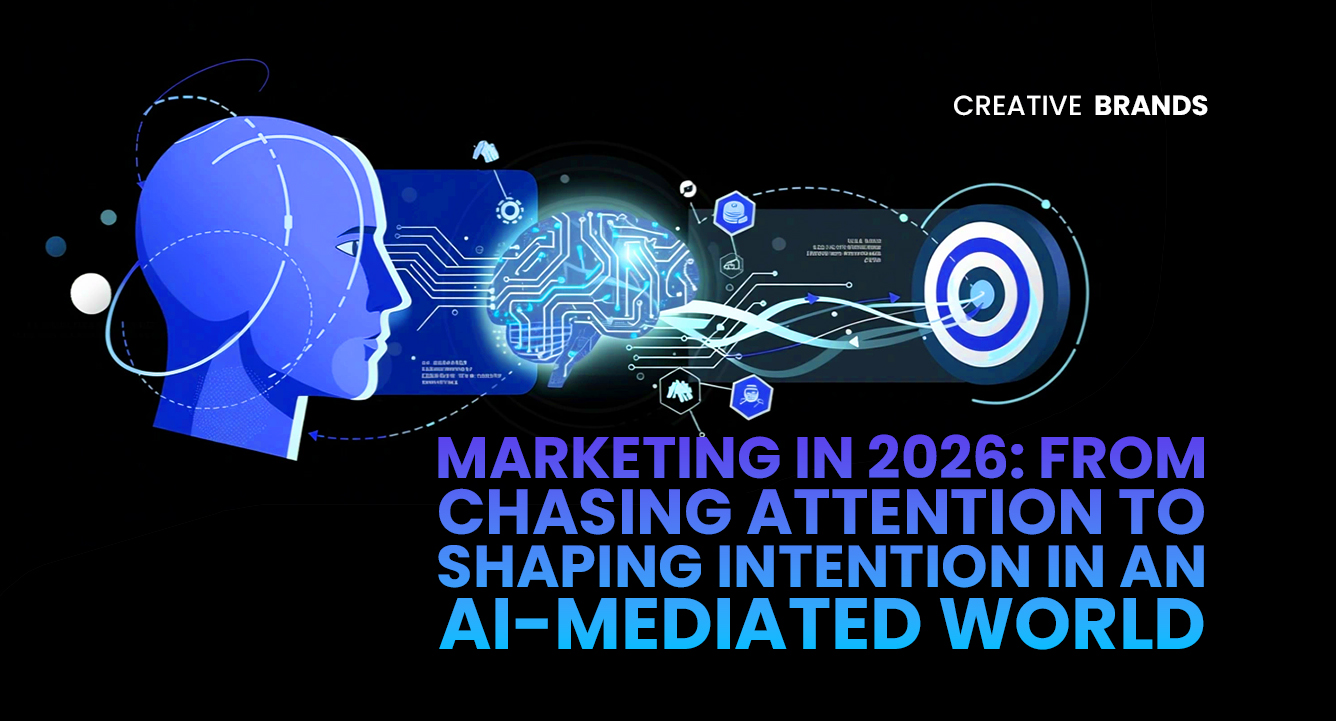
Marketing in 2026 will be defined by the shift from attention to intention as AI agents, synthetic data and automation reshape decision-making. Brands must persuade both people and machines, balance human creativity with algorithmic visibility, and drive growth through innovation, inclusion, creator partnerships, retail media and meaningful everyday consumer connections.
The marketing world has always been shaped by shifts in technology, culture and consumer behaviour, but 2026 is shaping up to be a year where several of these forces collide at once, creating a new operating reality for brands. According to the latest Kantar Marketing Trends 2026 report, the coming year will not simply be about doing more with digital or experimenting further with artificial intelligence. Instead, it will be about navigating a deeper transition: from fighting for attention to shaping intention, from speaking only to people to also persuading machines, and from chasing short-term performance metrics to building brands that can thrive in an increasingly automated, fragmented and emotionally complex marketplace .
One of the most profound changes highlighted in the report is the rise of AI agents as everyday decision-makers. In 2026, consumers will increasingly delegate tasks such as shopping, planning entertainment or comparing services to AI-powered agents that act on their behalf. These agents are no longer a futuristic concept. Kantar’s research shows that nearly a quarter of AI users are already using AI shopping assistants, signalling that delegated purchase support has quietly become part of daily life . This shift fundamentally alters the marketing equation. Brands are no longer competing only for human attention; they are also competing to be recognised, trusted and recommended by non-human intermediaries.
This transition reframes the marketer’s role. For decades, success was driven by how effectively brands could capture attention through creative storytelling and media reach. In 2026, attention still matters, but intention becomes the real battleground. AI agents do not respond to emotional spectacle in the same way people do. They rely on structured information, clear signals of relevance, and an understanding of brand meaning embedded in data. This is where the idea of “predisposing agents” emerges alongside the long-standing goal of predisposing people. Marketers will need to ensure that their products, services, guides, experiences and content are widely findable, machine-legible and contextually rich, so that algorithms can confidently select them on a consumer’s behalf .
At the same time, the human dimension does not disappear. The report is clear that, at least for now, technology does not buy things; people do. Emotions, empathy and cultural resonance continue to play a decisive role in shaping preferences. The challenge for brands in 2026 is to operate in both worlds at once: persuading humans through meaning and emotion, while servicing AI agents through clarity, structure and data. Those that accelerate their AI visibility strategies early will be better placed to drive growth as agent-mediated decision-making becomes more widespread .
Closely linked to this evolution is the growing importance of Generative Engine Optimisation, or GEO, which the report positions as the successor to traditional search engine optimisation. As large language models increasingly mediate discovery and recommendation, being visible is no longer enough. Brands need to be cited, trusted and understood by these models. Three-quarters of AI assistant users already rely on AI-driven recommendations regularly, underscoring how quickly this behaviour is becoming normalised . If a model does not “know” a brand, it will not choose it, regardless of how strong its market presence might be elsewhere.
This creates new risks as well as opportunities. In a world where algorithms summarise categories and recommend defaults, brands that fail to differentiate risk being flattened into a sea of sameness. Distinctive brand meaning, once expressed primarily through advertising and experience, now also needs to be encoded in data and content that machines can interpret. Recipes, how-to guides, structured FAQs and clearly articulated value propositions become strategic assets, not just content marketing add-ons. The strongest brands in 2026 will be those that actively shape the story AI tells about them, rather than passively hoping to be included .
Another major shift shaping marketing strategy in 2026 is the move from hype to practical execution in the use of synthetic data and augmented audiences. For years, synthetic data has been discussed as a promising but risky tool. Kantar’s research suggests that the conversation is maturing. When built on robust human data and used responsibly, synthetic data can deliver accuracy levels of 94–95% compared with ground truth, enabling faster, more scalable insights without compromising quality or ethics . This has profound implications for how brands understand underrepresented audiences, test scenarios and make decisions at speed.
However, the report also makes it clear that the industry is not fully ready. Algorithms behave differently depending on datasets and use cases, and the integration of emerging technologies such as digital twins, multimodal AI and immersive environments raises new questions about governance and skills. In 2026, success with synthetic data will depend less on enthusiasm and more on discipline: responsible data practices, rigorous testing, internal capability-building and trusted partnerships. Brands that treat synthetic data as a shortcut rather than a strategic tool risk undermining trust and insight quality .
While technology continues to reshape the mechanics of marketing, creativity and human connection remain central to effectiveness. Nowhere is this tension more visible than in the evolving role of creators. A net 61% of marketers plan to increase their investment in creator content in 2026, reflecting the continued shift towards more personal, platform-native forms of communication . Yet the report highlights a growing accountability gap. Engagement metrics such as likes and views are no longer sufficient indicators of success. As budgets grow, so does the pressure to demonstrate real impact on brand building and return on investment.
The challenge lies in how creator content is used. Despite its popularity, only around a quarter of creator content currently ties strongly to brand meaning. The report argues that the solution is structural rather than tactical. Instead of isolated influencer activations, 2026 calls for long-term creative platforms or clustered themes that align brand narratives with creator voices. This requires a shift in mindset. Creators are not actors delivering scripts; they are partners with their own authenticity and audience trust. Brands must learn to cede a degree of control while setting clear guardrails and success metrics, allowing co-creation to flourish without diluting brand identity .
Innovation more broadly emerges as a defining growth lever for 2026. Kantar’s BrandZ analysis shows that over the past two decades, brands willing to disrupt themselves or their categories have created an additional $6.6 trillion in value. Yet many organisations remain risk-averse, especially in volatile economic conditions . The report warns that playing safe is itself a risk. Short-termism may protect margins today, but it erodes relevance tomorrow.
What distinguishes successful innovation in 2026 is not the adoption of the latest technology for its own sake, but brand-led experimentation rooted in consumer motivations and tensions. With AI tools becoming widely accessible, the temptation to chase novelty is strong. The report urges CMOs to ensure that innovation brings a brand’s meaningful difference to life, rather than obscuring it. Cultures that reward smart risk-taking, structure experimentation and give teams permission to push boundaries will be better equipped to grow and shape the future .
Retail media is another area where 2026 is expected to mark a turning point. With more than 200 retail media networks now in operation, the channel has moved from experimental to central. According to Kantar’s data, retail media delivers results 1.8 times better than digital ads overall and nearly three times better when it comes to purchase intent . Unsurprisingly, a significant proportion of marketers plan to increase investment in this space.
Yet the report emphasises that growth will depend on collaboration rather than fragmentation. As retailers gain greater control over data and touchpoints, advertisers are demanding transparency, standardised measurement and clearer ROI frameworks. In 2026, the success of retail media will hinge on the integration of data across online and in-store environments, and on the ability of brands and retailers to work together to create consumer-focused experiences. The mainstreaming of shoppable ads on connected television and streaming platforms is likely to accelerate this convergence, reshaping how people discover and buy products .
Social media marketing is also undergoing a quieter but equally significant transformation. Algorithmic feeds increasingly reward generic, sales-heavy content, while organic reach for branded pages continues to decline. As broad engagement becomes more expensive and less effective, people are gravitating towards micro-communities where conversations feel more meaningful and personal. These spaces, often built around shared interests or knowledge exchange, prioritise authenticity and relevance over scale.
Kantar’s findings suggest that micro-communities can deliver tangible commercial value. In China, brands using knowledge-sharing micro-community platforms achieved 25% higher marketing ROI, and nearly 40% of consumers trust recommendations from these communities as much as personal ones . For marketers in 2026, this means shifting focus from reach to relationship-building, showing up with tangible value rather than overt promotion, and collaborating with credible creators who already hold trust within these spaces.
Alongside these structural changes, the report highlights a powerful cultural undercurrent shaping consumption: treatonomics. In an era of economic uncertainty and delayed or redefined life milestones, consumers are increasingly seeking joy and control through small, everyday indulgences. Over a third of consumers say they are prepared to go into short-term debt to spend on things they enjoy, reflecting the emotional weight these “little treats” now carry . Social media’s pivot towards instant commerce has amplified this behaviour, turning moments of desire into immediate transactions.
For brands, the implication is clear. Growth in 2026 will not come solely from premiumisation or functional superiority, but from understanding how products and experiences fit into people’s emotional lives. Meeting consumers where they are means recognising the value of everyday joy and designing offerings that feel rewarding, accessible and culturally attuned, even as trends fragment across regions and niches.
The question of values and inclusion also takes on renewed importance. Despite political and cultural backlash against diversity, equity and inclusion in some markets, the data points firmly towards inclusion as a driver of growth. Nearly two-thirds of people value companies that promote diversity and inclusion, a figure that has steadily increased in recent years . In 2026, future-facing brands are expected to move beyond performative messaging and focus on meaningful action, whether through inclusive innovation, accessible products or authentic representation.
The report argues that inclusive marketing is expansive marketing. By reaching underserved and underrepresented populations, brands unlock new sources of growth. However, in a polarised environment, clarity and consistency are essential. Brands must be clear about the values they stand for and demonstrate them through actions, not just communications. Cultural fluency and long-term commitment will matter more than short-term campaigns.
Underpinning many of these trends is the increasing use of AI to optimise creative effectiveness. As AI-assisted testing becomes faster and more accurate, marketers will be able to evaluate and refine creative work in near real time. Agentic optimisation, where AI systems recommend adjustments based on past performance, current trends and audience response, is expected to become more common in 2026 . Yet the report stresses that human insight remains essential. Data can indicate what works, but it cannot replace the human judgement required to tell authentic, emotionally resonant brand stories.
Importantly, attention is turning to the quality of training datasets that underpin AI-based decision-making. As automated systems play a greater role in shaping media and creative choices, ensuring that insights are robust, unbiased and trustworthy becomes a strategic priority. CMOs are encouraged to test and learn now, building confidence in these tools while maintaining a critical perspective.
Taken together, the Kantar Marketing Trends 2026 paint a picture of a discipline at a crossroads. The year ahead will demand that marketers balance automation with empathy, speed with responsibility, and innovation with meaning. Brands will need to speak fluently to both people and machines, operate across fragmented communities, and embed their values into products, data and experiences. Those that succeed will be the ones that understand that growth in 2026 is not about choosing between human realness and AI infiltration, but about orchestrating the two in service of deeper, more enduring connections .
Discover more from Creative Brands Mag
Subscribe to get the latest posts sent to your email.












Leave a comment